
(Editor’s note: First in a series)
The crisp days of fall beckon us to go outside and stroll among the changing colors of the season and the images of the past. Few locations encapsulate more history and evoke more memories than the Chickamauga and Chattanooga National Military Park.
The nation’s first national military park represents a reconciliation between the two political factions that had divided the region during the U.S. Civil War. Chattanooga, an emerging commercial center due to its location on the Tennessee River and the intersection of railroads, had supported Tennessee’s withdrawal from the Union. However, residents outside the city in Hamilton County, a rich agrarian region dotted with farms, were more often allied with the political ideology of the Union.
After four years of conflict between the armies of the opposing sides and high numbers of casualties, many in the country viewed the ceasefires as simply an end to the military conflicts. In 1865, the idea that this region would gain national attention as a site of symbolic reconciliation was difficult to imagine.
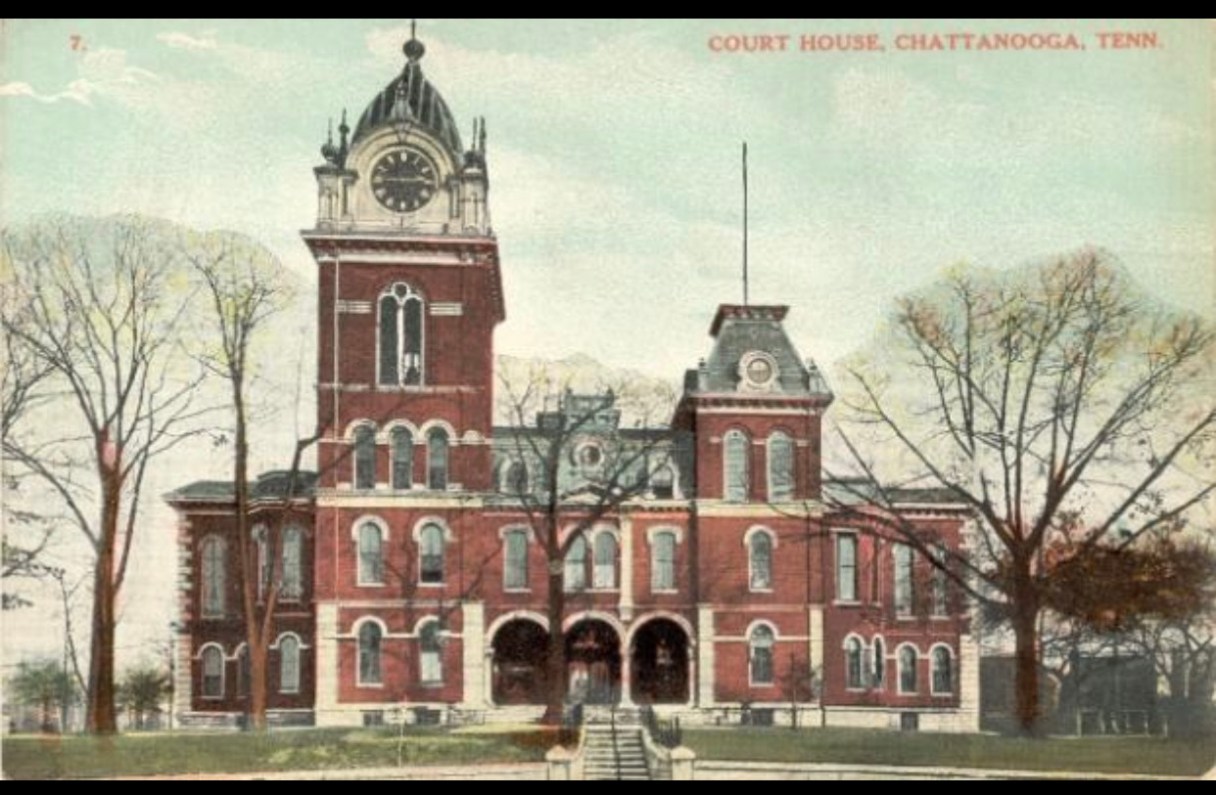
Eleven years later, the idea of moving forward seemed more possible. Chattanooga newspapers in 1876 include numerous stories about the celebrations of our nation’s centennial. The city hosted a grand celebration of the Declaration of Independence and the nation’s birth that featured parades, fireworks and a courthouse rally that drew more than 17,000 people onto the streets of Chattanooga. Evergreen arches had been constructed across Market Street, and flags were “seen floating all over the city, and suspended from the windows and balconies in great profusion.”
The Fourth of July parade that formed near the railroad terminals early that morning under the direction of Capt. H.C. Cooks included veterans and fire departments units from Tennessee, Georgia and Alabama and was more than two miles in length. The participants marched accompanied by drum and bugle corps to the courthouse. Included in the parade were wagon “displays” of the “various manufactured products of the city, such as sash, wagons and carriages … rails for railroads, brick, the ores found and used in this vicinity … along with wagons containing Penn’s treaty with the Indians, old-fashioned steam boats, ox carts, etc., etc.”
As a part of the courthouse rally, those present applauded the oldest veterans in their midst: the soldiers of the War of 1812 and the Mexican War. In a more surprising move, the master of ceremonies turned the audience’s attention to the veterans of the most recent conflict: “Permit me to introduce to you hundreds of soldiers of both armies in the late war, who are now in the audience surrounding me, and are here united in the celebration of the Centennial 4th of July, and have shaken hands across the bloody chasm … .”
The July 28, 1876, Chattanooga Daily Times included an interview with J.H. Lumpkin, a former Confederate Army captain and then sheriff of Floyd County, Ga., who stated that he brought three fire companies to the Chattanooga celebration so that “they might associate with Northern people and become better acquainted. In former days we regarded cotton as king. At the low rates of production, and in view of the brisk competition from Egypt, we can … cultivate our land for other purposes. We need Northern immigrants, and shall be glad to welcome them to our midst.”
One attendee, a resident of Ada, Ohio, wrote about the celebration in a letter that was published in the Toledo Daily Commercial. “The ‘red, white and blue’ was floated in great abundance, even by those who formerly maintained a different flag. It was not possible to discover any symptoms of former hatred for the old flag and Northern people, all having participated cheerfully and heartily in the festivities of the occasion.”
The Chattanooga Daily Times accounts may have reflected the most optimistic thoughts of those in attendance. However, they may have been encouraged by a particularly moving “tableau of a Union soldier presenting an olive branch to a former Confederate” representing renewed friendship.
The idea for the visual representation of reconciliation had been envisioned by two of Chattanooga’s most prominent faith leaders: Rev. Thomas McCallie and Presbyterian minister Jonathan W. Bachman, a former Confederate soldier known as the “Pastor of Chattanooga.”
“Every citizen of Chattanooga has cause to rejoice … in the day which the patriot fathers of ’76 consecrated by the promulgation of the gospel of political liberty,” it was said, “and which subsequent events have rendered doubly sacred … .”
The first step of “true reunion” had occurred.
Linda Moss Mines, the Chattanooga-Hamilton County historian, chairs the Chattanooga-Hamilton County “America 250” Committee. Visit Chattahistoricalassoc.org for more local history.