
(Editor’s note: Second in a series)
The Centennial of the Declaration of Independence in Chattanooga made national headlines as former Union and Confederate soldiers united in remembrance of the nation’s founding and the recent conflict that had almost destroyed the nation. The unique aspect of their gathering was their commitment to “moving forward together.”
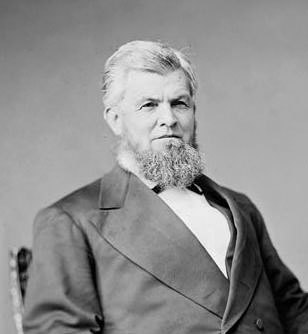
Chattanooga’s role in reconciliation gained increased prominence as David McKendree Key, a moderate Democrat who called Chattanooga home, stepped forward to lead. Key’s career included military service as a colonel in the Confederate forces, chancellor (Tennessee Chancery Court, 3rd Judicial District), federal judge and U.S. senator, chosen to fill the seat vacated by the death of Sen. Andrew Johnson, the former president.
After the Compromise of 1876 ended military occupation of the Southern states and subsequently Reconstruction, President Rutherford Hayes appointed Key as the first post-war Southerner to join a presidential cabinet. Key gained respect for his intelligence, fairness and ability to bring opposing factions together in compromise, including hosting a special gathering in Chattanooga.
The first reunion of a Union army on Southern soil occurred in Chattanooga in 1881 when the Society of the Army of the Cumberland gathered, joined by veterans from both armies. The Chattanooga Daily News headlined “Thousands of Strangers in the City” and followed with “Today at sunrise the hoarse roar of artillery from the historic heights of Fort Wood will announce the commencement of the exercise of the reunion of the Army of the Cumberland and the greeting of the ex-Confederates.”
The revelry softened with the news that President James A. Garfield had died from an assassin’s bullet. His death was especially emotional for the veterans because Garfield, an active member of the Society of the Army of the Cumberland, had served as Gen. William Rosecrans’ chief of staff at the Battle of Chickamauga. The newspaper noted “that the procession and greeting with their appropriate ceremonies, on Cameron Hill, as previously arranged, be carried out with this addition: The standards shall be draped in mourning and the badges of all societies shall be surmounted by a bow of crape.”
All eyes were on the large flagpole on Cameron Hill as four federal and four Confederate veterans hoisted the flag to half staff. The “requiem services, conducted by the Rev. J.W. Bachman, followed the official greeting of the veterans.” Capt. Summerfield Key greeted the Southern veterans, while Ohio Gov. Charles Foster addressed the Union men. The Rev. A.S. Johnson offered a prayer of peace and unity, followed by the reading of several scriptural passages by the Rev. J.J. Manker and the Rev. W.A. Montgomery.
The veterans of both armies joined in the singing of the “Doxology” with a benediction offered by the Rev. W.J. Trimble. At 4 p.m. at the courthouse, “a Union Memorial Service, in which representatives of both armies” united for “appropriate addresses and adopting resolutions suitable to the melancholy occasion,” had been planned by D.M. Key, J.E. MacGowan, Charles D. McGuffey, T.M. McConnell and A.J. Ricks.
Reporters for the Daily News noted the following day that “General J.T. Wilder, chairman of the local committee … had been happy to welcome to the city of Chattanooga the grand and brave old Army of the Cumberland.”
Chattanooga, he said, would be found to be the “freest city on the globe. Her citizens were proud and happy to welcome to her limits all good men from every part of the world, North, South, East, and West.”
Wilder, while paying tribute to the fallen president and acknowledging the “demonstration of grief for our great loss,” praised the gathering, including the “ex-Confederates, who come … in the most patriotic manner, like men to meet like men.”
One of the actions taken during the meetings in Chattanooga was the designation of three men who would represent the former Union and Confederate forces at Garfield’s funeral. On Sept. 29, the Rev. J.W. Bachman, Maj. Gen. G.C. Connor and Maj. M.H. Clift reported that they had “presented to Mrs. Garfield, at Cleveland, the resolutions of condolence adopted.”
In an interesting turn, the delegates were asked to join the Society of the Army of the Cumberland on the platform for the president’s memorial ceremony and then for the procession in carriages. Bachman and Clift were the only two former Confederate commanders offered platform seating.
What began as a reunion morphed into an “understanding” between former enemies.
Linda Moss Mines, the Chattanooga-Hamilton County historian, is a member of the Chattanooga Civil War Roundtable and regent, Chief John Ross Chapter, NSDAR. Go to Chattahistoricalassoc.org for more local history.