
Friday, November 13, 2026Nov 13

Russian threats revive old nuclear fears in central Europe

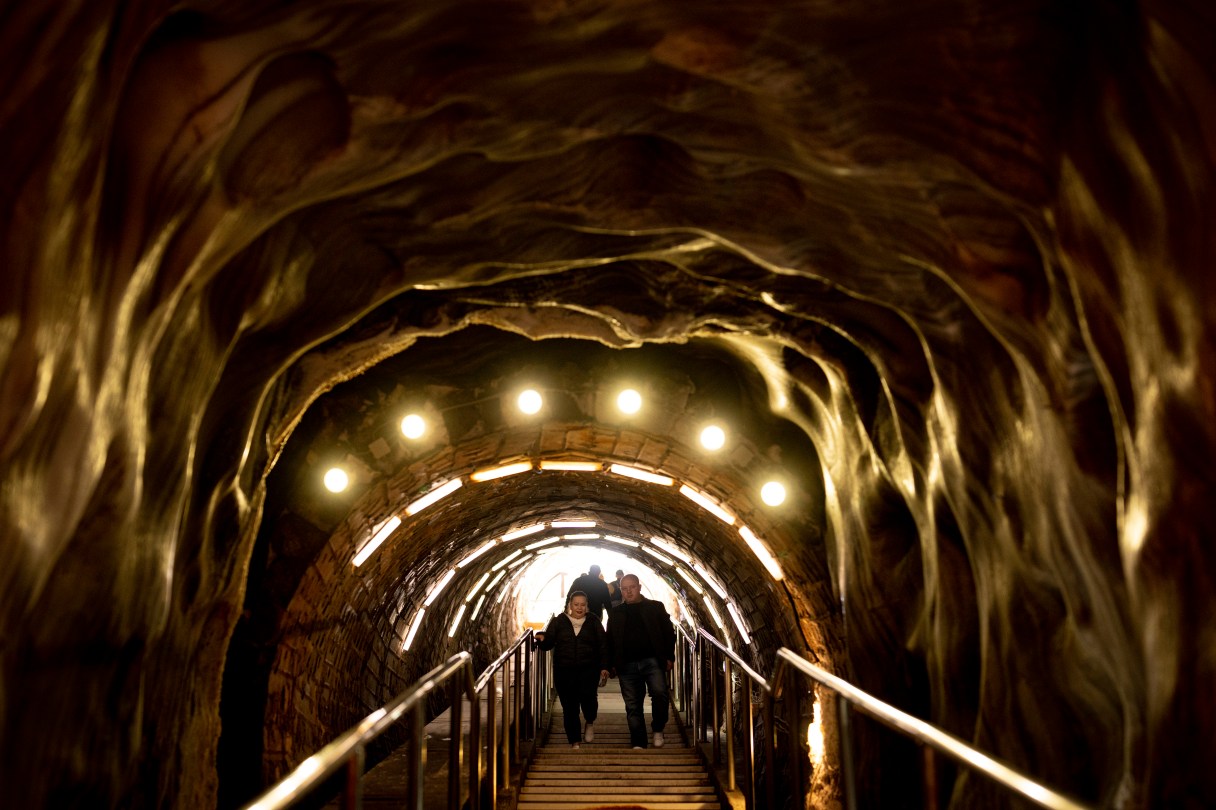
People walk in an access gallery at the Salina Turda, a former salt mine turned touristic attraction, now listed by emergency authorities as a potential civil defense shelter in Turda, central Romania, Monday, Oct. 17, 2022. Fighting around Ukraine's nuclear power plants and Russia's threats to use nuclear weapons have reawakened nuclear fears in Europe. This is especially felt in countries near Ukraine, like Poland, where the government this month ordered an inventory of the country's shelters as a precaution. (AP Photo/Vadim Ghirda)
People walk in an access gallery at the Salina Turda, a former salt mine turned touristic attraction, now listed by emergency authorities as a potential civil defense shelter in Turda, central Romania, Monday, Oct. 17, 2022. Fighting around Ukraine's nuclear power plants and Russia's threats to use nuclear weapons have reawakened nuclear fears in Europe. This is especially felt in countries near Ukraine, like Poland, where the government this month ordered an inventory of the country's shelters as a precaution. (AP Photo/Vadim Ghirda) People walk in an access gallery at the Salina Turda, a former salt mine turned touristic attraction, now listed by emergency authorities as a potential civil defense shelter in Turda, central Romania, Monday, Oct. 17, 2022. Fighting around Ukraine's nuclear power plants and Russia's threats to use nuclear weapons have reawakened nuclear fears in Europe. This is especially felt in countries near Ukraine, like Poland, where the government this month ordered an inventory of the country's shelters as a precaution. (AP Photo/Vadim Ghirda)

WARSAW, Poland (AP) — Two stories beneath a modern steel production plant on Warsaw’s northern edge lies an untouched Cold War relic: a shelter containing gas masks, stretchers, first aid kits and other items meant to help civil defense leaders survive and guide rescue operations in case of nuclear attack or other disasters.

A map of Europe on a wall still shows the Soviet Union — and no independent Ukraine. Old boots and jackets give off a musty odor. A military field switchboard warns: “Attention, your enemy is listening.”

Until now, nobody had seriously considered that the rooms built in the 1950s — and now maintained as a “historical curiosity” by the ArcelorMittal Warszawa plant, according to spokeswoman Ewa Karpinska — might one day be used as a shelter again. But as Russia pounds Ukraine, with shelling around a nuclear power plant and repeated Russian threats to use a nuclear weapon, the Polish government ordered an inventory this month of the 62,000 air raid shelters in the country.

The war has triggered fears across Europe, and these are especially felt in countries like Poland and Romania that border Ukraine and would be highly vulnerable in case of a radiological disaster.

After the Polish government order, firefighters visited the steel plant’s shelter last week and listed it in their registry. Warsaw’s leaders said the city’s subway and other underground shelters could hold all its 1.8 million residents and more in the case of an attack with conventional weapons.