
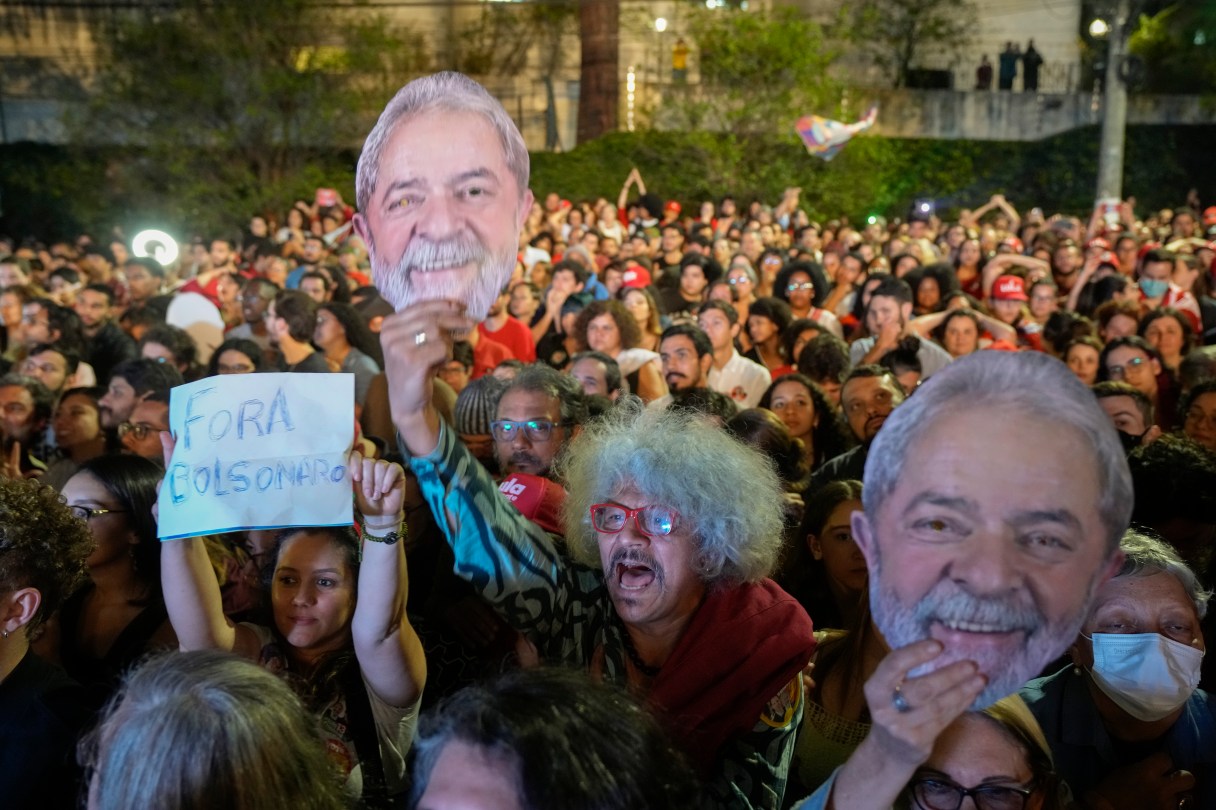
RIO DE JANEIRO (AP) — Brazilian voters are being bombarded by online misinformation less than a week before they pick their next leader.
People on social media say, wrongly, that the leftist candidate in Brazil’s presidential election plans to close down churches if elected. There are lies that Luiz Inácio Lula da Silva wants to let men use public-school restrooms next to little girls. And they’re falsely alleging that right-wing President Jair Bolsonaro has made comments confessing to cannibalism and pedophilia.
Baseless and politically motivated rumors are whipping through social media in Latin America’s largest democracy, roiling Brazilian politics much as U.S. politics has been roiled. The onslaught of fake rumors helped prompt Brazil last week to enact what some experts call the strictest limits on speech in the country’s young democracy.
It’s a conundrum posed by social media across the world, especially in countries wrangling with the intersection between modern technology and free speech. Brazil has adopted a particularly heavy-handed approach. Experts say that in doing so, authorities have raised questions about the country’s commitment to free speech.
“What is happening in Brazil, on Facebook, on YouTube and other platforms looks awfully similar to what was happening in the U.S. around the 2020 election,” said Vicky Wyatt, a campaign director at the U.S.-based activist group SumOfUs. “An individual post might not have that much reach, but cumulatively over time, having this constant drip-drip has negative consequences.”