
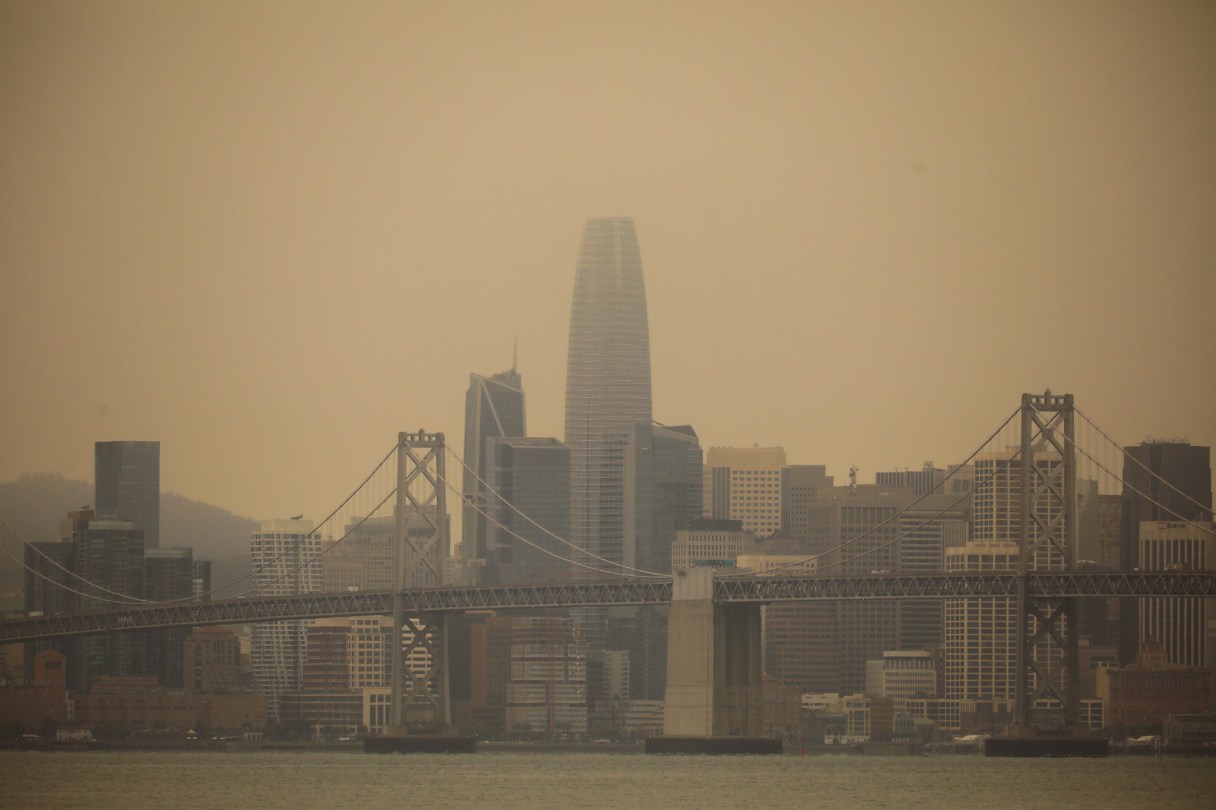
Two years ago the sky above my San Francisco Bay Area home was a dark pumpkin orange from wildfire smoke. The air smelled of wood fire, and gray ash covered my car. Today the bay’s waters are dark brown from a harmful algal bloom and the air smells of decay and dead fish.
Both incidents, like the heat dome California’s been suffering under since last week, have links to climate change. It used to be that climate emergencies happened somewhere else. But now they’re coming to a neighborhood near you.
We could have prevented it, but we failed to do what was required.
With the Inflation Reduction Act in August, President Joe Biden signed the first major climate bill in U.S. history. We need to view its provisions and incentives less as putting an end to heat waves, wildfires and algal blooms and more as triage — doing what we can while we can to salvage what we might.