
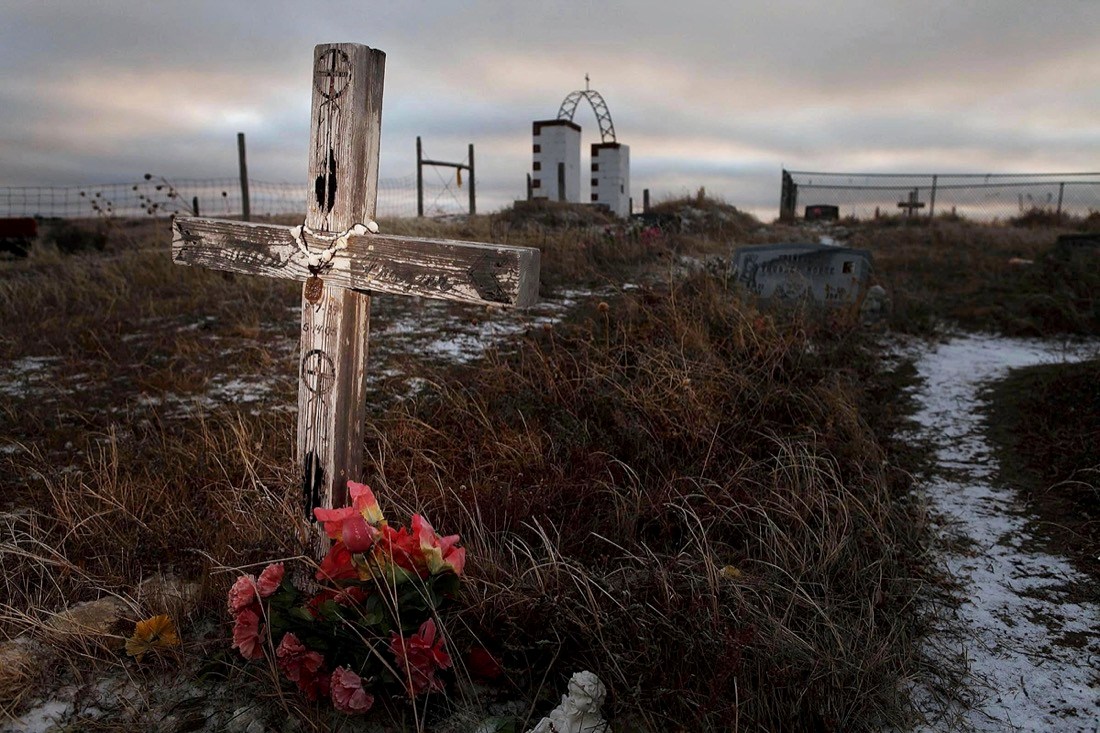
SIOUX FALLS, S.D. (AP) — Two American Indian tribes in South Dakota have joined forces to purchase 40 acres around the Wounded Knee National Historic Landmark, the site of one of the deadliest massacres in U.S. history.
The Oglala Sioux and the Cheyenne River Sioux said the purchase of the land on the Pine Ridge Indian Reservation was an act of cooperation to ensure the area was preserved as a sacred site. More than 200 Native Americans — including children and elderly people — were killed at Wounded Knee in 1890. The bloodshed marked a seminal moment in the frontier battles the U.S. Army waged against tribes.
“It’s a small step towards healing and really making sure that we as a tribe are protecting our critical areas and assets,” Oglala Sioux Tribe President Kevin Killer told The Associated Press.
The tribes agreed this week to petition the U.S. Department of the Interior to take the land into trust on behalf of both tribes. The Oglala Sioux tribe will pay $255,000 and the Cheyenne River Sioux tribe will pay $245,000 for the site, Indian Country Today reported. The title to the land will be held in the name of the Oglala Sioux tribe.
Marlis Afraid of Hawk, a member of the Cheyenne River Sioux Tribe whose grandfather, Albert Afraid of Hawk, survived the 1890 massacre as a 13-year-old boy, said she was overjoyed to see the tribes take ownership. She said she carries on the oral tradition of telling her grandchildren how her grandfather survived by fleeing through a ravine after a rifle held by a U.S. calvary soldier failed to fire at him.