
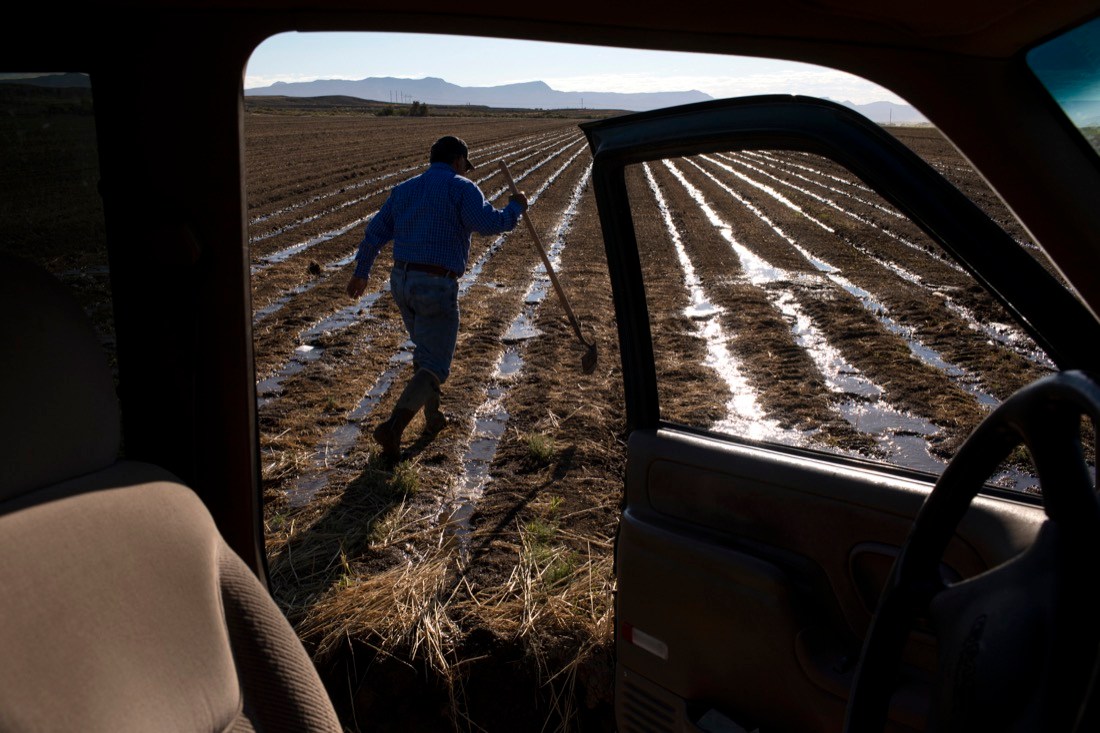
LOMA, Colo. (AP) — Under the blazing afternoon sun, Joe Bernal navigates a shiny-green John Deere tractor onto a dirt road a few miles north of downtown Fruita. Bernal is headed to cut hay in a field a few hundred feet down the road. On his way, he points out the land his family has acquired over the years. His grandparents had 150 acres over there. His parents bought this land here. His great grandparents, who showed up in 1925, lived in a house right there.
Surrounding Bernal’s land are the vistas of the Grand Valley, a strip of high desert situated on Colorado’s Western Slope marked by dusty mesas and cliffs and the winding, ever-present Colorado River, which plunges down from the mountains to the east. Grand Valley farmers and ranchers use the water to irrigate tens of thousands of acres, growing everything from peaches and corn to wheat and alfalfa.
But since 2000 flows on the river have declined 20% and water levels at Lake Powell and Lake Mead have dropped to less than 30% of their combined storage. With the river overtaxed, Grand Valley farmers now face some of the most urgent questions regarding the future of water in Colorado and the West. Questions about how agriculture, which accounts for about 70% of the state’s Colorado River water use, can be more efficient, whether water can be conserved and banked in Lake Powell and what, if anything, to do about someone looking to make a buck on the state’s most precious resource, so-called water speculators.
EDITOR’S NOTE: This is part of a collaborative series on the Colorado River on the eve of the Colorado River Compact, signed nearly 100 years ago. The Colorado Sun, The Associated Press, The Albuquerque Journal, The Salt Lake Tribune, The Arizona Daily Star and The Nevada Independent are working together to explore the pressures on the river in 2022.
In the Grand Valley, much of the concern around private, profit-driven investment in the river has focused on a New York investment firm called Water Asset Management, or WAM. Run by co-founder Disque Dean Jr., son of a New York real estate developer, WAM has spent millions buying farmland with valuable water rights in this part of Colorado. The company is the largest landowner in the influential Grand Valley Water Users Association, which operates the 55-mile Government Highline Canal. Western Slope farmers rely on the canal’s senior water rights to irrigate about 24,000 acres of farmland.