
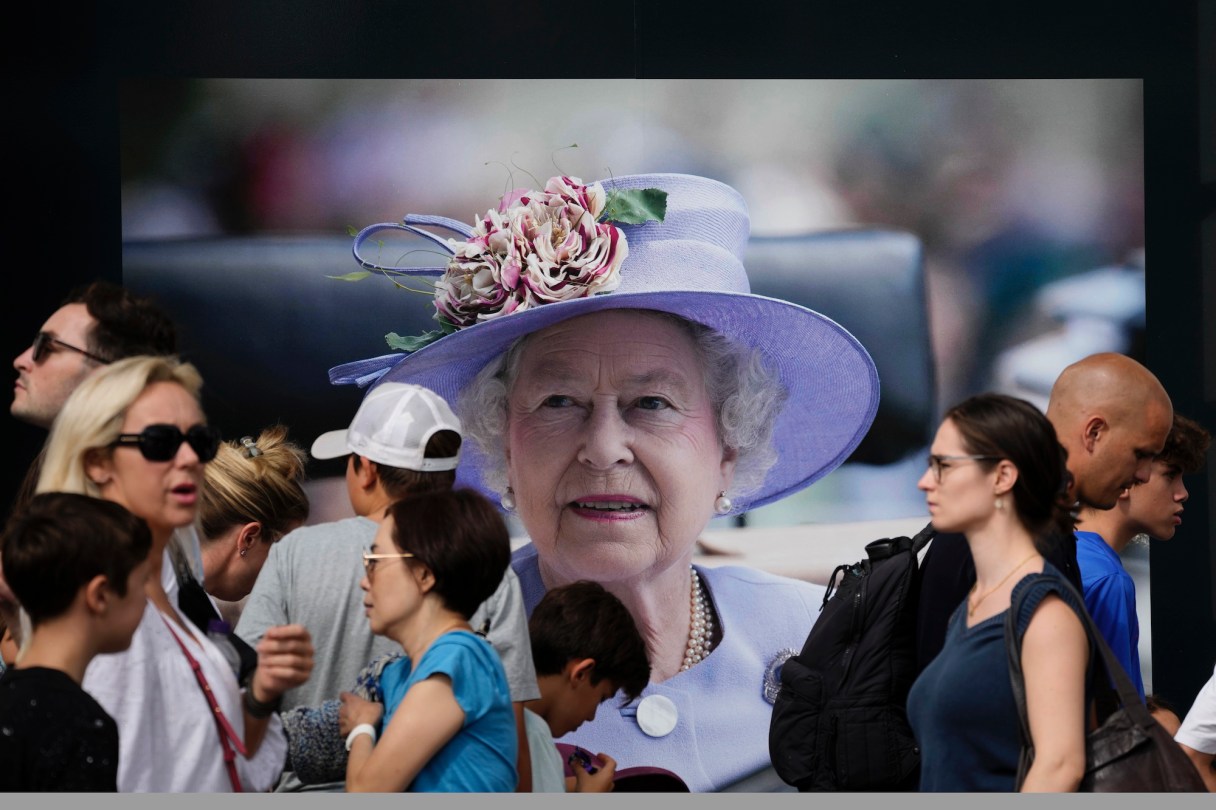
The Queen has died.
When those words were heard and repeated, over and over Sept. 8, people around the world knew immediately which queen. In fact, few are alive today who can remember a time when she was not on Britain’s throne. She lived to 96, not only the longest-reigning monarch in British history but the second-longest-reigning monarch in all of history, surpassed only by King Louis XIV of France, the “Sun King.” Among the many anecdotes that put her life in historical context, Elizabeth II was queen for a full third of the existence of the United States of America as a nation.
When Elizabeth ascended to power, Winston Churchill was the prime minister. Just two days before she died, in a final act of royal duty, Elizabeth received a 15th person into that high office. When she began her rule in 1952, there was a British Empire, and not just in name. Though every nation within the empire would gain independence, she remained head of state of a dozen of them, including Canada, Australia, New Zealand and other smaller countries around the world.
Elizabeth’s historic tenure as queen might have never happened, except for a domestic turmoil that has never quite seemed to leave the House of Windsor alone. Her father, George VI, assumed the throne only because her uncle abdicated it for an illicit romance. Her sister’s temperament did not, shall we say, “fit” her royal duties. Her eldest son, now King Charles III, entered a loveless marriage in the midst of his own extramarital affairs, while her second son ruined his place in the world by falling in with Jeffrey Epstein. Her grandson Prince Harry is full of bitter words and accusations about the royal family.
In this way, the royal family was a reflection of changes seen across the Western world during the Queen’s reign. Marriage rates in the U.K. have dropped by double digits in the last few decades, and divorces have increased by several orders of magnitude. While the Britain she inherited in her youth famously stood up for liberty and democracy against tyranny, corporate and government powers often enforce conformity and silence. Weekly church attendance in Britain has dropped to less than a million each week in a population of nearly 70 million. Add in technological change, war, globalization, populism, the rise and fall of global powers, and it may be that the Queen’s most remarkable achievement was preserving the monarchy as a legitimate institution amid the flux and chaos of the last few decades.