
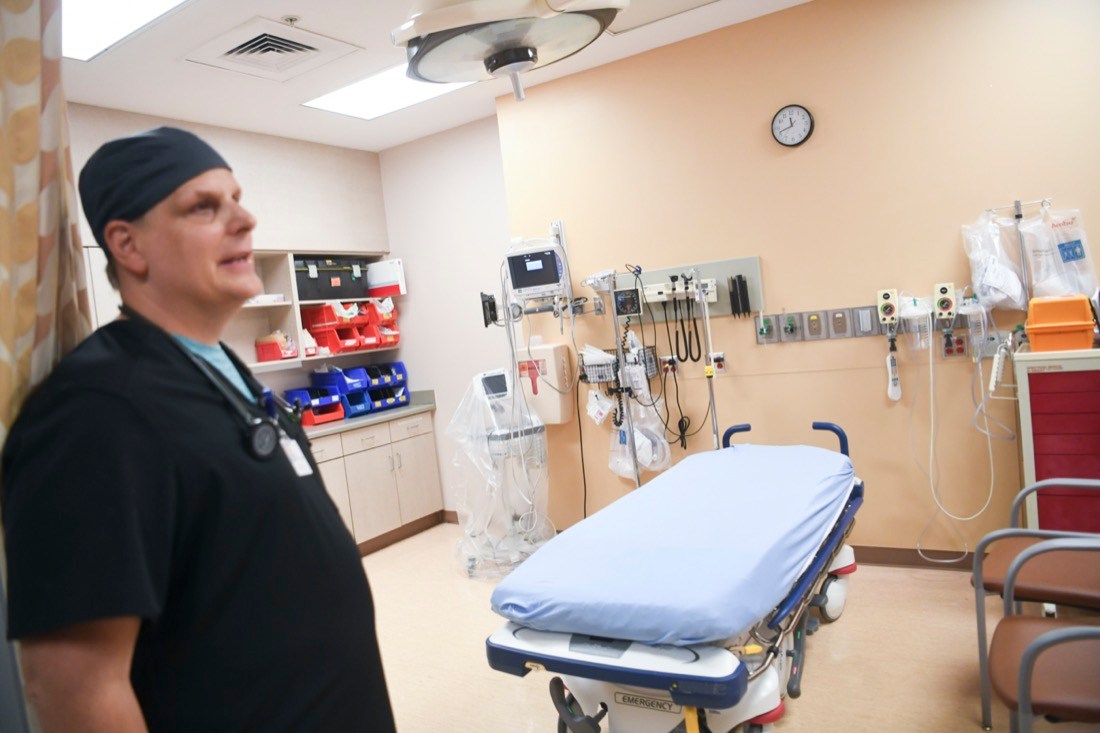
KNOXVILLE, Tenn. (AP) — During the peak COVID-19 surges of 2020, patients sat in the lobby of Fort Loudoun Medical Center in Lenoir City with IVs pumping fluids and nutrients into their veins.
Nurses checked blood pressure and other vital signs. Doctors evaluated patients with sprained ankles or nausea, and ordered medicines to alleviate pain or CAT scans to better understand their patients’ ailments.
The hospital’s hallways were lined with beds filled with patients experiencing fever, heart issues, or abdominal pain while hospital staff re-gloved, re-gowned, and re-masked, adjusting to the ever changing protocols and performing tasks outside their job description.
“This place was just a battle zone,” said Dr. Erik Geibig, the emergency department director at Fort Loudoun Medical Center. “I mean, you just had patients strung out all the way through.”
While Geibig, 51, was leading his team through an unprecedented global pandemic, he was also fighting a more personal battle.