
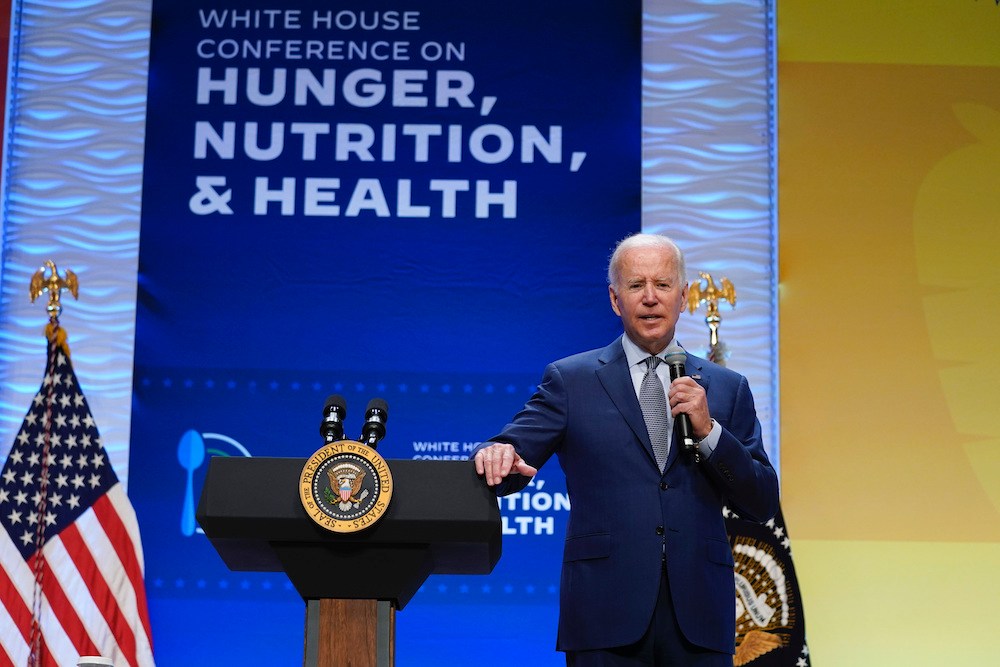
Staff members for Tennessee nutrition advocacy groups who attended the White House Conference on Hunger, Nutrition and Health hope the event will galvanize the movement to end hunger for families, seniors and other low-income populations after the pandemic.
On Wednesday, the Biden administration hosted the conference and invited policymakers and nutrition advocates from across the nation to discuss a coordinated and accelerated strategy in ending hunger, improving access to nutrition and physical activity, and closing the disparities that prevent vulnerable groups from accessing government programs.
Attendees were invited to share their testimonials on how programs have benefited people eligible for food programs and their collaboration with federal officials and national organizations in nutrition advocacy. Signe Anderson, the director of nutrition advocacy for the Tennessee Justice Center, addressed some of the barriers faced by low-income communities and how pandemic-related benefits greatly assisted in providing access to food. Anderson was joined by Memphis Tilth, an organization dedicated to sustainable food systems for local communities.
Anderson said one benefit of the pandemic was that free and accessible meals became a staple in keeping vulnerable populations fed.
When the pandemic caused schools to shut down or transition to remote learning, families and children who relied on school meals were able to access Pandemic-Electronic Benefits Transfer, an emergency program that provided funds to replace the lost meals.