
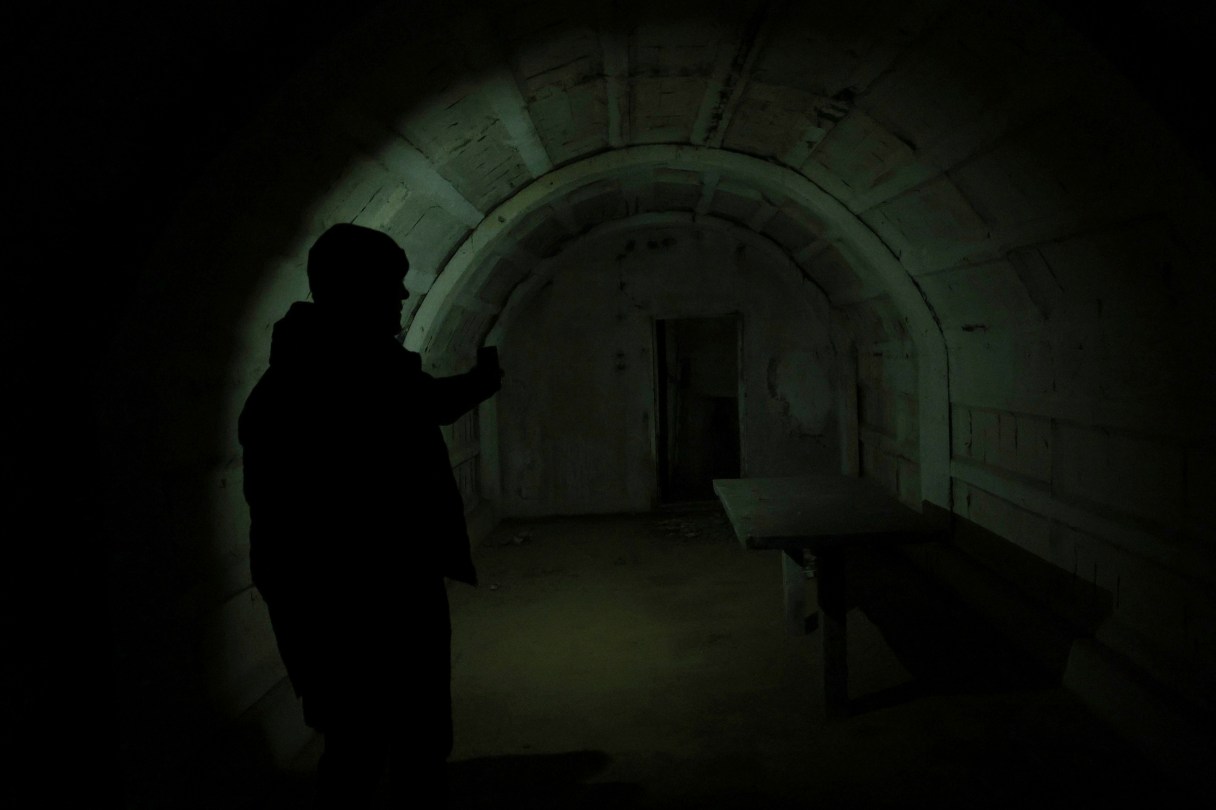
KUKES, Albania (AP) — If you’d like to walk for miles in concrete burrows built to defend an isolationist totalitarian regime that nobody wanted to attack, Kukes in northeastern Albania is the place for you.
The small Balkan country’s post World War II communist dictatorship reveled in massive defensive works; the countryside is still littered with the crumbling remains of 175,000 concrete mini-bunkers — again built to stop imaginary invaders. But Kukes’ tunnels take the prize.
Dug from the 1970s to the early 1990s — just in time for the communist regime’s collapse — the underground network was meant to house the town’s entire population of 16,000 for up to six months in case of war. Equipped with amenities running from a prosecutor’s office to a maternity clinic, it was Albania’s biggest fortification project with tunnels extending for up to seven kilometers (4 miles).
Now, local authorities hope to turn it into a tourist attraction, with the help of European Union funding. By the end of the year, they say, a multi-room command center and a long tunnel leading to it from the town hall should be accessible.
Post-communist Albania remains one of Europe’s poorest countries. Tourism is a major earner, generating 17% of GDP in 2021, while arrivals increased 33% in 2022 to reach some 7.5 million people.