
Monday, November 16, 2026Nov 16

Immigration reform stalled decade after Gang of 8’s big push

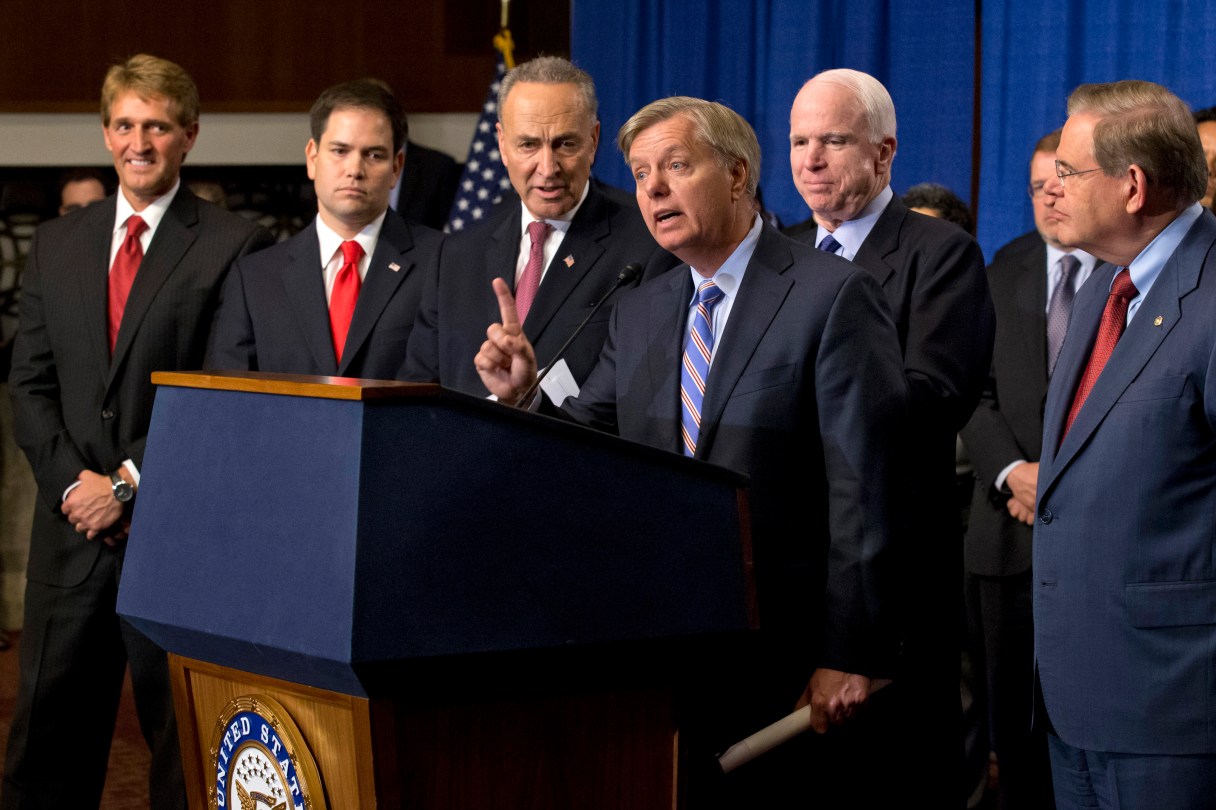
FILE - Sen. Lindsey Graham, R-S.C., center, speaks of immigration reform legislation outlined by the Senate's bipartisan "Gang of Eight" that would create a path for the nation's 11 million unauthorized immigrants to apply for U.S. citizenship, April 18, 2013, on Capitol Hill in Washington. From left are, Sen. Jeff Flake, R-Ariz., Sen. Marco Rubio, R-Fla., Sen. Charles Schumer, Graham, R-S.C., Sen. John McCain, R-Ariz., Sen. Robert Menendez, D-N.J., and Senate Majority Whip Richard Durbin, D-Ill. (AP Photo/J. Scott Applewhite, File)


MIAMI (AP) — Ten years ago this month, Sen. Chuck Schumer declared, “We all know that our immigration system is broken, and it’s time to get to work on fixing it.” Sen. John McCain quoted Winston Churchill. But it was Lindsey Graham who offered the boldest prediction.

“I think 2013 is the year of immigration reform,” the South Carolina Republican said.

It wasn’t. And neither has any year since those “Gang of Eight” senators from both parties gathered in a Washington auditorium to offer hopeful pronouncements. In fact, today’s political landscape has shifted so dramatically that immigrant advocates and top architects of key policies over the years fear that any hope of an immigration overhaul seems further away than ever.

Many Republicans now see calling for zero tolerance on the border as a way to animate their base supporters. Democrats have spent the last decade vacillating between stiffer border restrictions and efforts to soften and humanize immigration policy — exposing deep rifts on how best to address broader problems.