
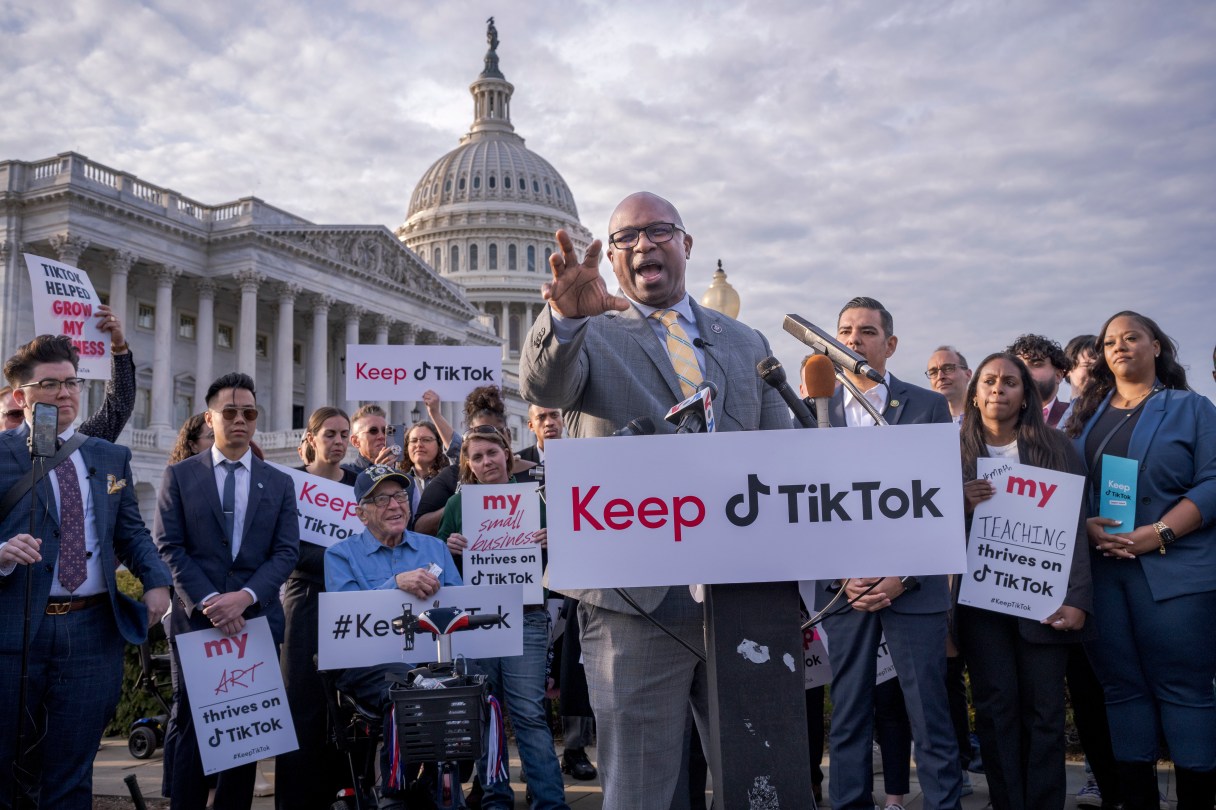
WASHINGTON (AP) — Rep. Jeff Jackson of North Carolina has used it to explain the complex fight over raising the debt limit. Rep. Robert Garcia of California has used it to engage with members of the LGBTQ+ community. And Sen. Bob Casey of Pennsylvania has used it to give an overview of Election Day results.
As pressure against TikTok mounts in Washington, the more than two dozen members of Congress — all Democrats — who are active on the social media platform are being pushed by their colleagues to stop using it. Many defend their presence on the platform, saying they have a responsibility as public officials to meet Americans where they are — and more than 150 million are on TikTok.
“I’m sensitive to the ban and recognize some of the security implications. But there is no more robust and expeditious way to reach young people in the United States of America than TikTok,” Democratic Rep. Dean Phillips of Minnesota told The Associated Press.
Yet the lawmakers active on TikTok remain a distinct minority. Most in Congress are in favor of limiting the app, forcing a sale to remove connections to China or even banning it outright. The U.S. armed forces and more than half of U.S. states have already banned the app from official devices, as has the federal government. Similar bans have been imposed in Denmark, Canada, Great Britain and New Zealand, as well as the European Union.