
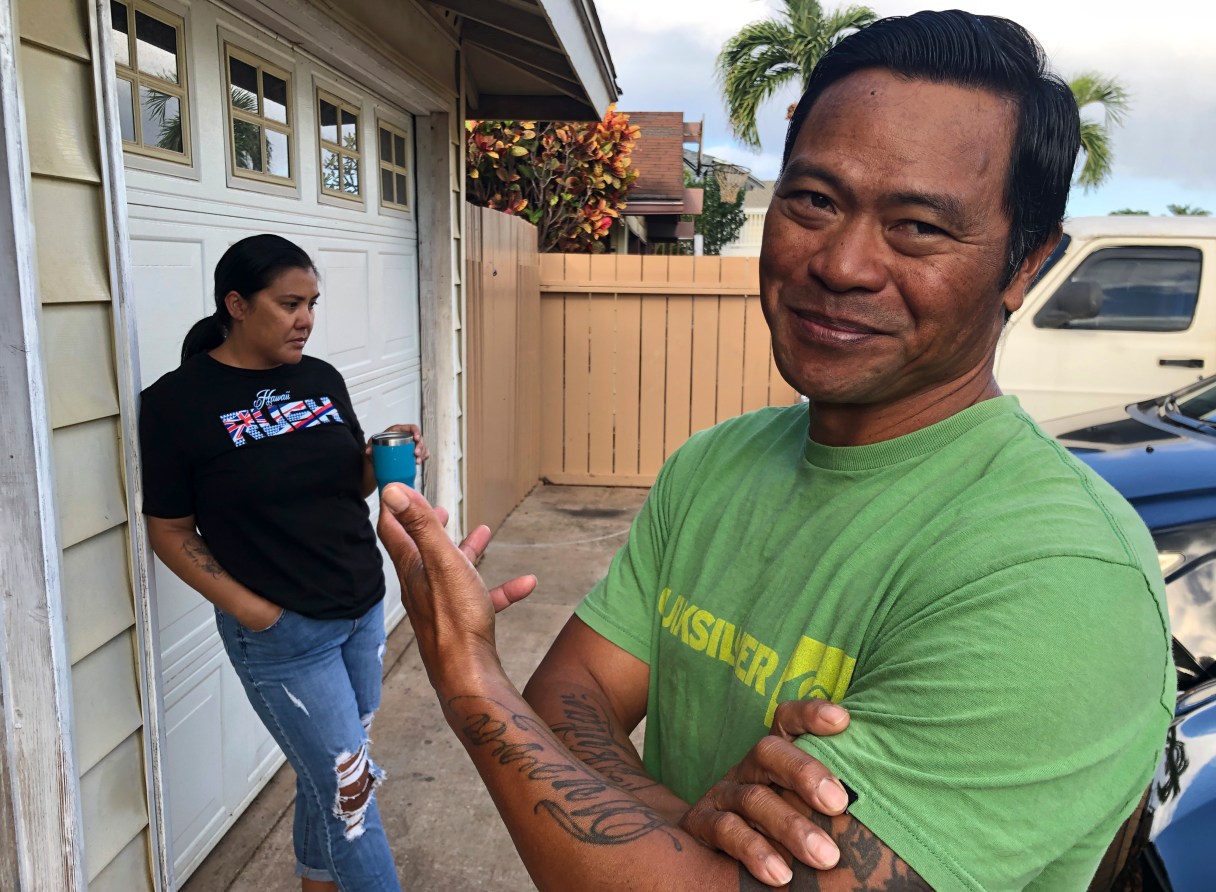
WAIANAE, Hawaii (AP) — Tedorian Gallano would like to buy a house for his wife and three youngest children in Hawaii, but real estate prices soared so high eight years ago he moved his family back to his childhood home outside Honolulu — and last year, his older brother followed suit.
Now, eight members from three generations of Gallano’s extended family share one bathroom in a house that’s so packed they’ve jerry-rigged an extra bedroom in the garage. Buying a home is “pretty much unattainable for the average working family” in Hawaii, the 49-year-old carpenter said.
“We always seem to have these hot markets that drive the prices up, and then it’s the hardworking local families that cannot buy houses who are kind of left out,” Gallano said.
Gallano’s situation is emblematic of the acute affordable housing crisis afflicting Hawaii, a problem so deep that there’s now widespread concern that many of Hawaii’s children won’t be able to afford to live there as adults. Many residents are fearful their entire state — a diverse and culturally vibrant society with unique values and a complex identity — is being gentrified before their eyes as home prices soar.