
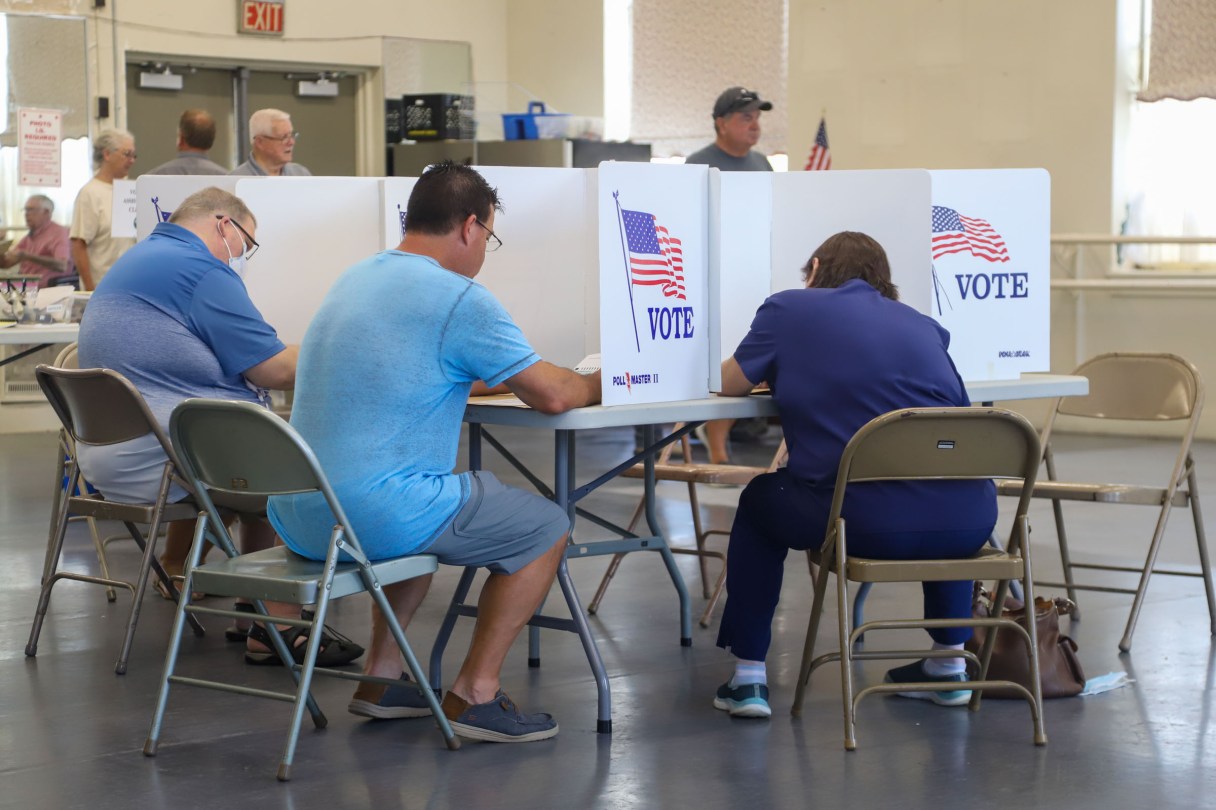

Tennessee state law says a voter may cast a ballot in a primary election if “at the time the voter seeks to vote, the voter declares allegiance” to that party.
To us, that means if voters feel led to choose the best of several candidates in one party in a primary and then vote for someone in the other party in the general election, so be it.
Our state does not have party registration, so it’s really up to voters to whom they give their allegiance in each election.
It was common until this century in Tennessee for voters, especially with local offices in general elections, to select a Democrat here and a Republican there. Now, with Republicans holding most statewide offices and many constitutional offices in the state’s 95 counties, voters don’t swing back and forth as much.
But back in the day, Democrats living in Republican strongholds often had to hold their nose and vote for the best GOP candidate when their party didn’t field one, and the same was true for Republicans living in a Democratic district.
Now, a bill in the legislature wants to, in our minds, confuse things a bit. It would have yellow signs displayed prominently in every polling place that warn voters it is a crime to vote in a primary without being a bona fide party member of the political party associated with that primary.
But that’s true only as far as it goes. The law does says that, but then it adds what we noted above — that a voter can cast a ballot in a primary if at the time of the vote the voter declares allegiance to that party.
In our minds, that doesn’t mean from then until until death, or from then through the general election, or from then through a five-year period. It only means at this time, for this election, their allegiance is to this one party.
Legislators in this session already defeated a measure that would have forced voters into a political party, and we think this particular measure deserves that same ending.
If Tennessee were a closed primary state, where voters could only vote in the primary associated with the party with which they were registered, such signs (and the misdemeanor charge that carries up to 30 days in jail and/or a fine of up to $50) would make sense.
Senate sponsor Mark Pody, R-Lebanon, says the intent is to “remind people they have to vote in the proper political party that they’re in.”
But that’s not true since there’s no party registration.
Asked during a committee hearing on the bill whether people have been prosecuted for violating the law (and not voting for the bona fide party with which they are affiliated), Pody said he was not aware of any prosecutions.
The sponsor and supporters likely want to eliminate instances like the Hamilton County mayor’s race last year when it was alleged that usually reliable Democratic voters were urged to vote in the Republican primary for Weston Wamp. Wamp, who was running third in the race according to polls, squeaked to a 318-vote victory out of 40,709 votes cast.
One might say such tactics, if proven true, were unethical, but state law — with the declared allegiance clause — allows them.
Democrats in the legislative hearing complained that such signs might scare voters from casting a ballot, fearing making a well-intentioned crossover vote. They said their voters also might not understand what a bona fide member of a party was, and if they were one.
The bill, nevertheless, was approved 7-2 in the Senate State and Local Government Committee. In the House, it has been placed behind the budget, meaning it is not likely to be considered until after the budget is passed, which is usually one of the last things legislators do before adjourning.
In this case, we hope the behind-the-budget status in the House means they won’t consider it (and it won’t advance). Tennessee has had enough trouble getting its citizens to vote without sidelining them with a yellow card with what would at the most be a half truth. Let the people vote in whichever primary they choose with their allegiance on the day they vote.