
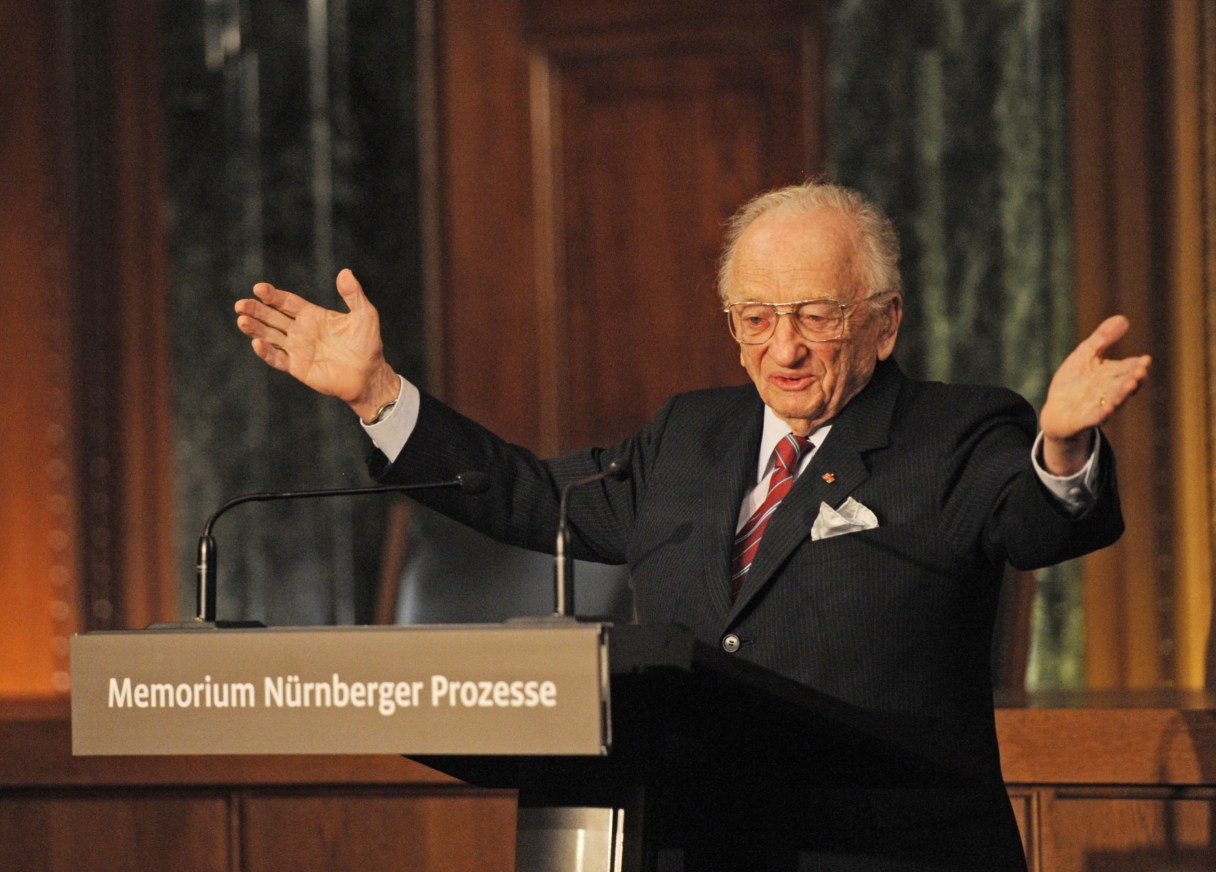
Ben Ferencz, the last living prosecutor from the Nuremberg trials, who tried Nazis for genocidal war crimes and was among the first outside witnesses to document the atrocities of Nazi labor and concentration camps, has died. He had just turned 103 in March.
Ferencz died Friday evening in Boynton Beach, Florida, according to St. John’s University law professor John Barrett, who runs a blog about the Nuremberg trials. The death also was confirmed by the United States Holocaust Memorial Museum in Washington.
“Today the world lost a leader in the quest for justice for victims of genocide and related crimes,” the museum tweeted.
Born in Transylvania in 1920, Ferencz immigrated as a very young boy with his parents to New York to escape rampant antisemitism. After graduating from Harvard Law School, Ferencz joined the U.S. Army in time to take part in the Normandy invasion during World War II. Using his legal background, he became an investigator of Nazi war crimes against U.S. soldiers as part of a new War Crimes Section of the Judge Advocate’s Office.
When U.S. intelligence reports described soldiers encountering large groups of starving people in Nazi camps watched over by SS guards, Ferencz followed up with visits, first at the Ohrdruf labor camp in Germany and then at the notorious Buchenwald concentration camp. At those camps and later others, he found bodies “piled up like cordwood” and “helpless skeletons with diarrhea, dysentery, typhus, TB, pneumonia, and other ailments, retching in their louse ridden bunks or on the ground with only their pathetic eyes pleading for help,” Ferencz wrote in an account of his life.