
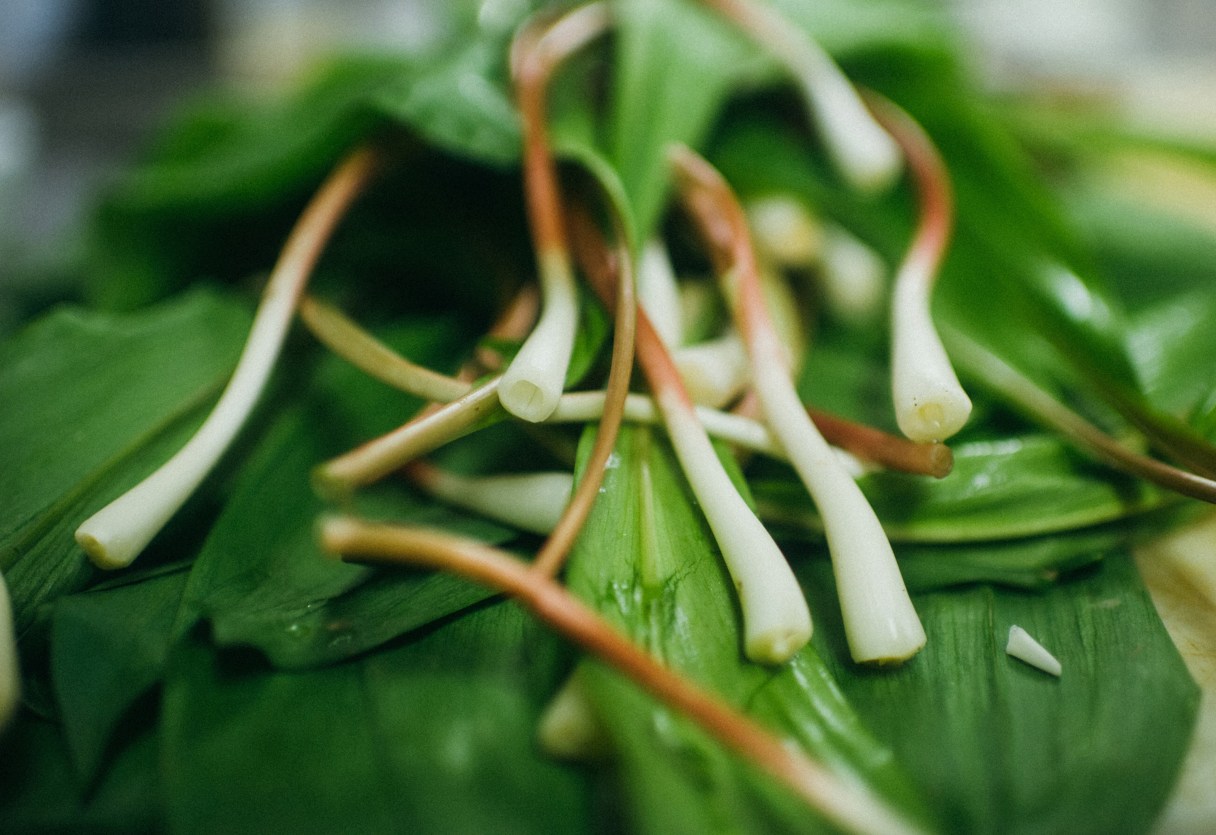
PITTSBURGH — In these first sunny, wonderfully balmy days of spring, nothing hits the spot — or nose — quite like ramps.
One of the earliest spring plants to emerge in Midwestern and Eastern deciduous forests, these greens that taste like a cross between onions and garlic are the culinary equivalent of a Taylor Swift concert ticket: If you dilly-dally, they’ll be gone before you can get your hands on them.
“I have people beating down the door before the season even begins,” says John Jackson, who has been foraging for himself for around eight years and for his mushroom business, Real Fungi, since 2018.
Sometimes called wild leeks or spring onions, Allium tricoccum is considered a cultural keystone Appalachian wild food. It’s been a spring delicacy in the Appalachian and Great Lakes regions of the U.S. and Canada for generations. While ramps appear in upscale restaurants and farmers markets in Pittsburgh, people are especially crazy about them in West Virginia and Tennessee, where you’ll find festivals and dinners almost every weekend during the harvest season, which runs roughly from March through May.
The country’s largest and longest-running ramp festival takes place around 200 miles south of Pittsburgh in Richwood, West Virginia. Feast of the Ramson will celebrate 83 years on Saturday. In Reliance, Tennessee, the Ramp Tramp Festival marks 65 years the same weekend.