
HARTFORD, Conn. (AP) — While Ameen Taylor feels fortunate he has a cooling tree cover in the front and back yards of his Detroit home, he knows it’s a different story for many residents of his hometown where neighborhoods often have little to no shade.
“To me, 70 degrees is fair weather, but when you’re walking somewhere or you’re around a neighborhood that don’t have trees, it will feel like it’s like 87, 90 degrees. That’s what it feel like,” said Taylor. “You’re exposed to more sun than you are shade.”
Like many cities in the U.S., parts of Detroit are packed with large amounts of impervious surfaces and heat-absorbing infrastructure like roads and bridges. Coupled with low levels of cooling tree cover, or canopy, it can make them dangerously hotter than the suburbs.
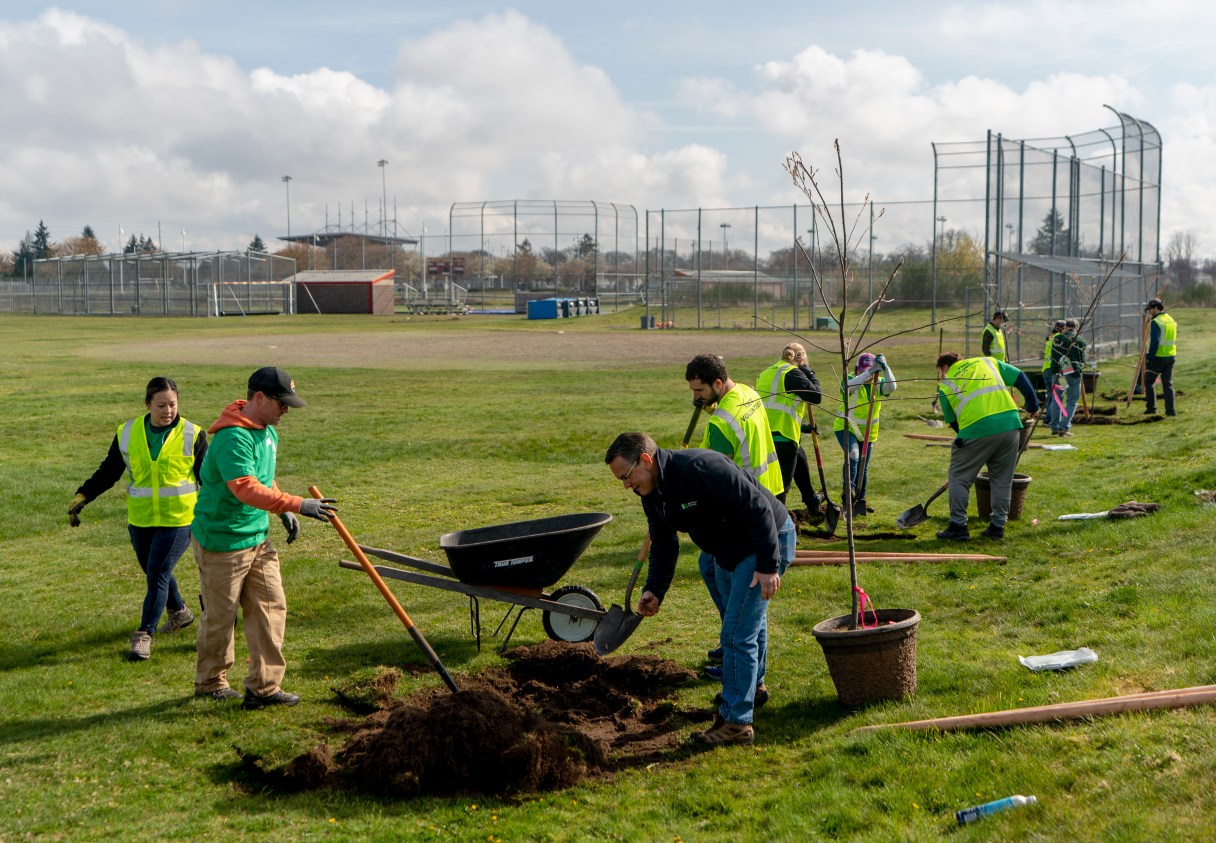
Such an inequity of tree cover is behind the historic $1.5 billion in President Joe Biden’s Inflation Reduction Act that’s set aside for the federal Forest Service Urban and Community Forestry Program to fund tree-planting projects over the next decade. With a focus on underserved communities, the initiative marks a massive increase from the roughly $36 million distributed annually to the program. Millions more for tree projects have also been available from Biden’s infrastructure law and COVID-19 relief funds.
Urban forestry advocates, who’ve argued for years about the benefits of trees in cities, see this moment as an opportunity to transform underserved neighborhoods that have grappled with dirtier air, dangerously high temperatures and other challenges because they don’t have a leafy canopy overhead. Advocates also predict this is the beginning of a long-term financial commitment to trees, especially amid dire warnings from scientists about global warming.