
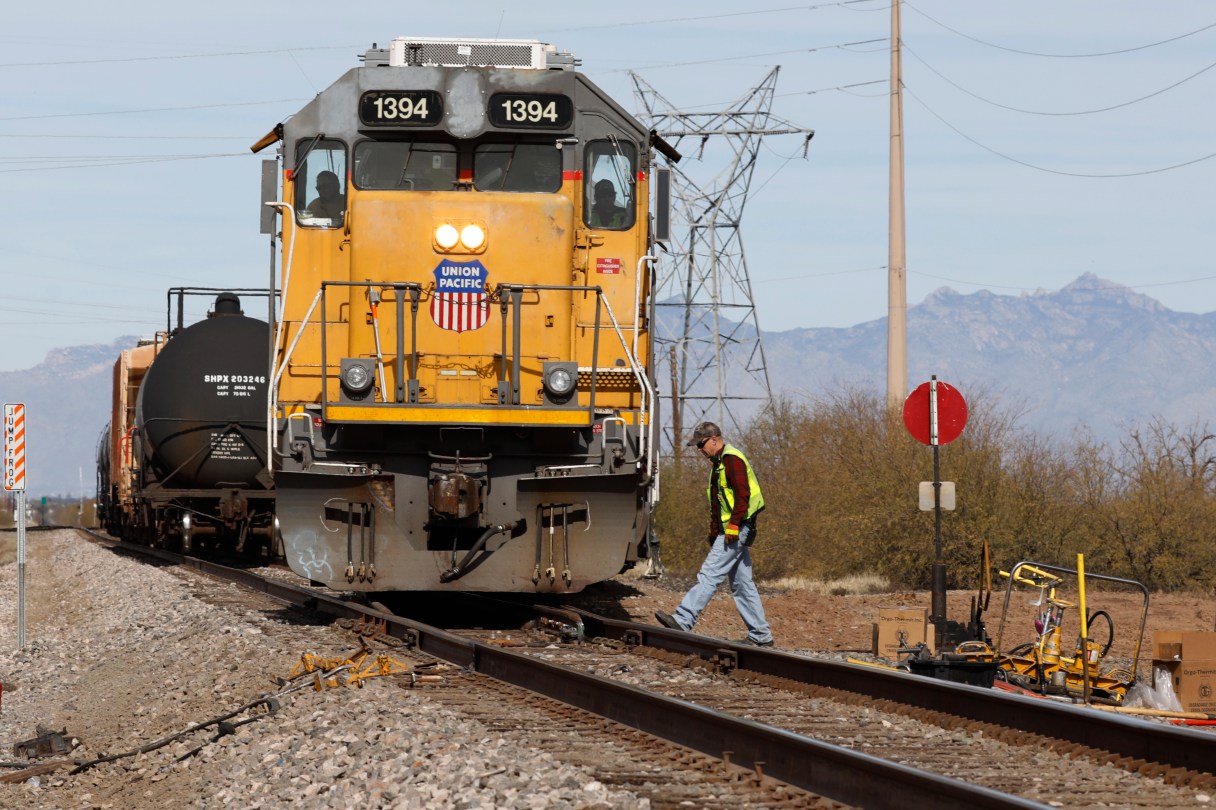
OMAHA, Neb. (AP) — Rail unions want railroads to take some of the billions they’re using every year to buy back their stock and spend it to improve safety in the wake of several high-profile derailments and hire more workers.
The 12 unions that represent all of the more than 100,000 workers across the industry said Friday that collectively the six biggest freight railroads spent over $165 billion on buybacks — well above the $119 billion they spent on upgrading and maintaining their track and equipment between 2015 and last year. At the same time, their safety record worsened as they cut costs and eliminated nearly one-third of all rail jobs.
“I think it has become increasingly apparent that the priorities of the railroads are out of whack,” said Greg Regan, president of the AFL-CIO’s Transportation Trades Department coalition that includes all the rail unions.
The fiery Feb. 3 derailment of a Norfolk Southern train that led to evacuations and health fears near the Ohio-Pennsylvania border, combined with a string of other derailments since then, triggered rising concerns about railroad safety and an host of reform proposals from Congress and regulators.
Unions say the recent derailments and the problems railroads have had keeping up with shipping demand highlight their concerns about how overwhelmed workers have become after extensive job cuts. They say inspections are being rushed with workers getting maybe a minute to check out each rail car and preventative maintenance may be neglected.