
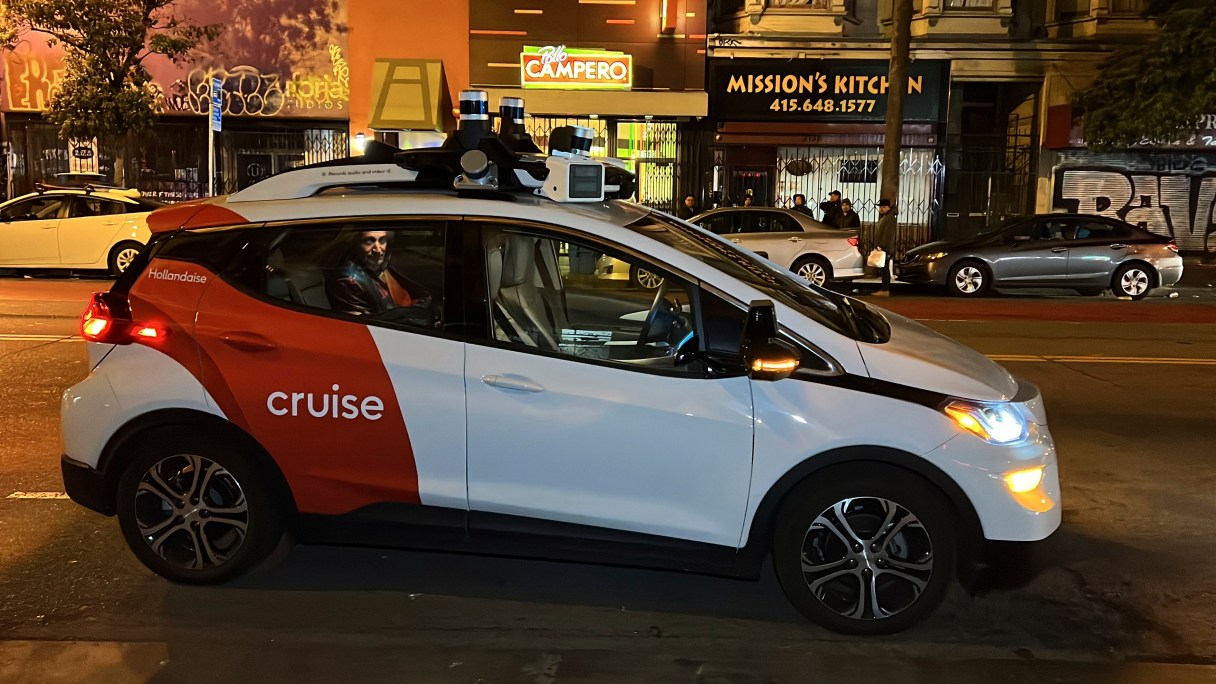
SAN FRANCISCO (AP) — I won’t forget the first time I took a ride in a car without anyone sitting in the driver’s seat.
It happened one night last September when a Chevy Bolt named Peaches picked me up outside a San Francisco bar. Our ensuing half-hour ride together produced, at first, a titillating display of technology’s promise. Then an unexpected twist made me worry that the encounter had turned into a mistake I would regret.
Peaches and I were getting along great for most of our time together as the car deftly navigated through hilly San Francisco streets similar to those that Steve McQueen careened through during a famous chase scene in the 1968 film “Bullitt.” Unlike McQueen, Peaches never exceeded 30 miles per hour (48 kilometers per hour) because of restrictions imposed by state regulators on a ride-hailing service operated by Cruise, a General Motors subsidiary, since it won approval to transport fare-paying passengers last June.
It was all going so smoothly that I was starting to buy into the vision of Cruise and Waymo, a self-driving car pioneer spun off from a Google project that is also trying launch a ride-hailing service in San Francisco.
The theory fueling the ambition is that driverless cars will be safer than vehicles operated by frequently distracted, occasionally intoxicated humans — and, in the case of robotaxis, be less expensive to ride in than automobiles that require a human behind the wheel.