
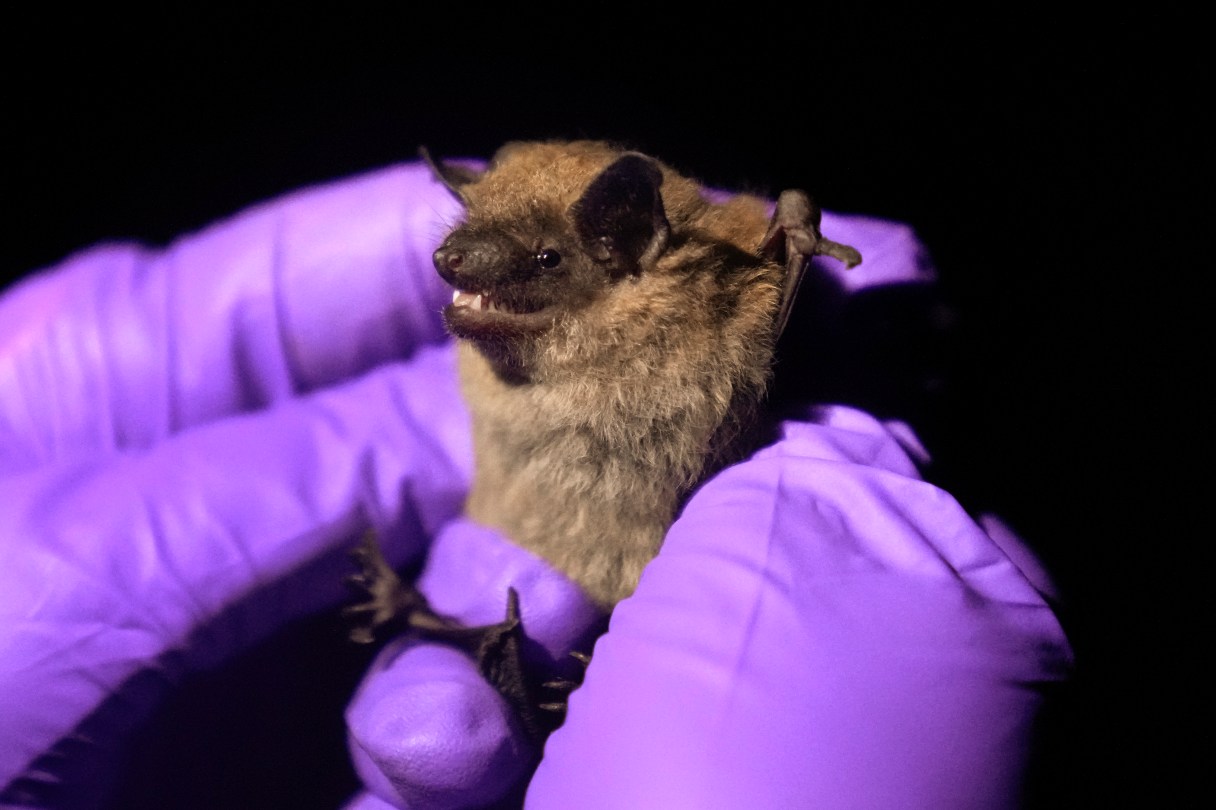
SHARON TOWNSHIP, Mich. (AP) — Biologist Ashley Wilson carefully disentangled a bat from netting above a tree-lined river and examined the wriggling, furry mammal in her headlamp’s glow. “Another big brown,” she said with a sigh.
It was a common type, one of many Wilson and colleagues had snagged on summer nights in the southern Michigan countryside. They were looking for increasingly scarce Indiana and northern long-eared bats, which historically migrated there for birthing season, sheltering behind peeling bark of dead trees.
The scientists had yet to spot either species this year as they embarked on a netting mission.
“It’s a bad suggestion if we do not catch one. It doesn’t look good,” said Allen Kurta, an Eastern Michigan University professor who has studied bats for more than 40 years.
The two bat varieties are designated as imperiled under the Endangered Species Act, the bedrock U.S. law intended to keep animal and plant types from dying out. Enacted in 1973 amid fear for iconic creatures such as the bald eagle, grizzly bear and gray wolf, it extends legal protection to 1,683 domestic species.