
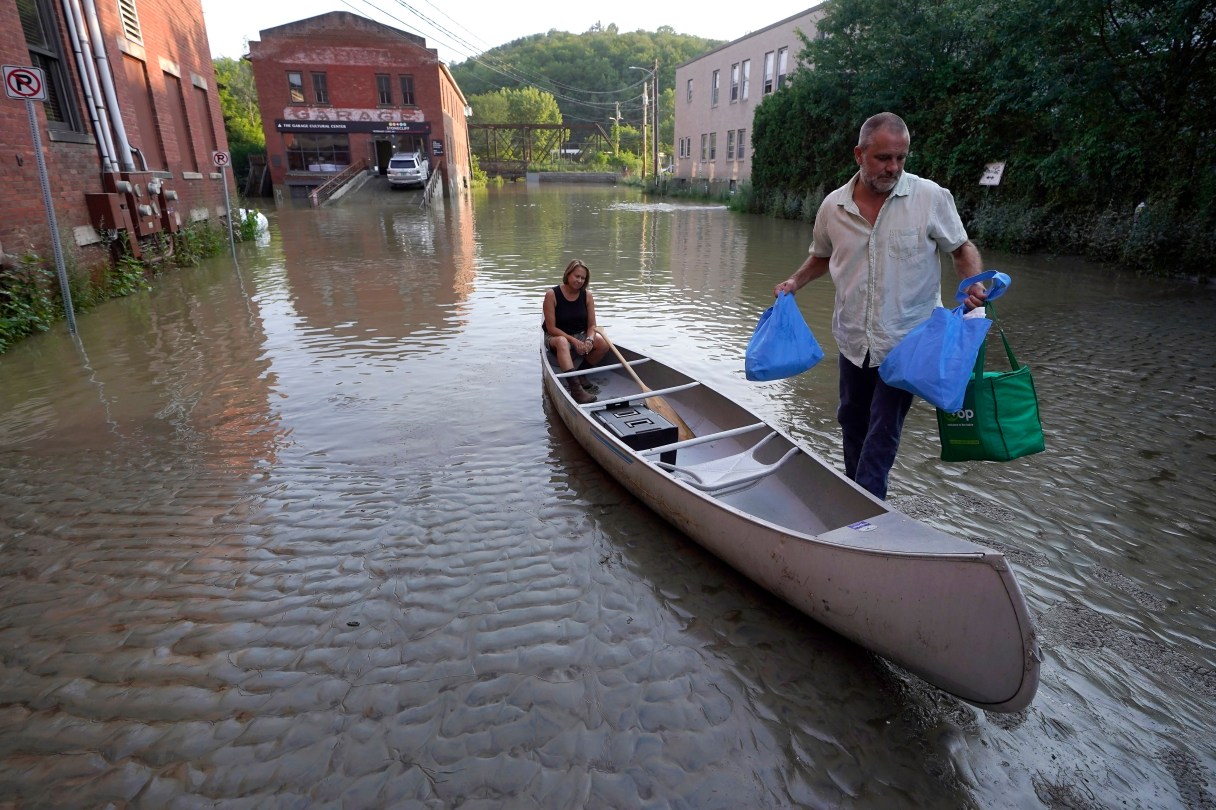
MONTPELIER, Vt. (AP) — A beloved bookstore in Vermont’s small capital city moved across the street to a new spot farther from the Winooski River after an ice jam sent river water into the store in 1992. A nearby office supply and gift store did the same in 2011 because it liked a different space that came with a bonus: it was higher and farther from the river.
But their moves to higher ground weren’t enough to save them from flooding after torrential rains in July caused what some saw as the state’s worst natural disaster since a 1927 flood that killed dozens of people and caused widespread destruction. Some communities suffered more severe flood damage this year than when Tropical Storm Irene ravaged the small, mountainous state in 2011.
“I think most people in this area were very concerned about climate change, but we also were a little pretty much thought we were a little safer here because we had not really suffered the drastic events that some other parts of the country have,” said Rob Kasow, co-owner of Bear Pond Books. “But I think now we’ve been a little disabused of the notion that Vermont is safe from climate change.”
Now the mostly gutted shops, restaurants and businesses that lend downtown Montpelier its charm are considering where and how to rebuild in an era when extreme weather is occurring more often. Vermont’s flooding was just one of several major flood events around the globe this summer that scientists have said are becoming more likely due to climate change.
“It’s definitely going to happen again,” said Lauren Oates of the Nature Conservancy of Vermont. “It’s not a question of if, but when and how bad next time.”