
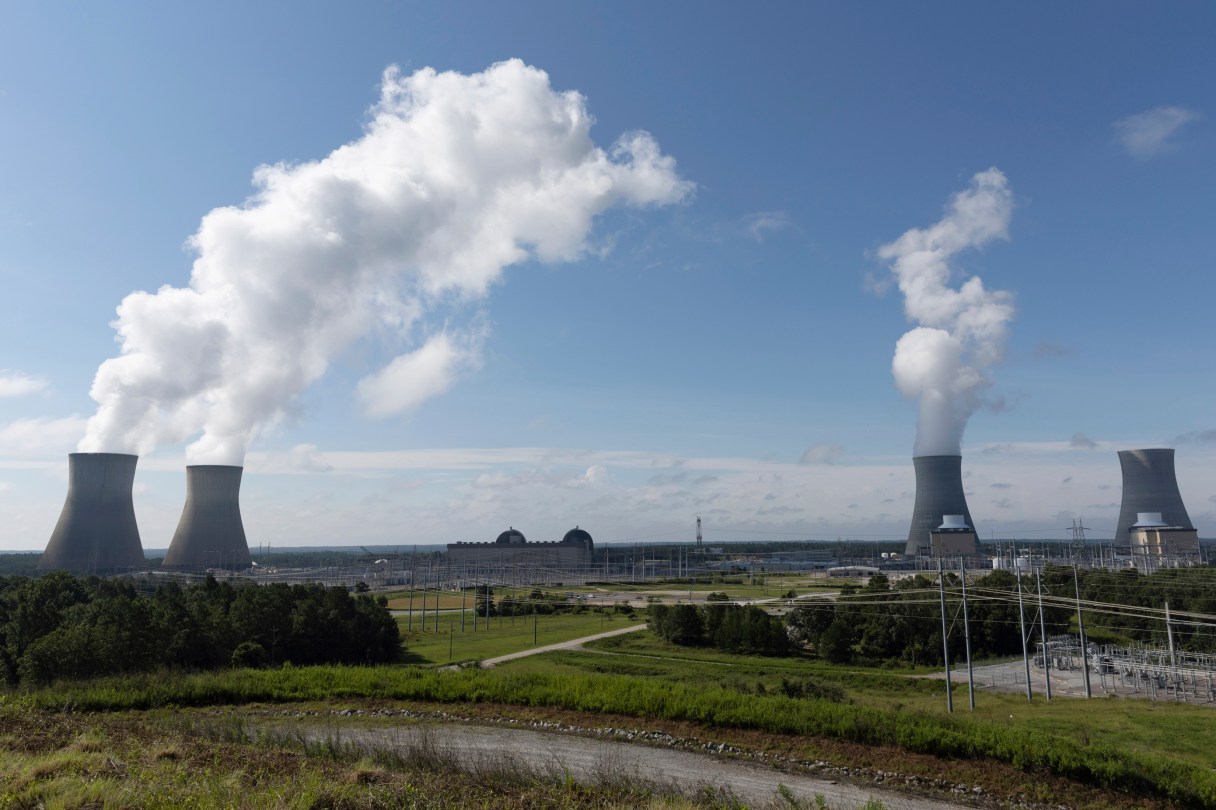
WAYNESBORO — At the crack of dawn on Monday, dignitaries and power company executives gathered on a rural Burke County hilltop overlooking Plant Vogtle for a celebration that was years delayed.
On a clear day, “Mount Vogtle” offers panoramic views of the power plant’s four cooling towers, a dramatic photo op as Georgia Power finally activated Unit 3, the first new nuclear reactor built on U.S. soil in more than 30 years. But as the sun rose, a thick fog rolled in over the Savannah River valley, shielding the plant from view.
The poor visibility surely wasn’t what the company had hoped for, but it could be symbolic of the uncertain future now facing the country’s nuclear industry — and Georgia Power’s customers.
Vogtle Units 3 and 4 were built in hopes of ushering in a nuclear renaissance. Instead, they could be remembered as enormously expensive one-offs. Even if new plants are built to split atoms again in the U.S., they could look vastly different from the East Georgia reactors.
Unit 3 entered service seven years behind schedule, and Unit 4 could be just as tardy by the time it’s powered up later this year or in early 2024. Original cost estimates of $14 billion from 2009 ballooned to $35 billion today — and counting — much of it to come out of the pockets of Georgia Power customers. A staff expert for Georgia’s energy regulators recently blasted Georgia Power’s “inaccurate cost estimates” and “management’s continuous, poor judgment” since the Vogtle expansion started.