
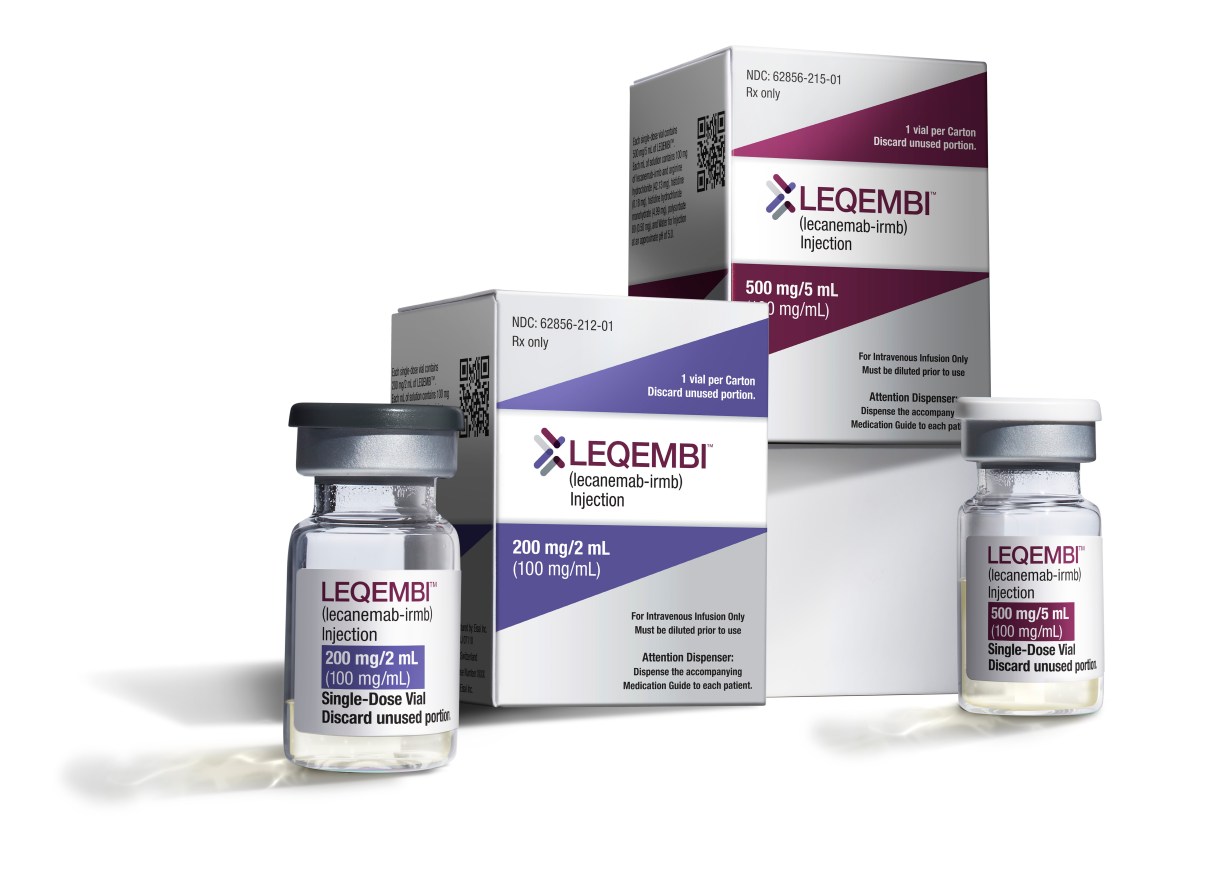
Some private insurers are balking at paying for the first drug fully approved to slow mental decline in Alzheimer’s patients.
Insurers selling coverage in North Carolina, Pennsylvania and New York, among other states, told The Associated Press they won’t cover Leqembi with insurance offered on the individual market and through employers because they still see the $26,000-a-year drug as experimental.
Their decision stands in contrast to Medicare, which will wind up covering most patients who take the drug. The federal coverage program mainly for people ages 65 and older announced shortly after Leqembi received full approval last month that it will cover the treatment while still tracking its safety and effectiveness.
Leqembi is the first medicine that’s been convincingly shown to slow the cognitive decline caused by Alzheimer’s disease, though only modestly. The U.S. Food and Drug Administration approved the IV drug for patients with mild dementia and other symptoms caused by early Alzheimer’s.
That approval came after regulators reviewed data from a large study in which the drug slowed memory and thinking decline by about five months in those who got the treatment compared with those who got a dummy drug. Some Alzheimer’s experts say the delay is likely too subtle for patients or their families to notice.