
Monday, November 16, 2026Nov 16

Opponents of Maine’s new abortion law won’t seek to nullify it through a referendum

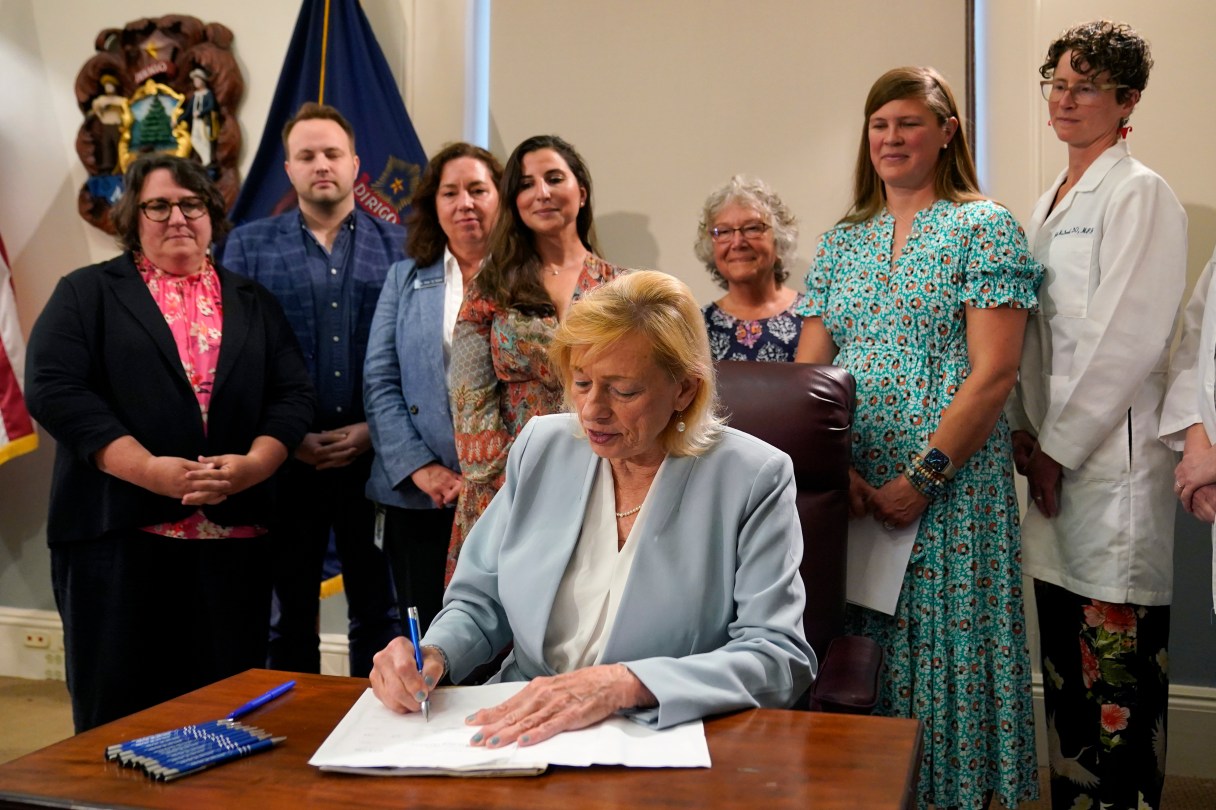
FILE - Maine Gov. Janet Mills signs into law a bill expanding access to abortions later in pregnancy, July 19, 2023, at the State House in Augusta, Maine. Groups opposed to Maine's new law expanding abortion access won't attempt to nullify the statute through a so-called People's Veto referendum. Republican Rep. Laurel Libby, leader of the Speak Up for LIFE group, said Wednesday that allies have decided to focus their resources on electing candidates who are opposed to abortions instead of collecting signatures and running a referendum campaign. (AP Photo/Robert F. Bukaty, File)

PORTLAND, Maine (AP) — Groups opposed to Maine’s new law expanding abortion access won’t attempt to nullify the statute through a so-called People’s Veto referendum.

Republican Rep. Laurel Libby, leader of the Speak Up for LIFE group, said Wednesday that allies have decided to focus their resources on electing candidates who are opposed to abortions instead of collecting signatures and running a referendum campaign.

“At the end of the day, we want to put our effort into the most effective place possible,” Libby, a Republican from Auburn, told The Associated Press. That means flipping legislative seats, she said, particularly in the Maine House.

The bill signed into law by Democratic Gov. Janet Mills last month allows abortions at any time if deemed medically necessary by a doctor, making the law one of the nation’s least restrictive. The previous law, the Reproductive Privacy Act of 1993, banned abortions after a fetus became viable outside the womb, at roughly 24 weeks, with an exception if the patient’s life is at risk.

Wednesday marked the deadline to notify state officials of a People’s Veto, a constitutional provision allowing citizens to repeal legislation through a statewide vote. To move forward, more than 67,000 signatures would have been needed.