
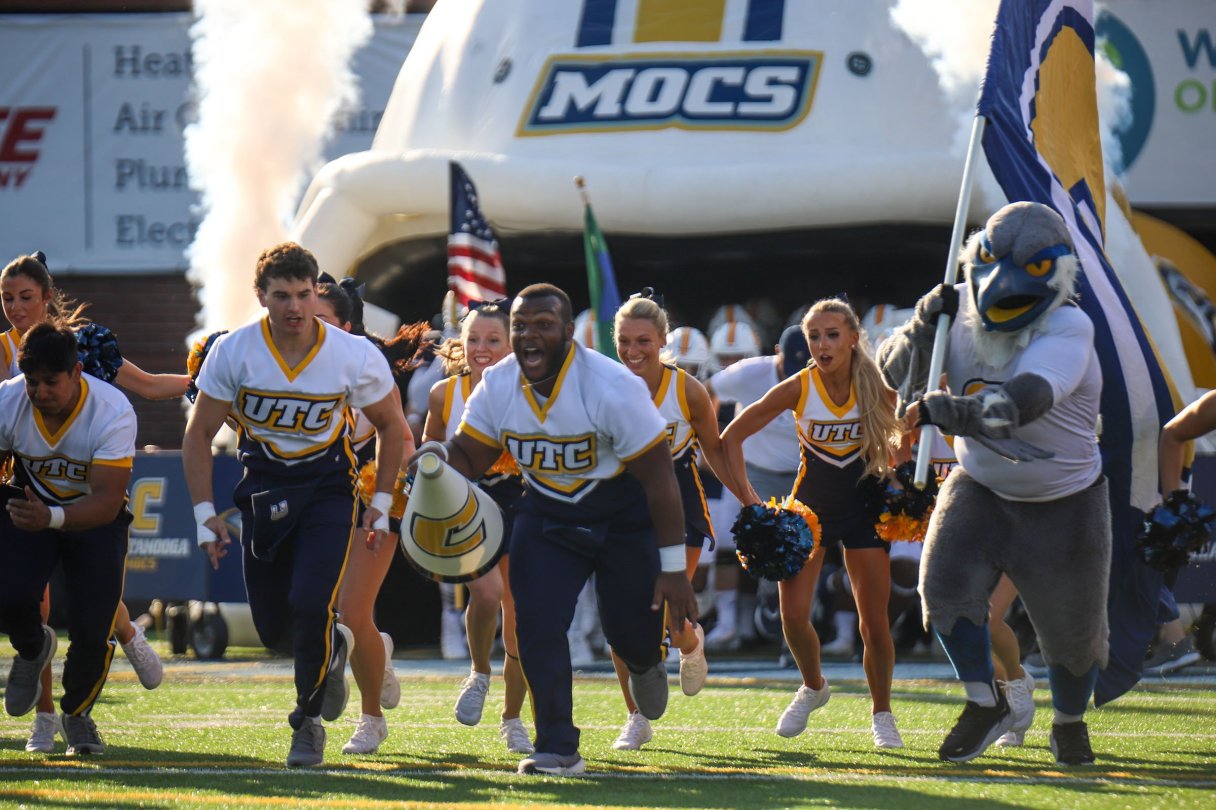

With fundraising his calling card, University of Tennessee at Chattanooga athletic director Mark Wharton has made it a point to increase the financial efforts of the school’s athletic department.
Two years after the NCAA lifted its longtime ban on student-athletes being compensated for endorsements, kicking off the name, image and likeness era, it’s never been as evident that money — more of it — is important for a college athletic department to be competitive. In basketball, for example, having money to compensate athletes is quickly becoming the difference between attracting top prospects and seeing those players choose other programs, either as recruits or transfers chasing NIL funds.
But how much does it actually cost to run an athletic department at UTC’s level? According to one report by the Knight-Newhouse College Athletics Database, which explores academic and athletic finances for NCAA Division I public schools, UTC’s operating expenses are $21.05 million, same as its revenue and both an 18% increase from when Wharton took over in 2017. Included in the expenses are coaches’ compensation, support and administrative compensation, and athletic student aid, among other things.
Of course, a lot of that is the higher costs of operating a D-I athletic department in 2023. For comparison, consider four other in-state public schools that, like the Mocs, are D-I programs but compete in the lower-tier Football Championship Subdivision for that sport: East Tennessee State’s athletic budget is slightly larger at $22.17 millions, while the Mocs are considerably ahead of the operating expenses of Austin Peay ($17.64 million), Tennessee Tech ($16.57 million) and UT Martin ($14.46 million).
It costs to be competitive. That’s why Wharton has been so active in the development of the Mocs Club, which is coming off a record-breaking year in terms of donations from boosters, alumni and fans in 2022. The school raised $3.88 million last year, up nearly $600,000 from the previous best, set in each of the previous two years.