
Monday, November 16, 2026Nov 16

Russia’s ruble has tumbled. What does it mean for the wartime economy?

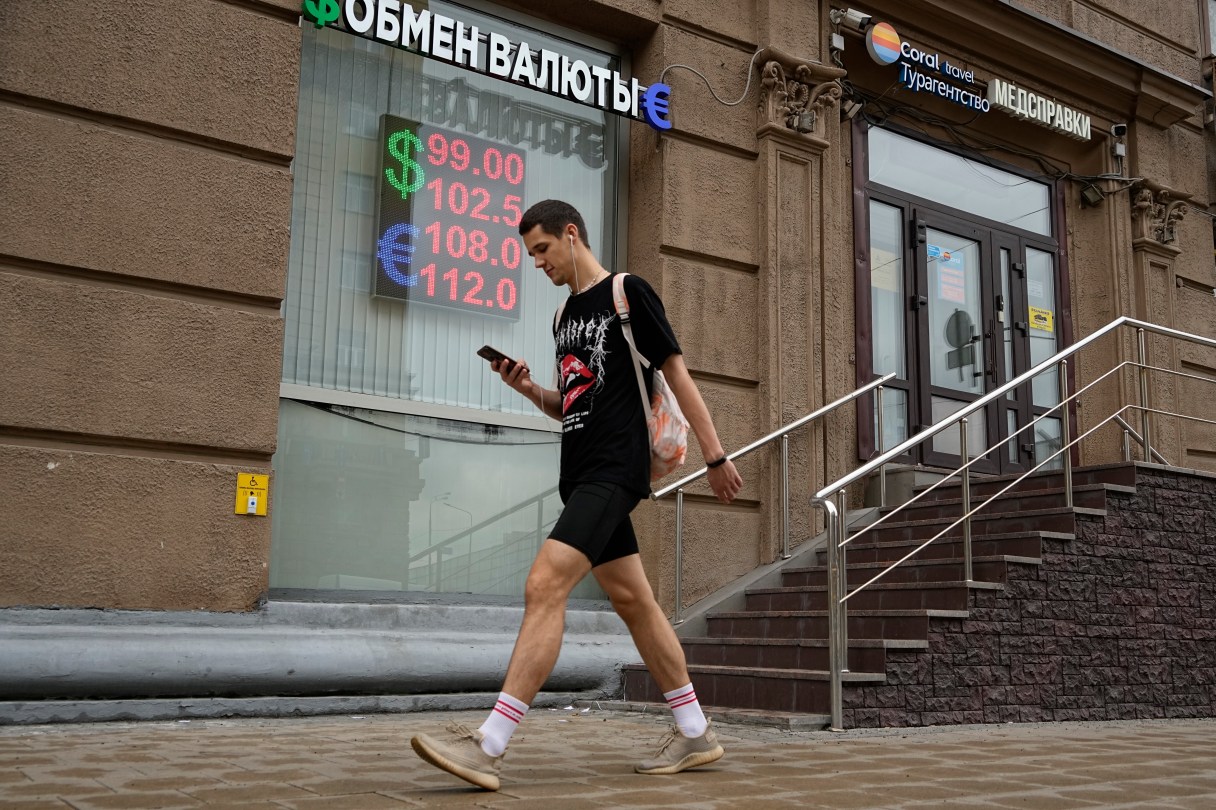
A man walks past a currency exchange office in Moscow, Russia, Monday, Aug. 14, 2023. Russia’s central bank made a big interest rate hike of 3.5 percentage points on Tuesday, Aug. 15, 2023, an emergency move designed to fight inflation and strengthen the ruble after the country's currency reached its lowest value since early in the war with Ukraine. (AP Photo/Alexander Zemlianichenko)

Russia’s ruble has fallen a long way in recent months, and the country’s central bank has stepped in to try to halt the slide.

Until now, the government stood aside as the declining ruble helped its budget. But a weaker currency also poses the threat of higher prices for everyday people in Russia — and the government has finally moved to halt the drop.

Here are key things to know:

WHY IS THE RUBLE FALLING?

Russia is selling less abroad — mainly reflected in falling revenue from oil and natural gas — and it’s importing more. People or companies importing goods to Russia means selling rubles for foreign currency like dollars or euros. That lowers the ruble’s exchange rate.