
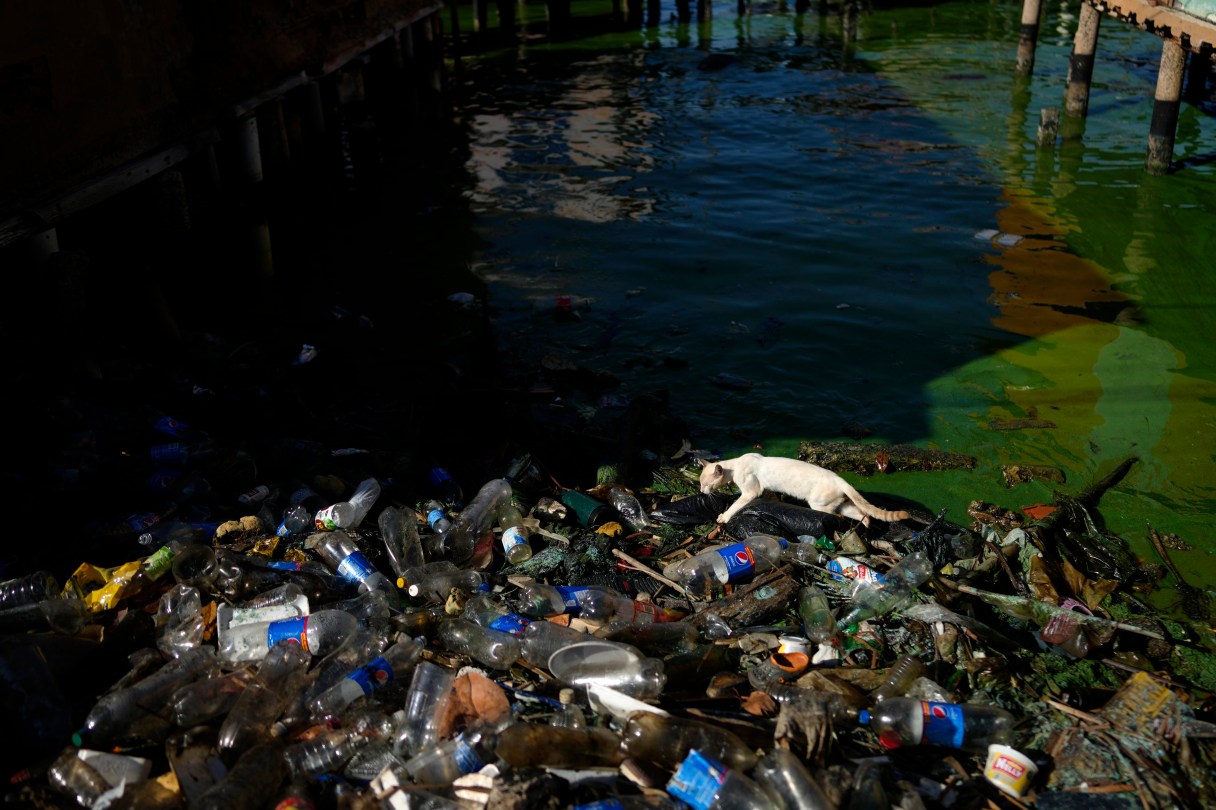
MARACAIBO, Venezuela (AP) — The fishermen of Lake Maracaibo say they face their worst nightmare everyday as fish stocks decline and pollution degrades the health of this great freshwater lake, one of the oldest — and largest — in the world.
Lake Maracaibo, which once was at the heart of Venezuela’s oil boom, has turned into a polluted wasteland, according to environmentalists.
The pollution of the lake, located about 600 kilometers (372 miles) west of the capital, Caracas, is the result of decades of excessive oil exploitation, poor maintenance of the obsolete infrastructure and a lack of waste treatment plants in the area. Tens of thousands of kilometers of pipes lie at its bottom, where crude oil leaks and system failures are frequent.
The lake, which collects rainwater from more than a hundred tributaries, has also become the wastewater deposit for the western states of Zulia, Mérida and Trujillo, where 5.3 million people live. Waste from the Colombian department of Norte de Santander also ends up in it.
Fertilizers, sewage and other chemicals are discharged into Lake Maracaibo, causing high concentrations of nitrogen and phosphorus that have led to the growth of cyanobacteria such as microcystin that produces 95% of what is locally called “verdin,” a greenish, toxic microalgae that occupies much of the lake’s waters, according to Beltrán Briceño, a professor at the University of Zulia and head of the microbiology laboratory of the Institute of Agricultural Research in Maracaibo.