
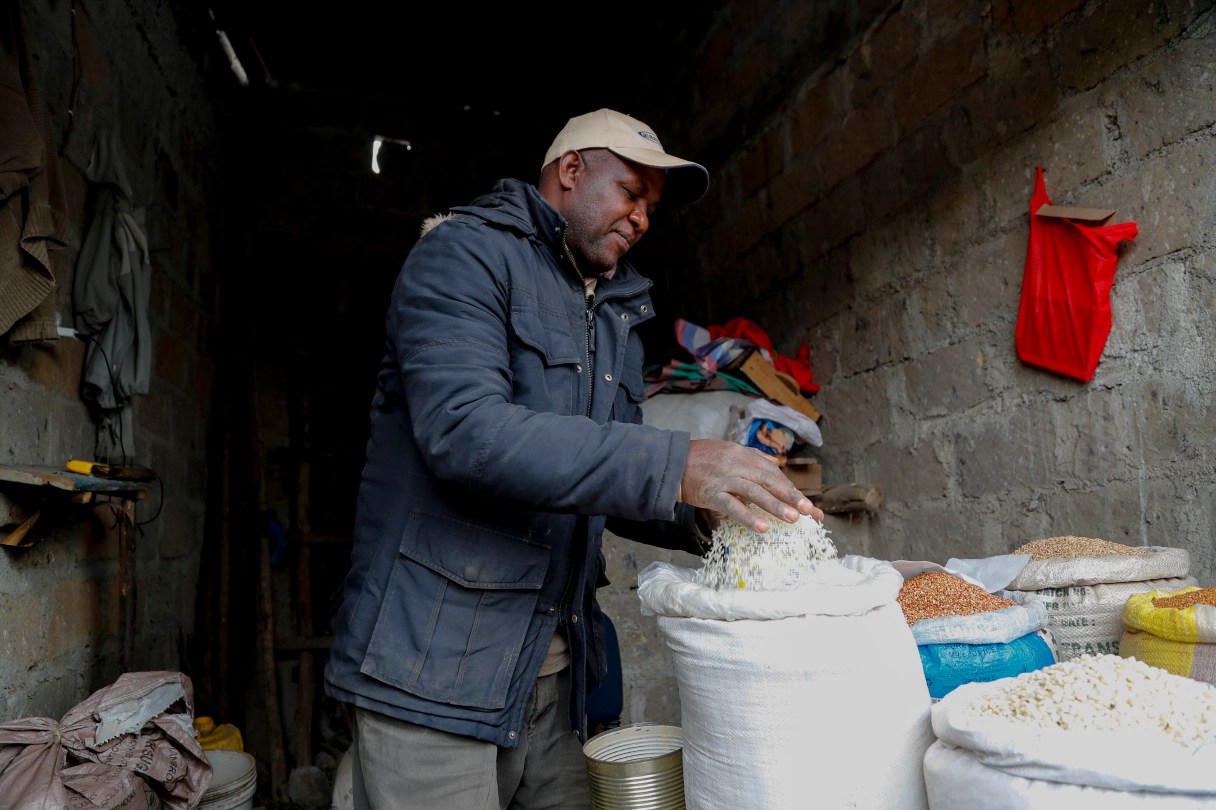
Francis Ndege isn’t sure if his customers in Africa’s largest slum can afford to keep buying rice from him.
Prices for rice grown in Kenya soared a while ago because of higher fertilizer prices and a yearslong drought in the Horn of Africa that has reduced production. Cheap rice imported from India had filled the gap, feeding many of the hundreds of thousands of residents in Nairobi’s Kibera slum who survive on less than $2 a day.
But that is changing. The price of a 25-kilogram (55-pound) bag of rice has risen by a fifth since June. Wholesalers are yet to receive new stocks since India, the world’s largest exporter of rice by far, said last month that it would ban some rice shipments.
It’s an effort by the world’s most populous nation to control domestic prices ahead of a key election year — but it’s left a yawning gap of around 9.5 million metric tons (10.4 tons) of rice that people around the world need, roughly a fifth of global exports.