
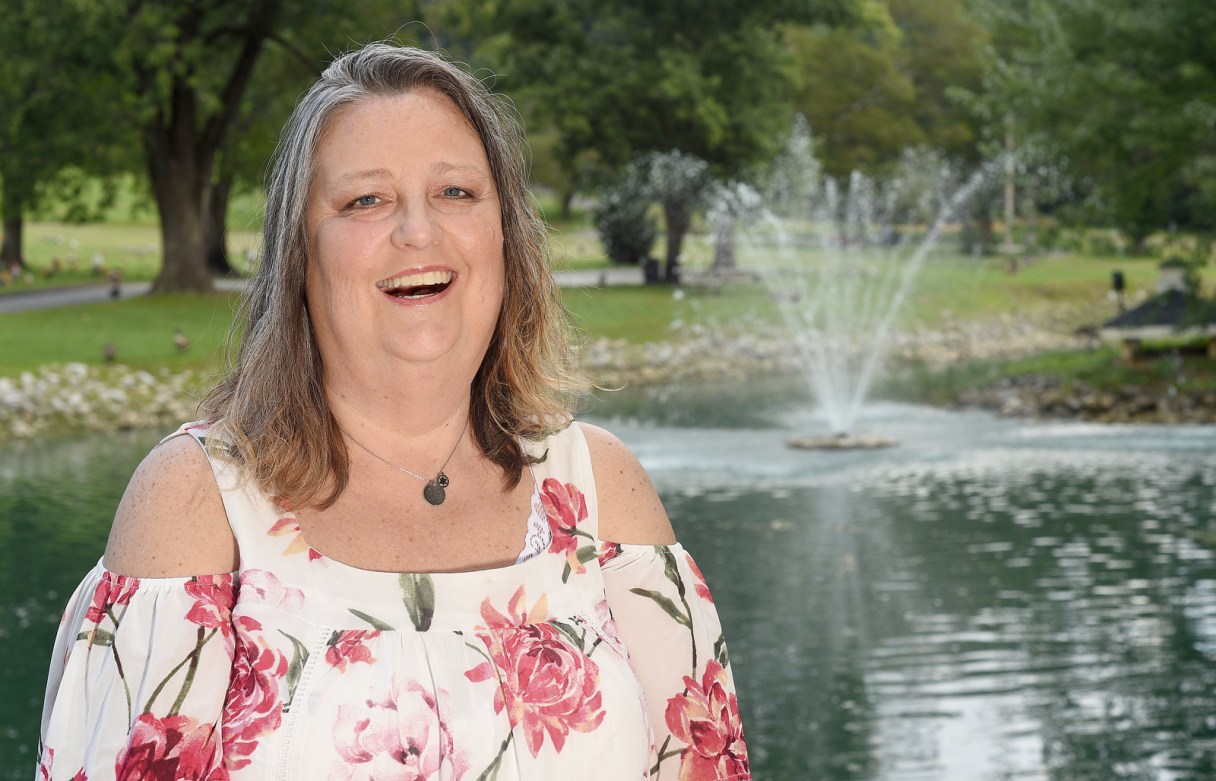
Rhonda Miller was secured to the operating room table with her left side facing up, nearly 9 inches of her scalp pulled back and skull removed, when she said, “I’m bored.”
She didn’t know how long speech pathologist Katie O’Brien had been holding the iPad that displayed black-and-white drawings — a visual exercise designed to monitor Miller’s cognitive function — as neurosurgeon Dr. Ranjith Babu sliced through her gray matter.
Late this past year, Miller underwent an unconventional type of brain surgery performed while the patient is conscious and alert. The specialized technique, called an awake craniotomy, allows surgeons to know if a certain area of the brain is critical for everyday function before cutting tissue that if damaged could render their patients neurologically disabled.
In Miller’s case, the goal was to remove a glioblastoma — a highly aggressive and deadly type of brain cancer — embedded in the left frontal lobe of her brain. Around 40% of patients with glioblastoma survive the first year post-diagnosis, and 17% make it past the second year, according to the American Association of Neurological Surgeons.