
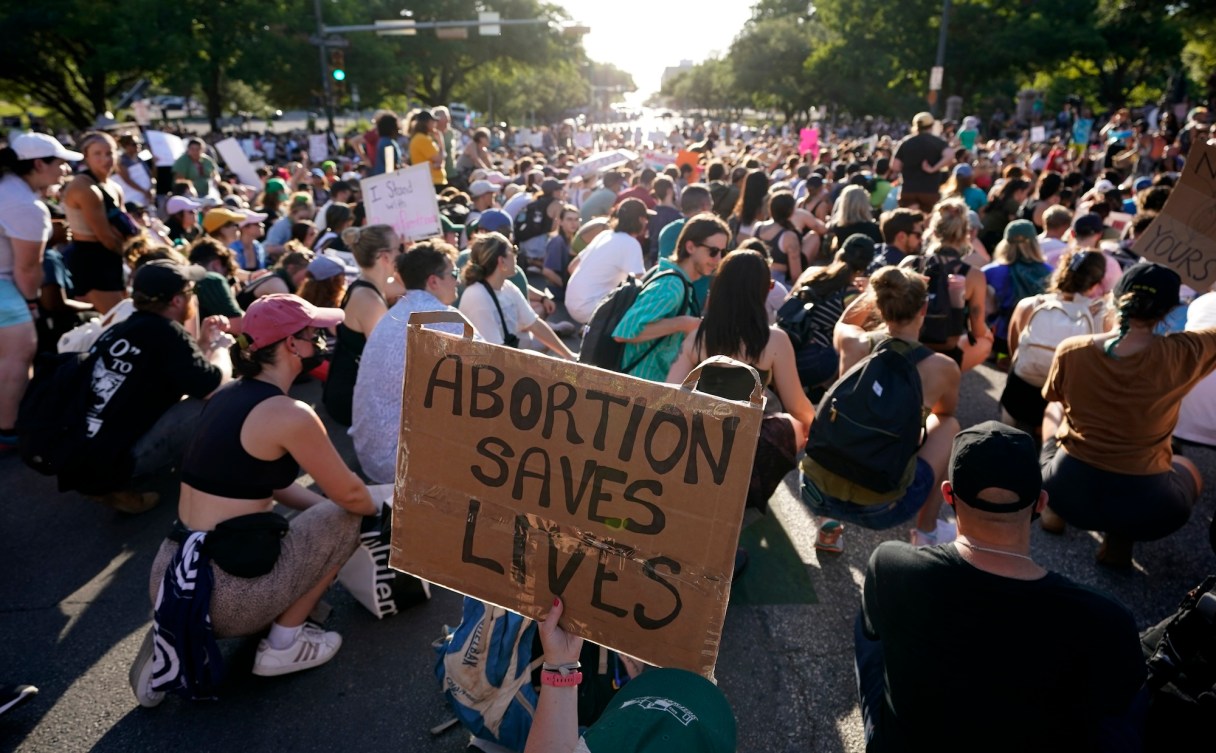
Soon after the Supreme Court overturned Roe v. Wade last year, horror stories started emerging of women denied medically urgent abortions for pregnancies gone dangerously awry. In response, the anti-abortion movement developed a sort of conspiracy theory to rationalize away the results of their policies.
Pro-choice activists, they argued, were deliberately misconstruing abortion laws, leading doctors to refuse to treat women who obviously qualified for exceptions. “Abortion advocates are spreading the dangerous lie that lifesaving care is not or may not be permitted in these states, leading to provider confusion and poor outcomes for women,” said a report by the anti-abortion Charlotte Lozier Institute.
Whether this argument stemmed from genuine denial or a cynical desire to mislead the public, a shattering case in Texas shows how absurd it is. Late last month, Kate Cox, a 31-year-old mother of two, learned that her latest, much-wanted pregnancy was doomed due to a severe genetic disorder. If the pregnancy continued, she was likely to have a stillbirth, and if she didn’t, the baby had virtually no chance of surviving long outside the womb.
Her doctor told her that carrying the pregnancy to term could jeopardize her future fertility. She, her husband and her doctor sued the state, seeking a court order to allow her to terminate her pregnancy in Texas. If the Texas abortion ban had workable medical exceptions, it’s hard to see how they wouldn’t apply to Cox. But it doesn’t, and the state attorney general, Ken Paxton, fought the Cox family and their doctor every step of the way.
This case is unusual for Cox’s willingness to wage a legal fight while suffering a medical catastrophe, but not for the cruel bind the state placed her in.
The Center for Reproductive Rights quickly filed suit on her behalf, and last week, a Texas judge sided with Cox, issuing a temporary restraining order that would have allowed her doctor to end the pregnancy without facing criminal or civil penalties. But Paxton appealed the order. On Friday, Texas’ Supreme Court blocked the lower court ruling, pending its decision on the merits of the case.
In desperation, Cox finally traveled out of state for an abortion, though the Center for Reproductive Rights is not disclosing where she went.
As Molly Duane, the Center for Reproductive Rights attorney representing Cox, points out, abortion procedures at 15 weeks of pregnancy or later are generally done over two days, with patients sent home in between. Most people would rather not endure this process in a hotel room. “Truly, she just wanted to get health care in Texas,” Duane said Friday. But she couldn’t. Late Monday, the Texas Supreme Court declared that Cox wasn’t entitled to an abortion and vacated the lower court’s order.
“I think it’s the clearest message you could have possibly received from an anti-abortion state that they never meant the medical exemption to mean anything at all,” Duane said.
An irony here is that if the state Supreme Court had allowed Cox to end her pregnancy in Texas, it might have benefited hard-line opponents of abortion. Were the state to codify clear exemptions for people in extreme medical distress, offering a sliver of mercy to women like Cox, its callous abortion ban might seem slightly more politically palatable.
But right-wing politicians and those who support them would rather inflict unimaginable suffering on women than relax the tiniest bit of control over their medical decisions. I asked Duane if any anti-abortion groups had filed amicus briefs on Cox’s behalf. I wasn’t surprised that the answer was no.