
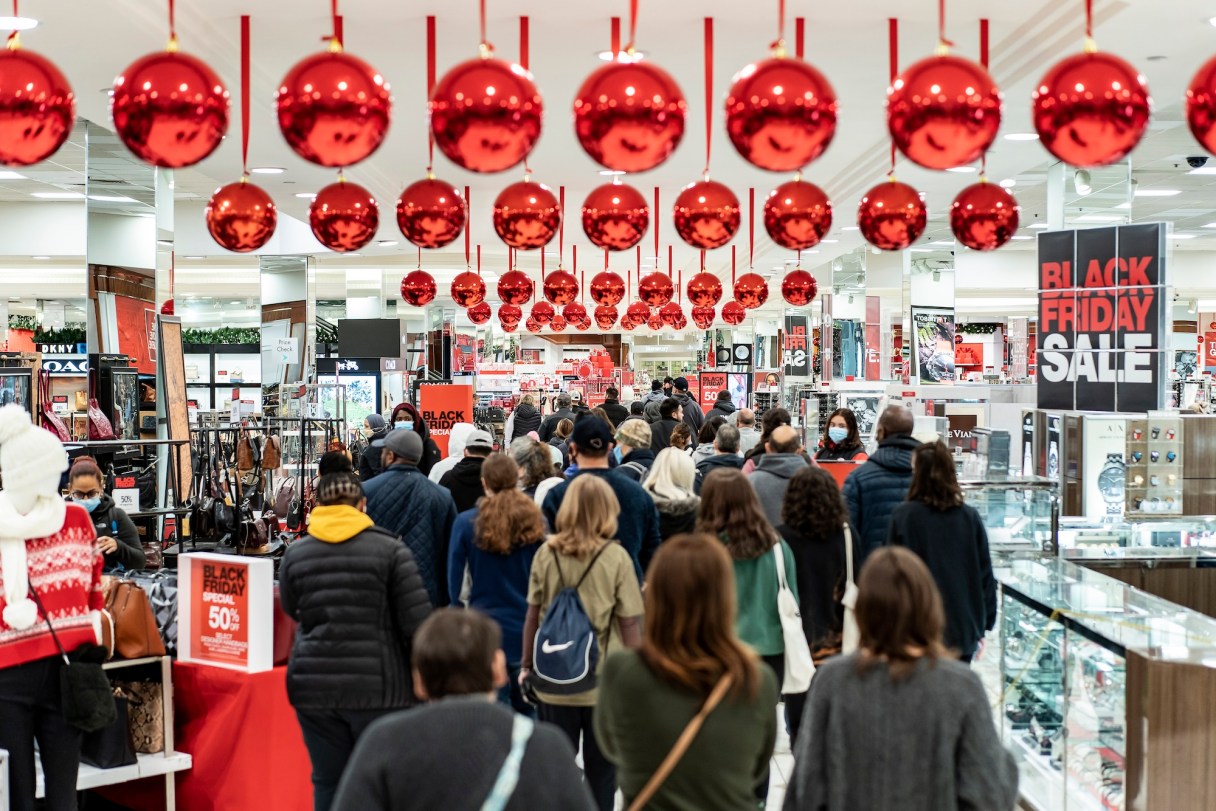
There are just 10 shoplifting days until Christmas.
I am surely not encouraging holiday thievery. I’m simply acknowledging ’tis the season for larceny, whether it’s because stores are busier, “shoppers” are wearing heavier clothing or because some ne’er-do-wells just want to get mom a nice gift for no charge.
This year, shoplifting has been a white hot topic, as big retailers like Target, Walmart and Dick’s Sporting Goods blamed wholesale shoplifting for massive losses and even store closings.
In April, the National Retail Federation, the industry’s largest trade group, announced that retailers had $94 billion in inventory “shrinkage” in 2021 — and half was due to organized theft. (“Shrinkage” describes disappearing inventory, whether it be from shoplifting, employee theft or even accounting errors.)
In September, the same organization said 2022’s “shrinkage” was $112 billion.
The worry about losses was fed by viral videos of brazen thieves rushing into stores, grabbing mounds of merchandise and leaving without apparent concern.
There was widespread handwringing about lawlessness, especially in conservative media that worried about the “shoplifting epidemic taking over America.”
And then came something to perhaps temper the panic.
The National Retail Federation, the group that frets about “shrinkage,” retracted its estimate that half of the $94 billion in losses in 2021 were due to organized theft. The group stood by the $94 billion figure and last year’s $112 billion. It just does not say how or why that inventory is disappearing.
Left-wing media, like The Huffington Post, was almost giddy, with stories like, “The Shoplifting Epidemic Touted By Fox News Is Likely Overblown, Data Shows.”
Criminal justice advocates worry that reports of brazen criminals, “flash mobs” and rampant theft might make for tougher laws.
And in recent years, many prosecutors have been leaning back from throwing the book at those with sticky fingers.
In 2018, the Atlanta Police Department was in an officer shortage — it still is — and announced it was pulling back from responding to many shoplifting cases because calls from large retailers were pulling much-needed cops out of service.
Sgt. John Chafee told me the department still responds to such calls but the 2018 effort “resulted in many businesses stepping up and taking responsibility for security of their property.”
Reported shoplifting cases in Atlanta are up about 20% from last year but down 15 to 18% from pre-COVID levels.
But however you slice the numbers, the reality of shoplifting is difficult to ascertain, according to Adam Gelb, the founder and president of The Council on Criminal Justice.
There are a couple major reasons, Gelb says.
First, retailers have always been cagey about publicly reporting the real numbers of “shrinkage.” And, he added, the percentage of disappearing inventory has largely remained constant throughout the years.
Also, he said, “The confounding factor is reporting. We know there’s an undercount (in shoplifting cases reported to police) but we don’t know how much. Possible reasons are retailers are not sure if police will come and, if they do come and make an arrest, will there be a prosecution?
“They are just thinking, ‘Perhaps it’s not worth it,’ ” Gelb told me.
Veteran defense attorney Jeff Brickman, the former district attorney of DeKalb County, told me that the number of those arrested for shoplifting has remained constant, although prosecutors are more apt to send them to diversion programs.
“I don’t think the amount of shoplifting has changed though the years,” he said.
I asked about the political debate on the subject.
“I don’t think it’s left-right,” Brickman said. “I think they look left, then they look right. And then they take it.”