
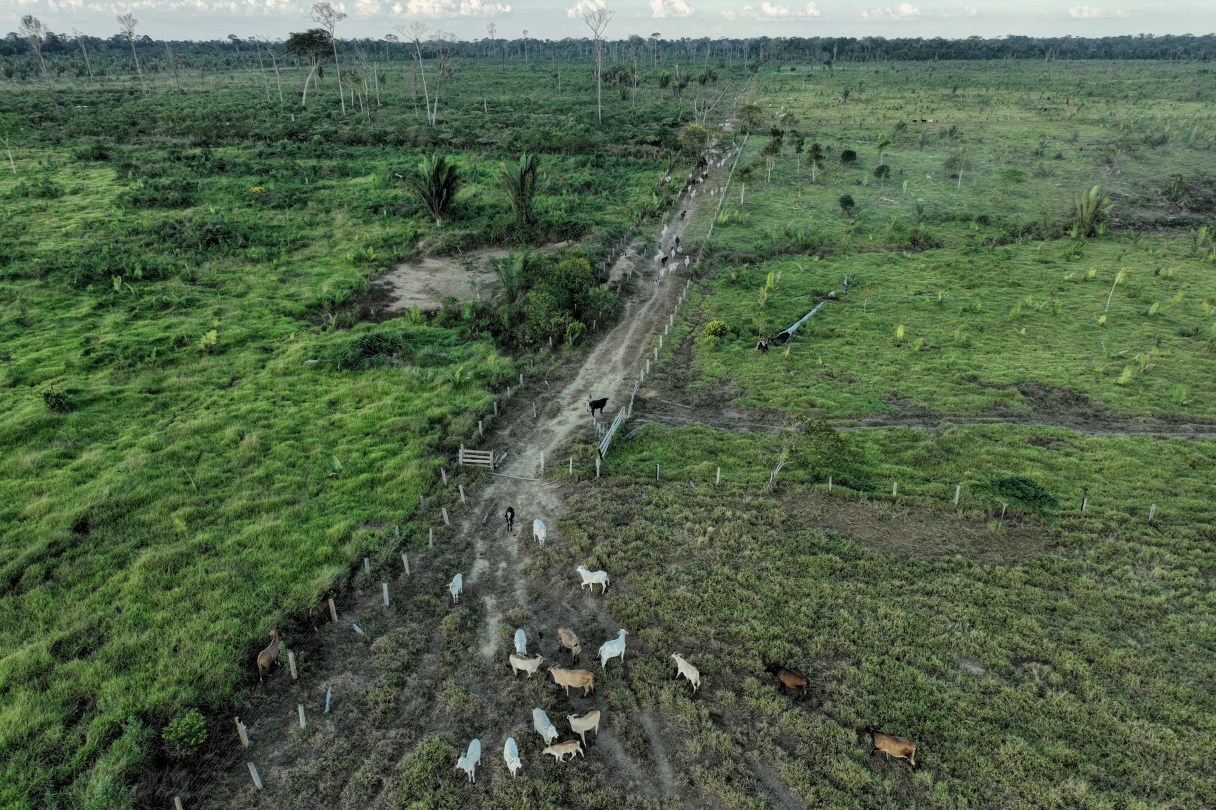
JACI-PARANA, Brazil (AP) — Meat processing giant JBS SA and three other slaughterhouses are facing lawsuits seeking millions of dollars in environmental damages for allegedly purchasing cattle raised illegally in a protected area in the Brazilian Amazon.
The lawsuits, filed December 5 to 12 by the western Brazilian state of Rondonia, target the exploitation of a protected area known as Jaci-Parana, once rainforest but now mostly transformed into grassland by decades of misuse by land-grabbers, loggers and cattle ranchers. Despite a law forbidding commercial cattle in the reserve, some 216,000 head now graze on pasture there, according to the state animal division.
The lawsuits contain a type of evidence that is getting the attention of deforestation experts and veterans of Brazil’s illegal cattle trade: transfer documents showing cows going straight to the slaughterhouse from protected areas, with the information apparently provided by the illegal ranchers themselves.
“In two decades fighting illegal cattle-raising in the Amazon, I had never encountered a transit permit with the name of a conservation unit on it,” said Jair Schmitt, chief of environmental protection at Brazil’s federal environmental agency, Ibama.