
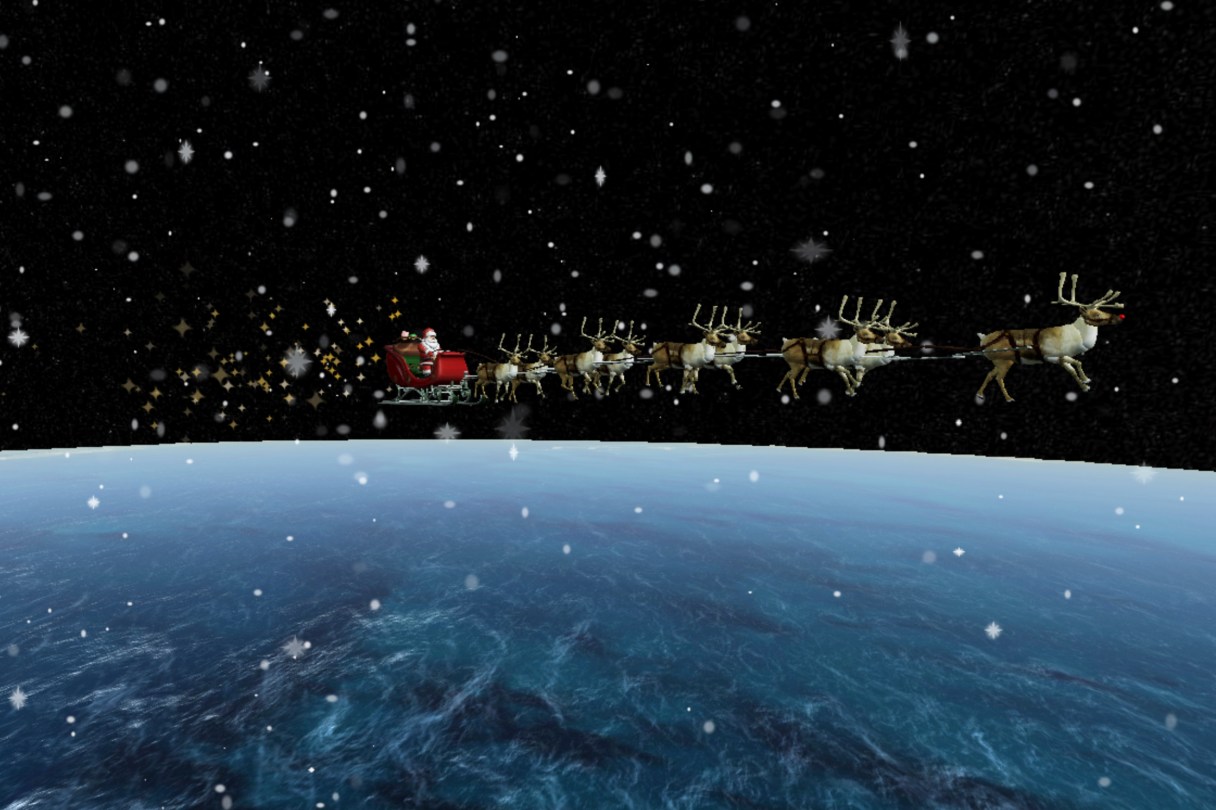
U.S. and Canadian Air Force officials remain on high alert today, tracking the movements of an airborne Nordic sleigh propelled by eight reindeer. Every Dec. 1, the North American Aerospace Defense Command reactivates a specialized surveillance unit in anticipation of the renowned traveler’s expected appearance, reporting his progress to millions of children around the world throughout the day Dec 24.
NORAD is a joint military command between the United States and Canada that closely monitors virtually everything that flies over North America or approaches our shores by sea. Once ensconced in a bunker deep inside Cheyenne Mountain in Colorado, the agency now resides at Peterson Space Force Base in Colorado Springs, Colo. NORAD gained some unwanted attention during the Chinese spy balloon incident last January but has been unerringly faithful to its mission of tracking Santa since the height of the Cold War. So how did one of the world’s most advanced military installations take on the mission of tracking St. Nick?
An advertising campaign, a fortuitous accident and a quick-thinking young Air Force officer came together to create a charming and enduring tradition.
On Nov. 30, 1955, the Sears store in Colorado Springs published a newspaper ad inviting children to call and speak with Santa Claus. “Hey kiddies! Call me direct on my telephone. Just dial ME 2-6681.” The invitation also included a reminder to “be sure and dial the correct number.” Good advice, except that the number printed in the ad was not the North Pole, but due to a one-digit error was actually the hotline for the Continental Air Defense Command, the predecessor of NORAD.
Anticipating a hearty greeting from the jolly old elf, the first young caller instead reached Col. Harry Shoup, the duty officer assigned to the emergency line. Shoup, prepared for a call from the president or a senior military commander raising an alert, was instead confronted with what he might at first have thought to be a prank. America was embroiled in the Cold War and a call on the hotline could signal a nuclear attack. Instead, the timid voice on the line asked: “Are you really Santa Claus?”