
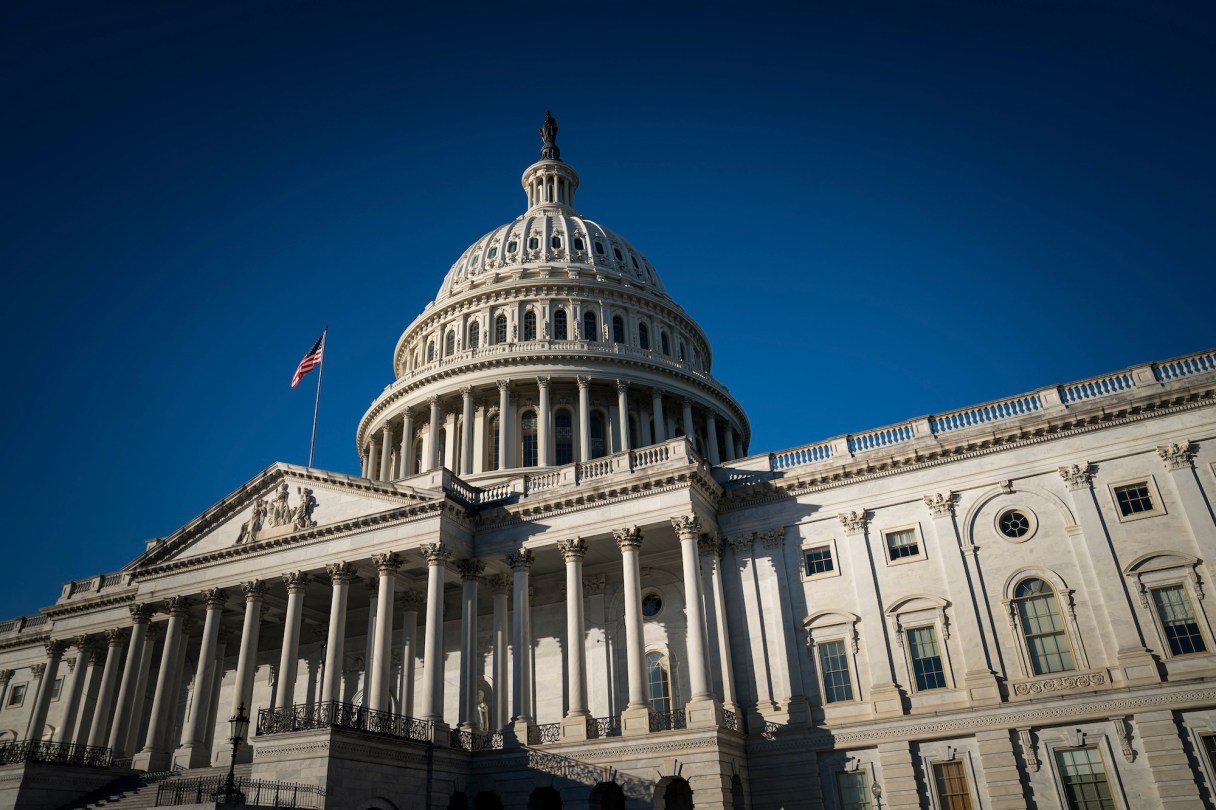
When Republicans narrowly captured the House last year, most analysts predicted they would do more investigating than legislating. Unfortunately, that has proven to be true.
Indeed, its final full week epitomized the entire first session of the “do nothing” 118th Congress.
House Republicans launched an impeachment investigation of President Joe Biden, though many supporters acknowledged a year of probes had not uncovered the proverbial “smoking gun.” Then, they went home.
GOP members in both chambers blocked more aid for Ukraine — while declaring how much they support the embattled country’s fight against Russian invaders. They are demanding tough new measures to curb illegal immigration — though no Congress has been able to agree on anything for the border in years.
The main problem has been the proclivity of House Republicans to load even essential measures like appropriations bills with conservative wish list items ranging from abortion restrictions to reduced spending for social programs.
With Democrats holding both the Senate and the White House, there was no way for their initiatives to become law. But their inclusion did gum up the legislative works; House Republicans were even unable to pass some of their own funding measures because of internal divisions.
In recent weeks, Republicans have suggested they are pursuing two main lines of inquiry against Biden. In both, prospective charges have already been proven false.
One initially surfaced in 2019, when Trump was impeached for withholding congressionally approved arms shipments to Ukraine unless President Volodymyr Zelenskyy reopened an investigation into Biden’s role as vice president in firing Ukraine’s public prosecutor, Viktor Shokin.
The false allegation was that Biden acted to protect his son and halt an investigation into Burisma, the Ukrainian oil company that paid Hunter Biden vast amounts of money for questionable purposes.
But former U.S. Ambassador Marie Yovanovitch and other U.S. officials have confirmed he was acting on behalf of President Barack Obama and major U.S. allies, because Shokin was considered corrupt; there is no evidence he was investigating Burisma at the time.
The second allegation, oft repeated by many Republican critics without any proof, is that President Biden benefited financially from his son’s lucrative dealings in Ukraine and China. The House Oversight Committee released documents showing one of Hunter Biden’s businesses made three payments totaling $1,380 to his father. They turned out to be repayments of a loan to help him buy a Ford truck.
GOP members have been under strong pressure from Trump and his supporters to impeach Biden in retaliation for the Democrats’ impeachment of Trump and even to “expunge” the latter actions from the record. One Republican, Texas Rep. Troy Nehls, gave this reply when asked to explain the GOP’s impeachment drive: “All I can say is Donald J. Trump 2024 baby.”
Meanwhile, the Senate’s Democratic majority has often been hamstrung by the GOP minority or individual Republicans. Though GOP Leader Mitch McConnell strongly advocated helping Ukraine, he acquiesced in the demands of fellow Republicans to condition it on major policy changes on immigration.
As a result, Majority Leader Chuck Schumer has been unable to muster the 60 votes needed to pass the administration’s proposal of additional funding for Ukraine, Israel, Taiwan and the border. Negotiations on the package are continuing but, even if the Senate agrees, House Speaker Mike Johnson says the House won’t consider aid for Ukraine.
This will all need to be resolved when lawmakers return in January. But everything that prevented action this year will still be present, exacerbated by the pressures of the presidential campaign.
As a result, it will likely prove difficult for this Congress to keep the government open, let alone do anything else.