
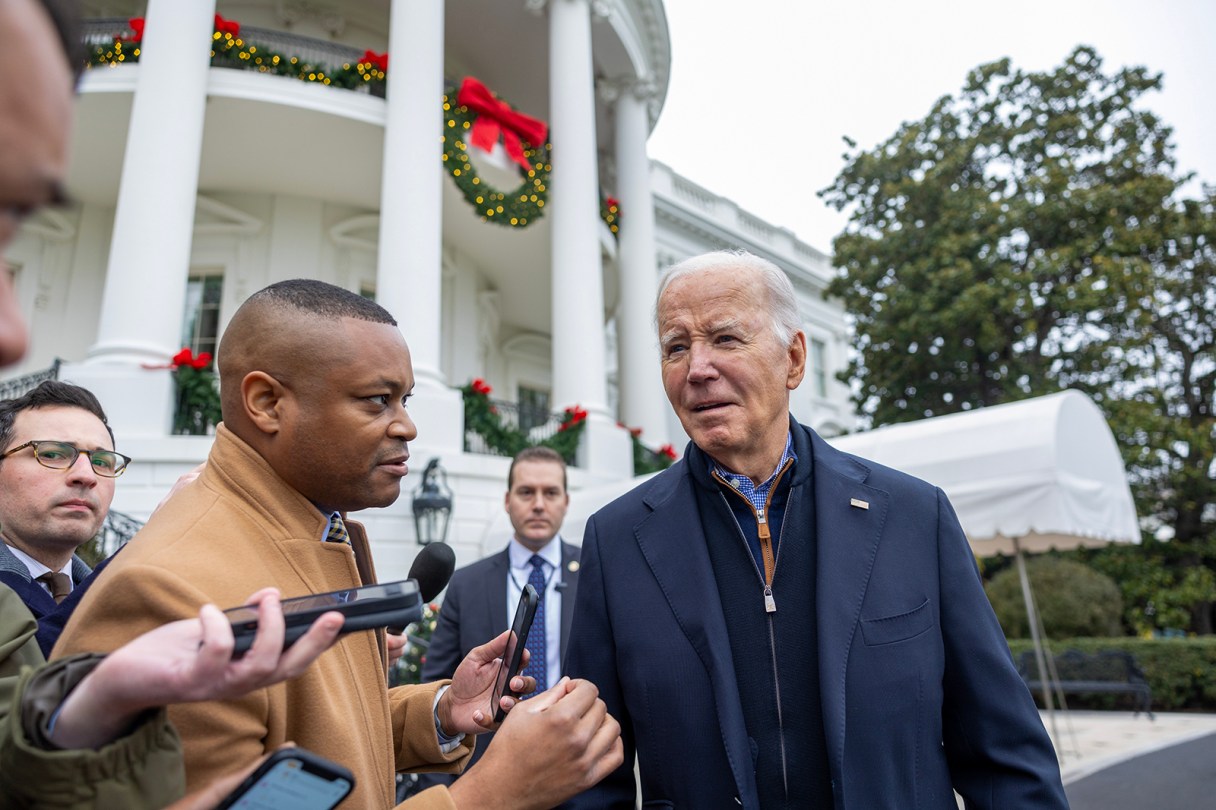
President Joe Biden finalized the largest annual pay raises for federal employees in decades last week after the worst inflation since the 1980s — finally coming down now to more acceptable levels — took its toll on workers and their families over the past two years.
The only problem: Federal agencies will need to find room for that boost within budgets that are currently operating with no growth from the previous year and could end up facing steep cuts starting in a few months. That could mean negative outcomes of varying degrees, according to experts, ranging from contractor cutbacks to hiring freezes to furloughs and layoffs.
The 5.2 percent raises for civilian and military employees Biden set in motion via executive order and his signature on the fiscal 2024 defense authorization law are set to take effect in January. Most workers won’t see the impact show up until their first full paychecks of the new year arrive on Feb. 2.
At least in theory, agencies could muddle through to that point by scraping up the money here and there while Congress finishes up the fiscal 2024 spending bills. After that point, however, it’s anyone’s guess what agencies will need to do to make ends meet.
Current stopgap funds, mostly at prior-year rates, run out Jan. 19 for the departments of Agriculture, Energy, Housing and Urban Development, Transportation and Veterans Affairs, as well as the Army Corps of Engineers and Food and Drug Administration. Budget authority for the rest of the federal agencies lapses after Feb. 2.