
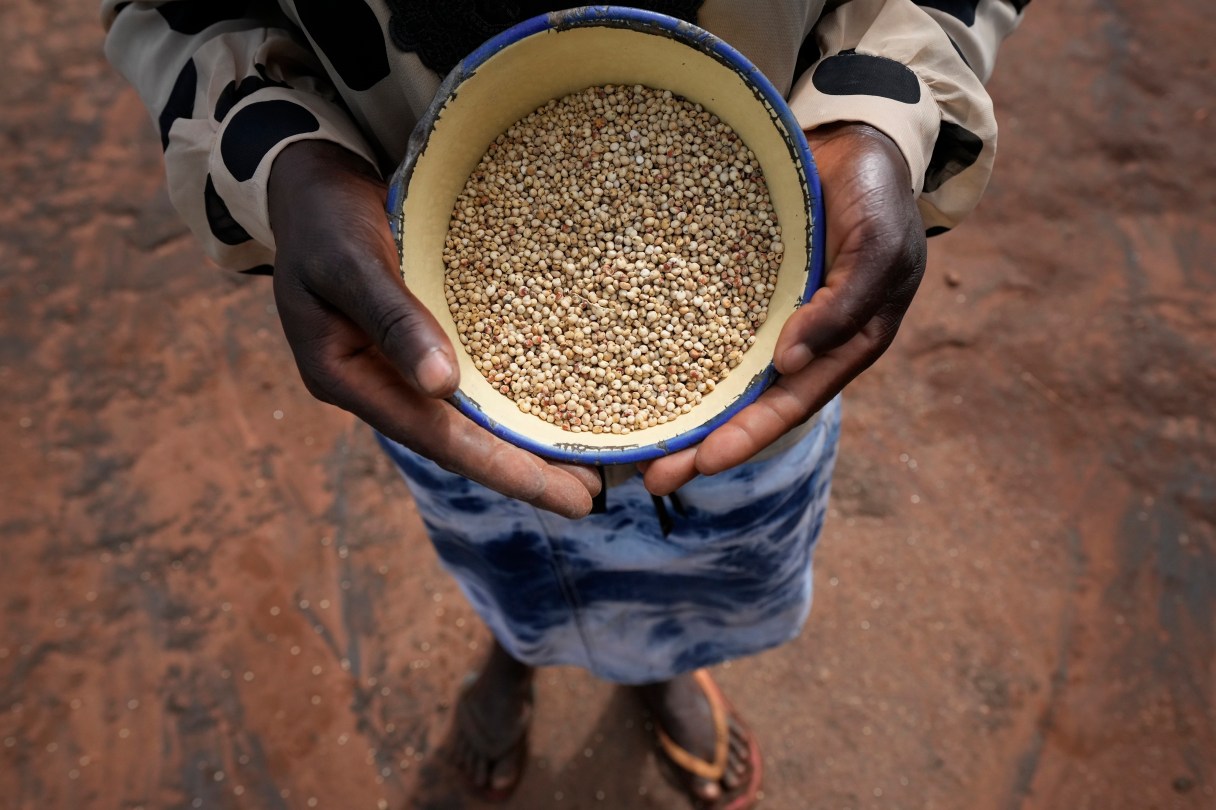
RUSHINGA, Zimbabwe (AP) — While others in her Zimbabwean village agonize over a maize crop seemingly headed for failure, Jestina Nyamukunguvengu picks up a hoe and slices through the soil of her fields that are lush green with a pearl millet crop in the African country’s arid Rushinga district.
“These crops don’t get affected by drought, they are quick to flower, and that’s the only way we can beat the drought,” the 59-year old said, smiling broadly. Millets, including sorghum, now take up over two hectares of her land — a patch where maize was once the crop of choice.
Farmers like Nyamukunguvengu in the developing world are on the front lines of a project proposed by India that has led the U.N.’s Food and Agricultural Organization to christen 2023 as “The Year of Millets,” an effort to revive a hardy and healthy crop that has been cultivated for millennia — but was largely elbowed aside by European colonists who favored corn, wheat and other grains.
The designation is timely: Last year, drought swept across much of eastern Africa; war between Russia and Ukraine upended supplies and raised the prices of foodstuffs and fertilizer from Europe’s breadbasket; worries surged about environmental fallout of cross-globe shipments of farm products; many chefs and consumers are looking to diversify diets at a time of excessively standardized fare.
All that has given a new impetus to locally-grown and alternative grains and other staples like millets.