
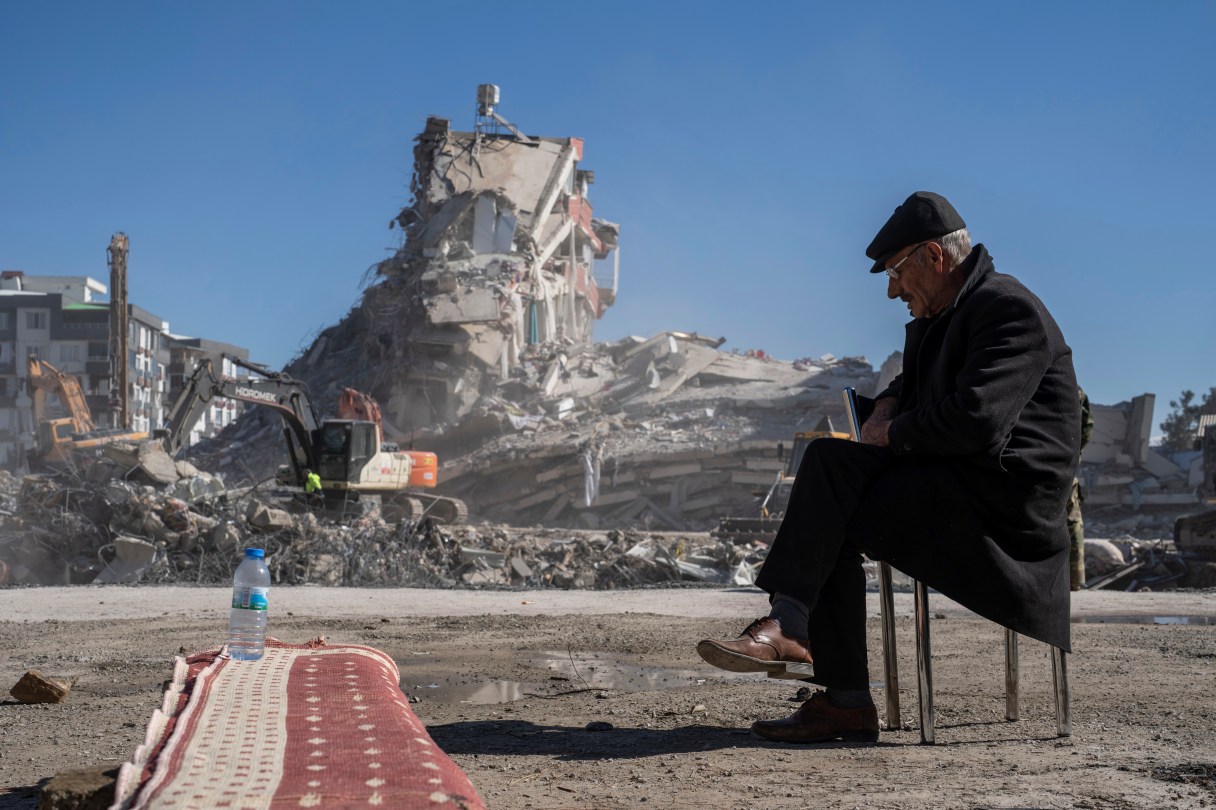
TOKYO (AP) — Mountains of rubble and twisted metal. Death on an unimaginable scale. Grief. Rage. Relief at having survived.
What’s left behind after a natural disaster so powerful that it rends the foundations of a society? What lingers over a decade later, even as the rest of the world moves on?
Similarities between the calamity unfolding this week in Turkey and Syria and the triple disaster that hit northern Japan in 2011 may offer a glimpse of what the region could face in the years ahead. They’re linked by the sheer enormity of the collective psychological trauma, of the loss of life and of the material destruction.
The combined toll of Monday’s 7.8 magnitude earthquake rose past 23,000 deaths on Friday as authorities announced the discovery of new bodies. That has already eclipsed the more than 18,400 who died in the disaster in Japan.
That magnitude 9.0 earthquake struck at 2:46 p.m., March 11, 2011. Not long after, cameras along the Japanese coast captured the wall of water that hit the Tohoku region. The quake was one of the biggest on record, and the tsunami it caused washed away cars, homes, office buildings and thousands of people, and caused a meltdown at the Fukushima Daiichi nuclear power plant.