
Saturday, November 14, 2026Nov 14

In test, zaps to spine help 2 stroke survivors move arms

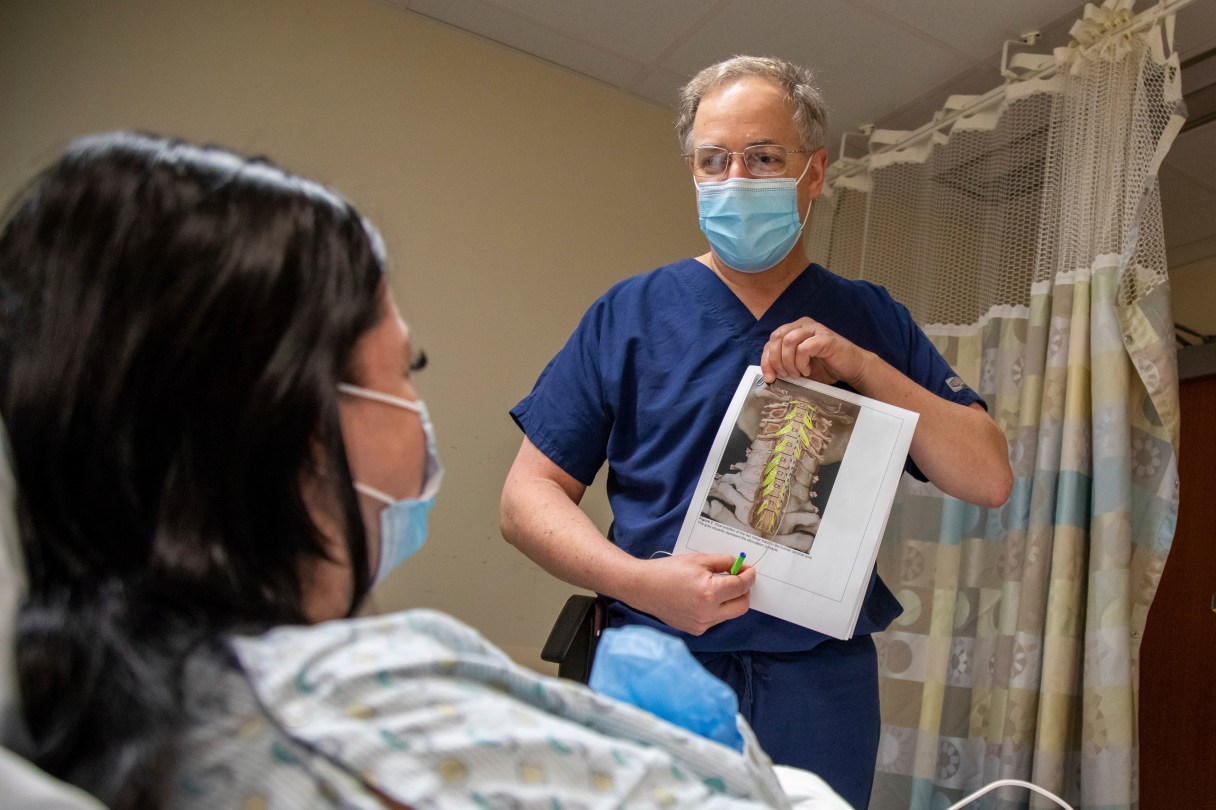
In this photo provided by UPMC and Pitt Health Sciences, neurosurgeon Dr. Peter Gerszten tells study participant Heather Rendulic how electrodes will be implanted on her spinal cord at UPMC Presbyterian in Pittsburgh on May 7, 2021. A stroke left Rendulic with little use of her left hand and arm, so she volunteered for a first-of-its-kind experiment that stimulates her spinal cord in spots that control upper limb motion. (Tim Betler/UPMC and Pitt Health Sciences via AP)


WASHINGTON (AP) — A stroke left Heather Rendulic with little use of her left hand and arm, putting certain everyday tasks like tying shoes or cutting foods out of reach.

“I live one-handed in a two-handed world and you don’t realize how many things you need two hands for until you only have one good one,” the Pittsburgh woman told The Associated Press.

So Rendulic volunteered for a first-of-its-kind experiment: Researchers implanted a device that zaps her spinal cord in spots that control hand and arm motion. When they switched it on, she could grasp and manipulate objects — moving a soup can, opening a lock and by the end of the four-week study, cutting her own steak.

It’s not a cure — the improvements ended after scientists removed the temporary implant — and the pilot study included only Rendulic and one other stroke survivor. But the preliminary results, published Monday, mark a step toward one day restoring mobility for this extremely common type of paralysis.