
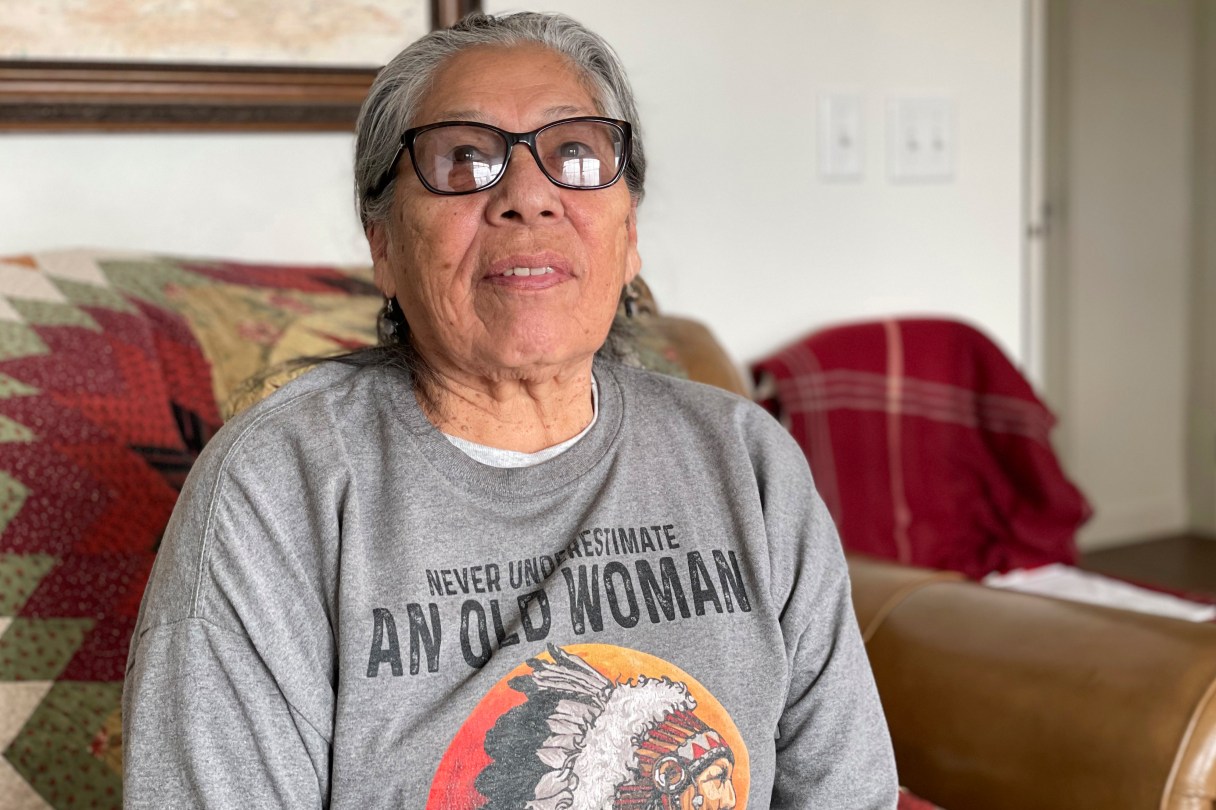
WOUNDED KNEE, S.D. (AP) — Madonna Thunder Hawk remembers the firefights.
As a medic during the occupation of Wounded Knee in early 1973, Thunder Hawk was stationed nightly in a frontline bunker in the combat zone between Native American activists and U.S. government agents in South Dakota.
“I would crawl out there every night, and we’d just be out there in case anybody got hit,” said Thunder Hawk, of the Oohenumpa band of the Cheyenne River Sioux Tribe, one of four women assigned to the bunkers.
Memories of the Wounded Knee occupation — one in a string of protests from 1969 to 1973 that pushed the American Indian Movement to the forefront of Native activism — still run deep within people like Thunder Hawk who were there.
Thunder Hawk, now 83, is careful about what she says today about AIM and the occupation, but she can’t forget that tribal elders in 1973 had been raised by grandparents who still remembered the 1890 slaughter of hundreds of Lakota people at Wounded Knee by U.S. soldiers.