
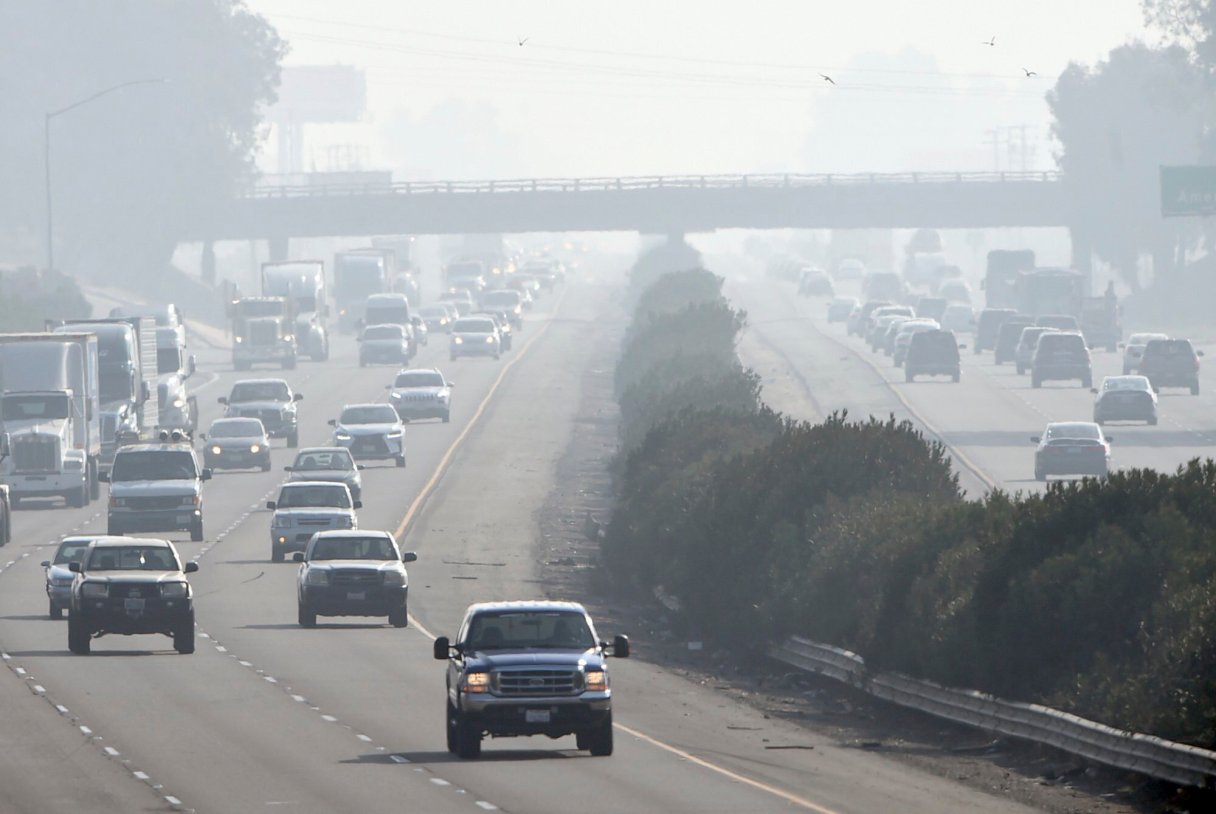
WASHINGTON (AP) — The Biden administration is proposing tougher standards for a deadly air pollutant, saying that reducing soot from tailpipes, smokestacks and wildfires could prevent thousands of premature deaths a year.
A proposal released Friday by the Environmental Protection Agency would set maximum levels of 9 to 10 micrograms of fine particle pollution per cubic meter of air, down from 12 micrograms set a decade ago under the Obama administration. The standard for particle pollution, more commonly known as soot, was left unchanged by then-President Donald Trump, who overrode a scientific recommendation for a lower standard in his final days in office.
Environmental and public health groups that have been pushing for a stronger standard were disappointed, saying the EPA proposal does not go far enough to limit emissions of what is broadly called “fine particulate matter,” the tiny bits of soot we breathe in unseen from tailpipes, wildfires, factory and power plant smokestacks and other sources.
In a development that could lead to an even lower standard, the EPA said Friday it also would take comments on a range of ideas submitted by a scientific advisory committee, including a proposal that would lower the maximum standard for soot to 8 micrograms. A microgram is one-millionth of a gram.
EPA Administrator Michael Regan said the proposal to strengthen the national ambient air quality standards for fine particle pollution would help prevent serious health problems, including asthma attacks, heart attacks and premature death that disproportionately affect vulnerable populations. Those populations include children, older adults and those with heart and lung conditions as well as low-income and minority communities throughout the United States.