
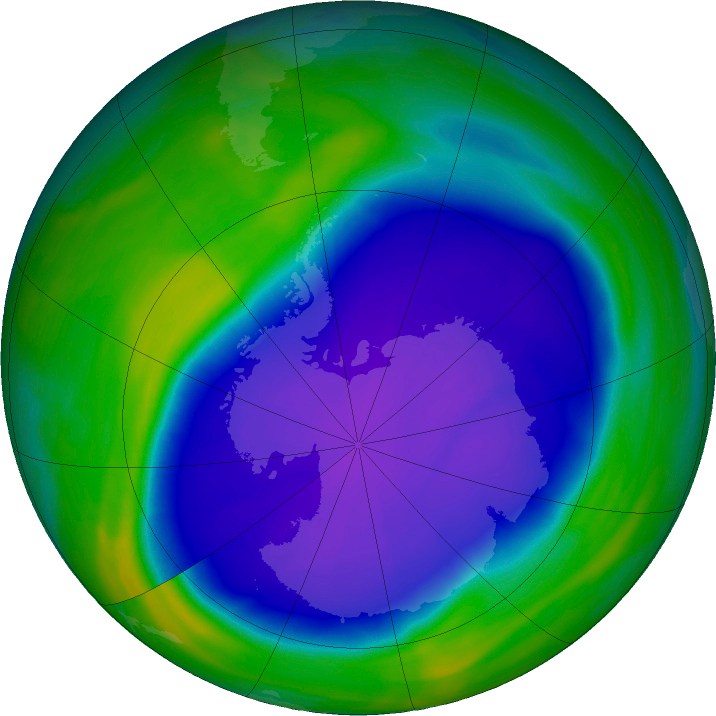
DENVER (AP) — Earth’s protective ozone layer is slowly but noticeably healing at a pace that would fully mend the hole over Antarctica in about 43 years, a new United Nations report says.
A once-every-four-years scientific assessment found recovery in progress, more than 35 years after every nation in the world agreed to stop producing chemicals that chomp on the layer of ozone in Earth’s atmosphere that shields the planet from harmful radiation linked to skin cancer, cataracts and crop damage.
“In the upper stratosphere and in the ozone hole we see things getting better,” said Paul Newman, co-chair of the scientific assessment.
The progress is slow, according to the report presented Monday at the American Meteorological Society convention in Denver. The global average amount of ozone 18 miles (30 kilometers) high in the atmosphere won’t be back to 1980 pre-thinning levels until about 2040, the report said. And it won’t be back to normal in the Arctic until 2045.