
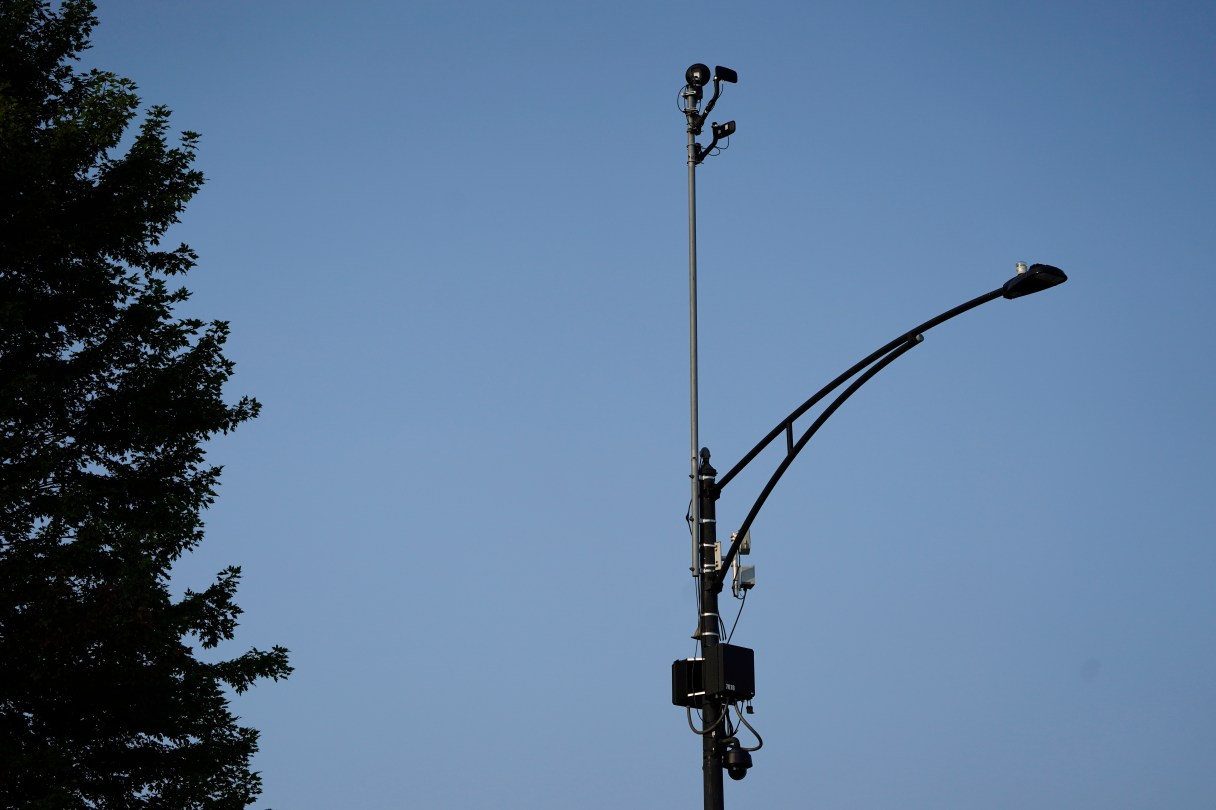
CHICAGO (AP) — In more than 140 cities across the United States, ShotSpotter’s artificial intelligence algorithm and intricate network of microphones evaluate hundreds of thousands of sounds a year to determine if they are gunfire, generating data now being used in criminal cases nationwide.
But a confidential ShotSpotter document obtained by The Associated Press outlines something the company doesn’t always tout about its “precision policing system” — that human employees can quickly overrule and reverse the algorithm’s determinations, and are given broad discretion to decide if a sound is a gunshot, fireworks, thunder or something else.
Such reversals happen 10% of the time by a 2021 company account, which experts say could bring subjectivity into increasingly consequential decisions and conflict with one of the reasons AI is used in law-enforcement tools in the first place — to lessen the role of all-too-fallible humans.
“I’ve listened to a lot of gunshot recordings — and it is not easy to do,” said Robert Maher, a leading national authority on gunshot detection at Montana State University who reviewed the ShotSpotter document. “Sometimes it is obviously a gunshot. Sometimes it is just a ping, ping, ping. … and you can convince yourself it is a gunshot.”
Marked “WARNING: CONFIDENTIAL,” the 19-page operations document spells out how employees in ShotSpotter’s review centers should listen to recordings and assess the algorithm’s finding of likely gunfire based upon a series of factors that may require judgment calls, including whether the sound has the cadence of gunfire, whether the audio pattern looks like “a sideways Christmas tree” and if there is “100% certainty of gunfire in reviewer’s mind.”