
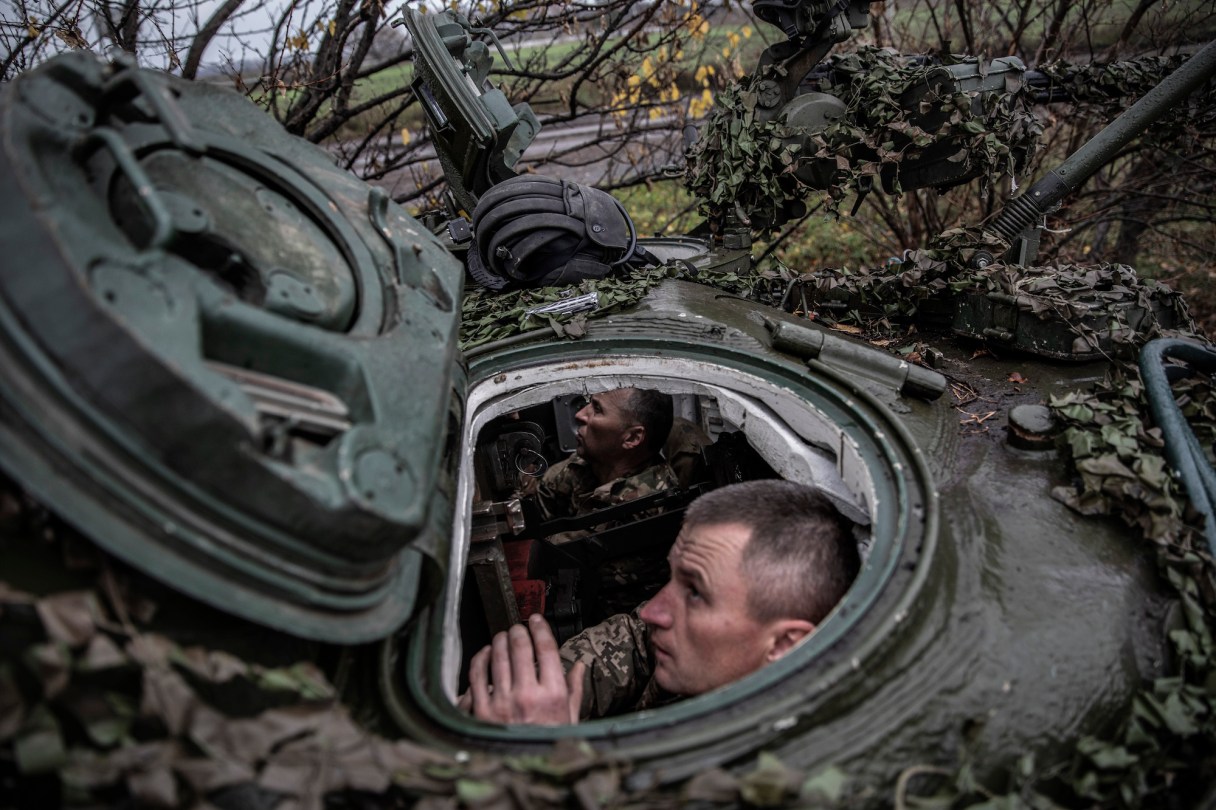
The Biden administration announced last week that the U.S. will provide 31 Abrams M-1 tanks to Ukraine, and Germany said it will send 14 of its Leopard tanks to Kyiv.
The tank deal and the first anniversary of the start of the war in February offer an opportunity to evaluate the effectiveness and future direction of U.S. military aid to Ukraine, which has been authorized at more than $27 billion in the last year alone — an annual amount not seen since the height of the Vietnam War.
American arms and training, combined with the skill and courage of Ukrainian forces, have been highly effective in blunting Russia’s attack and rolling back some of its initial territorial gains. The question is how to continue supporting Ukraine without inching closer to a direct U.S.-Russian confrontation.
The tank deal itself will not be a game changer militarily. The relatively small numbers involved, and the fact that the U.S. systems reportedly may not arrive in Ukraine for six months to well over a year, are just part of the issue. Daniel Davis, who served in an armored cavalry regiment in a devastating tank battle with Iraqi forces in the 1991 Persian Gulf War, has pointed out that to be fully effective in using them, U.S. personnel required more than a year of training.
The systems are also extremely difficult to maintain, as undersecretary for defense policy Colin Kahl noted recently, suggesting that the Pentagon’s initial reluctance to supply the tanks was because the Defense Department “has been very focused on … not providing the Ukrainians systems they can’t repair, they can’t sustain, and that they, over the long term, can’t afford.” These realities greatly diminish the tanks’ role on the battlefield.