
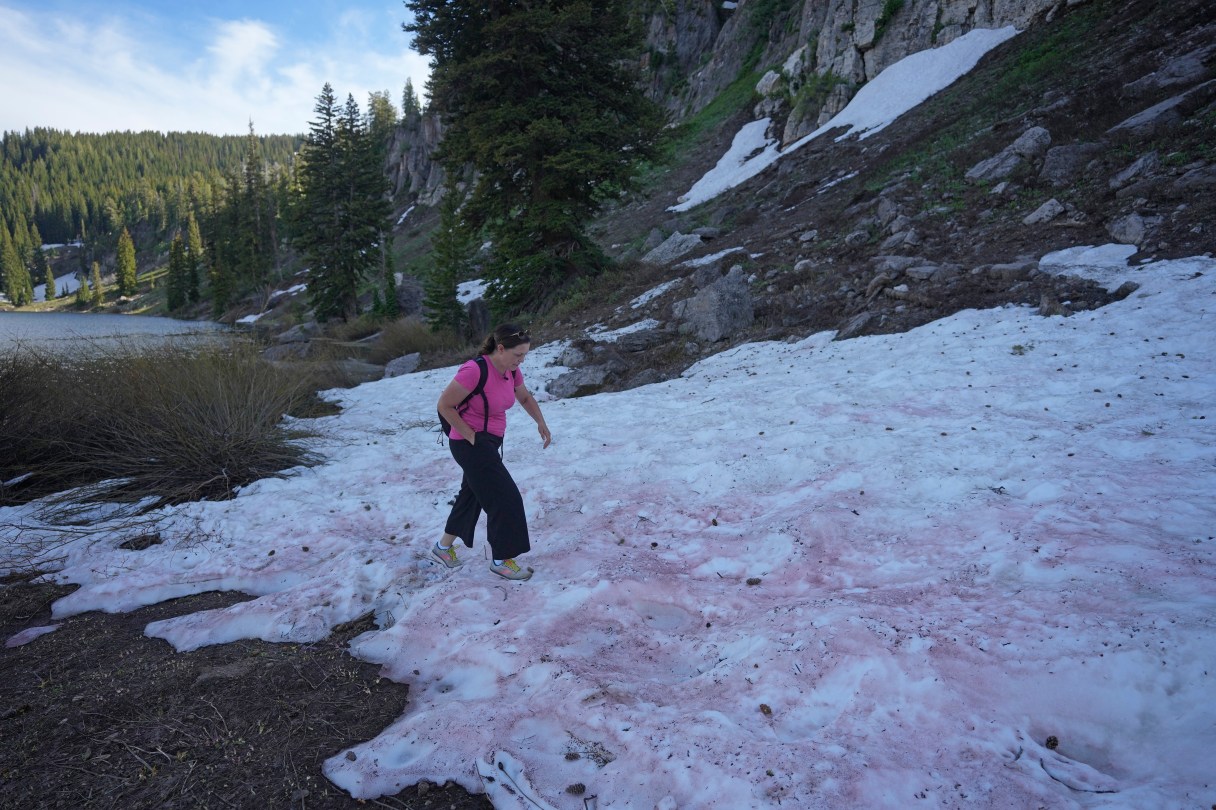
LOGAN, Utah (AP) — High up in the mountains, amid pinyon pine and quaking aspen trees, the remaining remnants of the winter’s snow is dotted with hues of pinks, purples and oranges.
Hikers, campers and church youth groups journeying by grasp it in their palms and liken it to flavored snow cones, Flamin’ Hot Cheetos, pink lemonade, dissolved blood or if passersby conducted an art project using red food coloring.
“It’s almost like it’s been sprinkled with Himalayan salt or even Kool-Aid powder,” Jana Brough, a mother hiking with friends and family at Tony Grove Lake in Utah’s Logan Canyon, said this week. “But when you scrape it you can tell it’s just on the surface.”
From the roads that traverse mountain passes above Park City to the Bear River Range near the Utah-Idaho border, last winter’s record snowfall is heating up, baking under the sunlight and turning hues of red. The presence of so-called “watermelon snow” — referred to unofficially due to its pinkish tint — is piquing the curiosities of photo-seeking visitors and raising a host of questions about nature, health and climate. Its prevalence this summer is particularly striking on ridges and in mountain ranges where snow would have melted by now in drier years.
The technicolor snow appears in high-altitude environments throughout the globe including the French Alps and Japan’s Mountains of Dewa when a perfect storm of conditions — water content, sunlight, temperatures and the presence of nutrients — awaken dormant green algae called chlamydomonas nivalis that thrive in cold temperatures. The algae swim to the surface of the snow, where they bloom and divide. Upon arrival, when they’re hit by sun and ultraviolet rays, their color changes to absorb radiation and protect themselves from damage.