
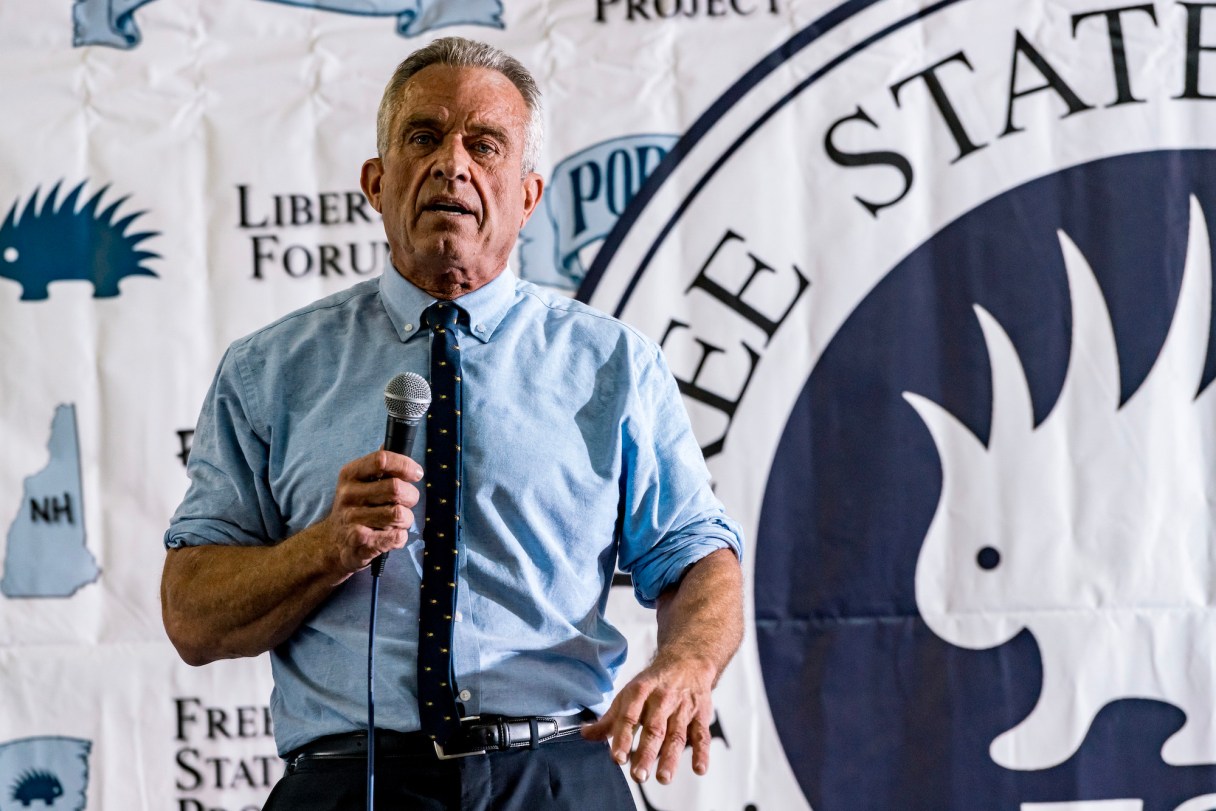
Nominations define parties. But what we’re seeing in Robert F. Kennedy Jr.’s futile challenge to President Joe Biden is an odd situation in which a nomination skirmish won’t change anything in the Democratic Party, but might have real impact on the Republican Party.
Kennedy, who has promoted numerous conspiracy theories and falsehoods over the years, is doing relatively well in early presidential primary polls, running in the mid-teens in hypothetical match-ups with Biden. Democratic Party leaders have universally either condemned or ignored Kennedy’s campaign, and there is no party pressure on Biden to debate Kennedy or otherwise engage with him.
Yet Kennedy is getting a lot of attention and even interview appearances across Republican-aligned media, including Fox News. It’s not clear whether the goal of these outlets is to cause trouble for Biden in the primaries, or if any famous-ish Democrat attacking a Democratic president is automatically popular with Republican audiences.
It’s likely that the reaction to his campaign will contribute to the anti-kookery trend among Democrats over the last decade. In 2004, Kennedy’s false claims that rigged voting machines in Ohio helped re-elect George W. Bush found an audience among a fraction of Democrats, including some elected officials. A segment of the party’s voters were at one time sympathetic to his anti-vaccination rhetoric. That’s faded over the years, with Democrats priding themselves on being the reality-based party. As a result, high-profile Democrats have become much better at rejecting baseless theories and the politicians, including Democrats, who push them.
Don’t be fooled by the polls either. Any unpopular president will be vulnerable to polling showing that the party would consider alternatives. Barack Obama only won 89% of Democratic primary votes in 2012, and was under 80% in several states, despite having opponents who were virtually unknown. Kennedy is only doing somewhat well now because Biden is unpopular and Kennedy enters with a very famous name. My guess is that few of the 15% or so who say they support him know his views and that the more coverage he gets, the fewer Democrats will find him a good place to park their Biden-hesitant votes.