
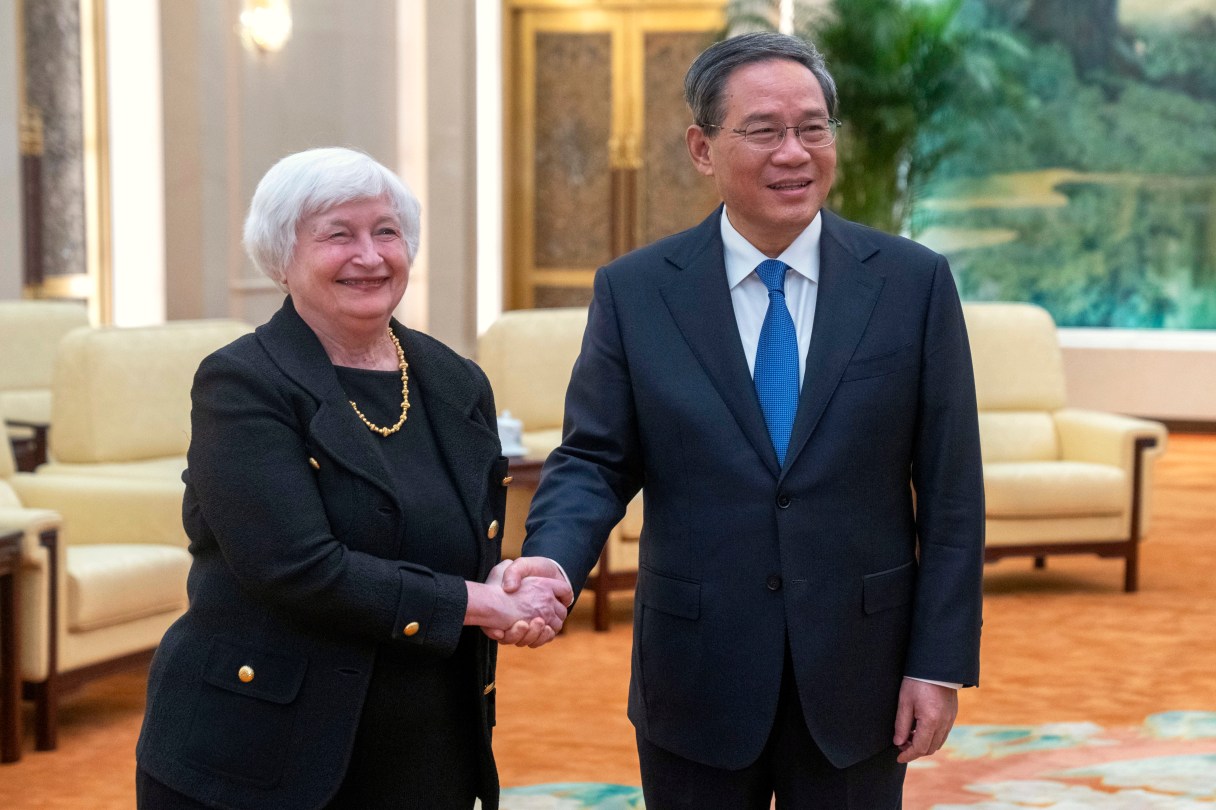
BEIJING (AP) — U.S. Treasury Secretary Janet Yellen and Chinese Premier Li Qiang expressed hope Friday for better communication after Yellen appealed to Beijing not to let frustration over U.S. curbs on technology exports disrupt economic cooperation.
Both governments used positive terms to describe Yellen’s visit to China’s capital, which was aimed at improving strained relations, and stressed the importance of U.S.-China economic ties. They announced no plans for more high-level meetings or to revive additional contacts that disputes over technology, security and other respective irritants have disrupted.
Yellen is one of several senior U.S. officials expected to travel to Beijing to encourage Chinese leaders to revive interactions between the governments of the world’s two largest economies. Treasury officials said earlier she wouldn’t meet with Chinese leader Xi Jinping, and no breakthroughs were expected.
In a one-hour meeting with China’s No. 2 leader that lasted twice as long as planned, Yellen said Washington and Beijing have a duty to cooperate on issues that affect the world. She appealed for “regular channels of communication” and “healthy economic competition,” a reference to complaints that China is stepping up subsidies and market barriers to protect its companies.
At the same time, Yellen defended “targeted actions,” such as U.S. curbs on Chinese access to advanced processor chips and other technology, that she said they are needed to protect national security.