
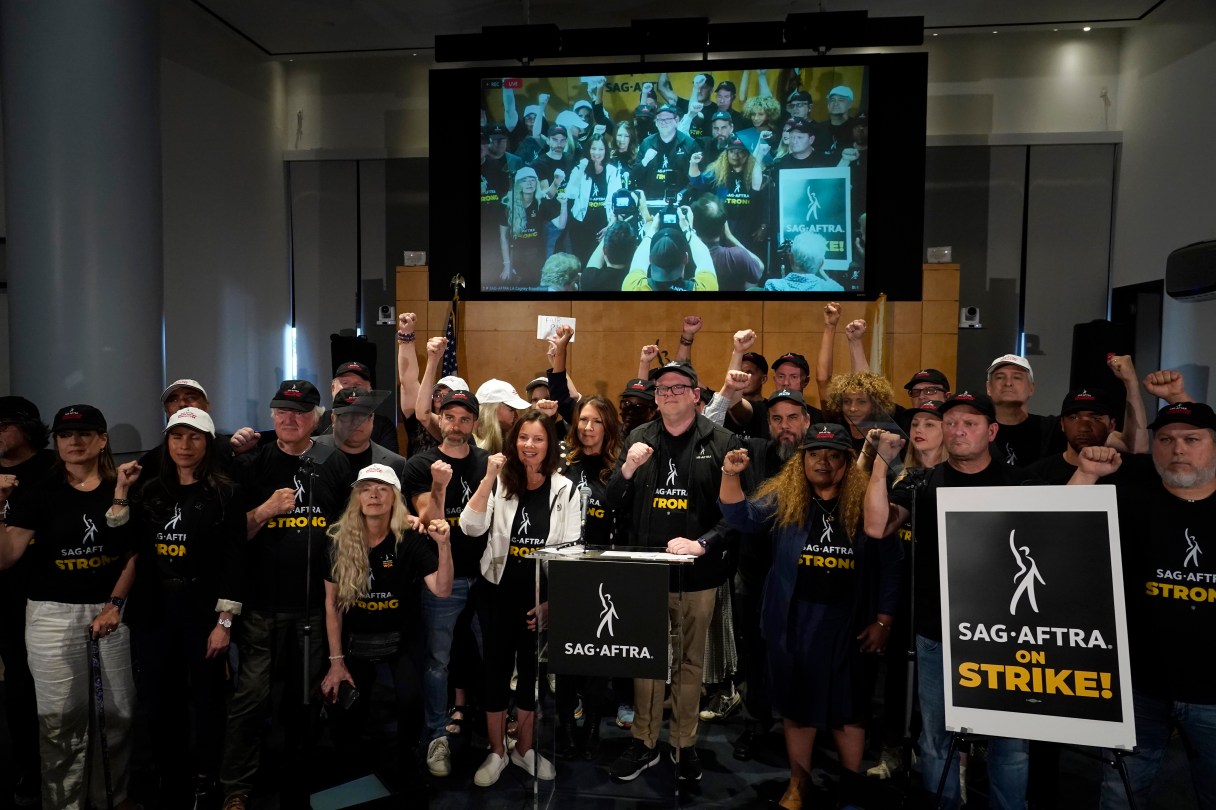
LOS ANGELES (AP) — Hollywood actors are joining screenwriters in the first dual strike from the two unions in more than six decades, with huge consequences for the film and television industry. Here is a look at how it has played out, why it’s happening, and what could come next.
WHAT LED TO THE ACTORS STRIKE?
More than a month of talks on a new three-year contract between the Screen Actors Guild-American Federation of Television and Radio Artists and the studios, streaming services and production companies that employ them led to little progress, and the tone became openly hostile in the days before union leaders voted to begin a strike on Friday. A last minute intervention from a federal mediator didn’t bridge the gap.
Union leaders say the streaming model that has taken over the industry in recent years has cheated actors of their share of income and funneled money to executives, and proposals of the Alliance of Motion Picture and Television Producers, which represents the studios, streamers and production companies in negotiations, did not even begin to meet their needs.
A 12-day extension of the contract and the talks shortly before an initial deadline in late June brought some hope a deal would be reached, but the hostility only grew. “The Nanny” star Fran Drescher, who heads the union said it made them “feel like we’d been duped, like maybe it was just to let studios promote their summer movies for another 12 days.”