
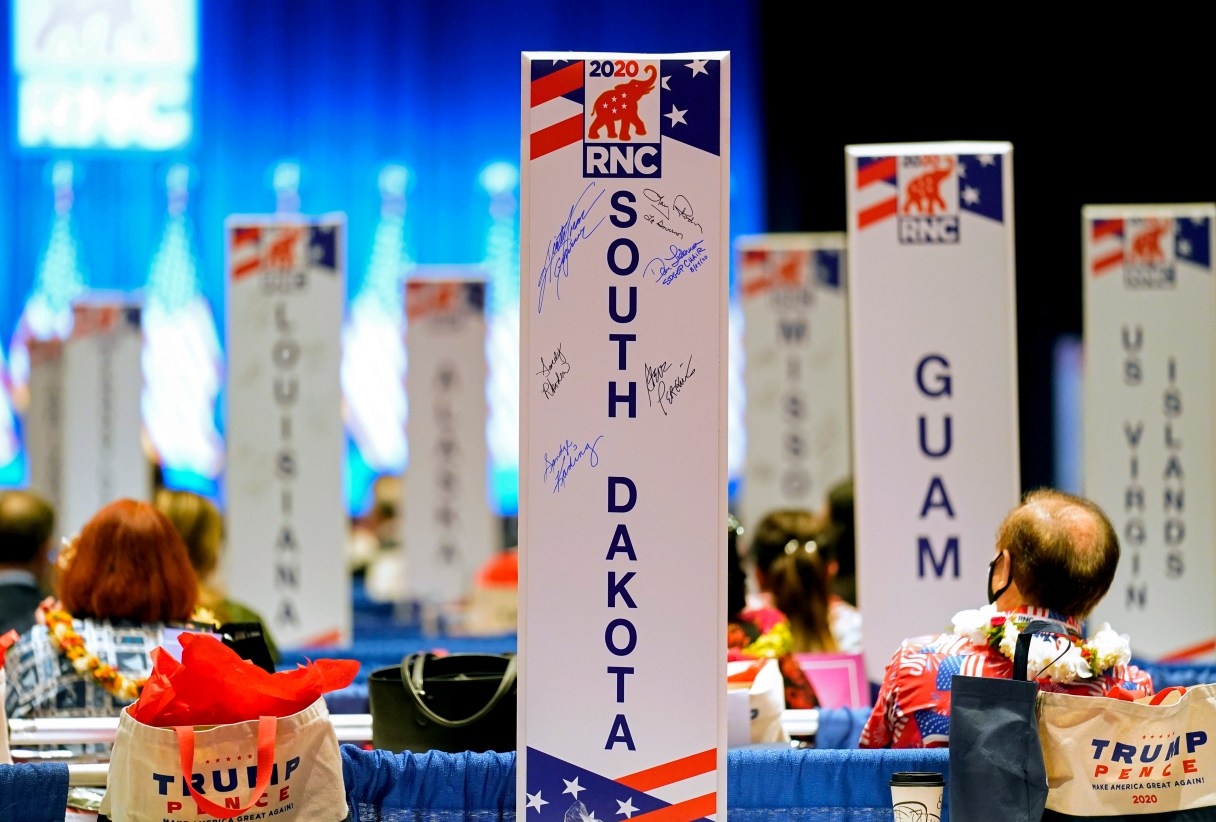
NEW YORK (AP) — Set aside the polls, the fundraising numbers or Donald Trump’s name recognition as metrics of his early dominance of the Republican presidential contest. He has what could prove to be the most important advantage in the race: a leg up in winning the delegates needed to clinch the GOP nomination.
While the delegate count won’t begin taking shape until voting begins next January, Trump’s edge in the race to win their votes is years in the making. Many state Republican parties made changes to their rules ahead of the 2020 election by adding more winner-take-all contests and requiring candidates to earn higher percentages of the vote to claim any delegates. Those changes all benefit a frontrunner, a position Trump has held despite his mounting legal peril, blame for his party’s lackluster performance in the 2022 elections and the turbulent years of his presidency.
As Trump makes another run for the White House, he has been focused on the looming battle for delegates, according to people with knowledge of his effort who requested anonymity to discuss strategy. He’s had regular discussion with state party chairs, many of whose leadership races he got involved in, and has hosted delegations from Republican parties in Nevada, Louisiana and Pennsylvania at his homes in Florida and New Jersey.
The moves are a sign of how Trump’s team is focused on the crucial, if less glamorous, aspects of winning the GOP nomination. That’s a notable change from his first bid for the White House in 2016, when his team of relatively novice operatives weren’t familiar with the minutia of the delegate contest and sometimes found themselves outflanked by better-prepared rivals, particularly Texas Sen. Ted Cruz.