
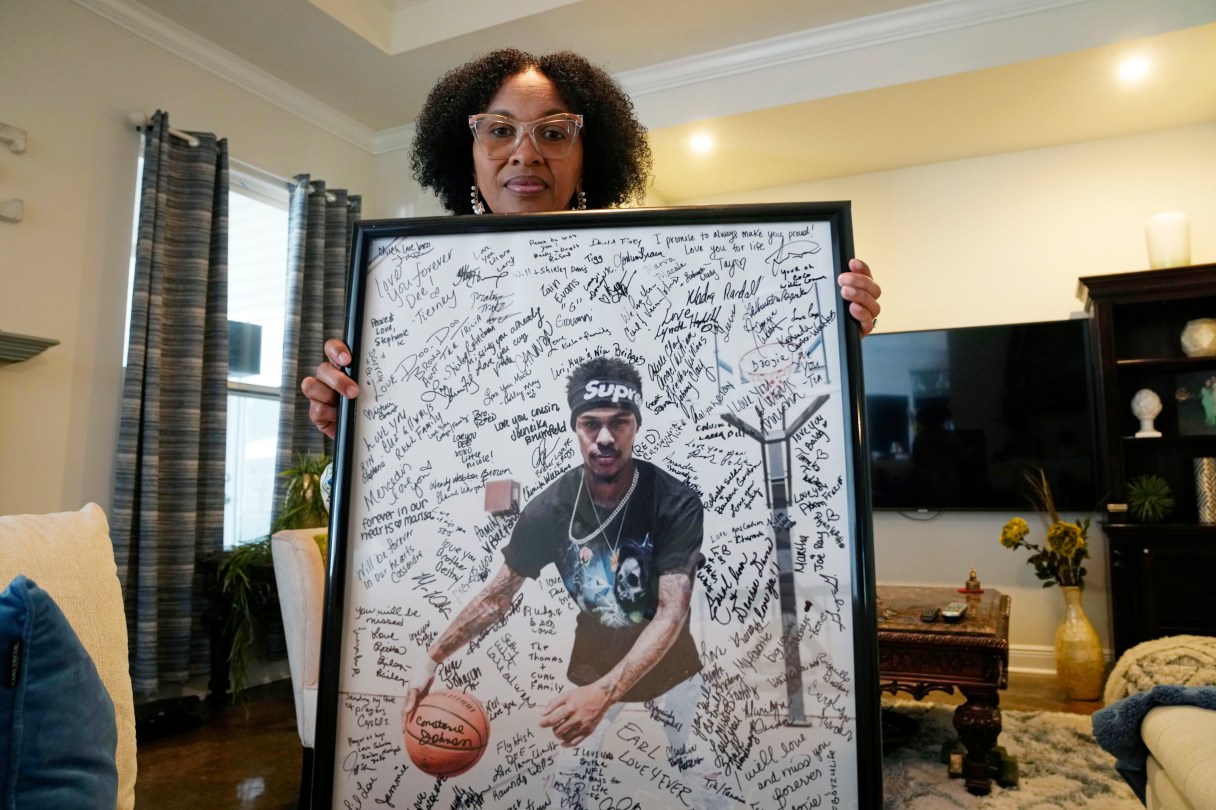
Pamela White stared at the silver tree with twinkling lights while she cleaned out her son’s apartment, wondering how in a matter of days she went from celebrating Christmas to having to think about headstones and burial plots.
Her son, Dararius Evans, was an Army reservist and veteran who had survived a deployment in Iraq. A few days after Christmas 2019, the 28-year-old was killed in a shooting outside of Baton Rouge, Louisiana. The shooter was sentenced to life in prison last year.
White and her family, who live outside of New Orleans, turned to Louisiana’s victim compensation board for help paying for the unexpected funeral. She was met with administrative hurdles, a denial that blamed her son for his own death, a lengthy appeal — all while paying up front through a personal loan that gathered interest as she waited.
Thousands of crime victims each year are confronted with the difficult financial reality of state compensation programs that are billed as safety nets to offset costs like funerals, medical care, relocation and other needs. Many programs require victims to pay for those expenses first and exhaust all means of payment before they reimburse costs, often at rates that don’t fully cover expenses.